Yum China’s 2025 Sustainability Report: Scaling ESG Governance Across a 18,000-Store Restaurant Ecosystem
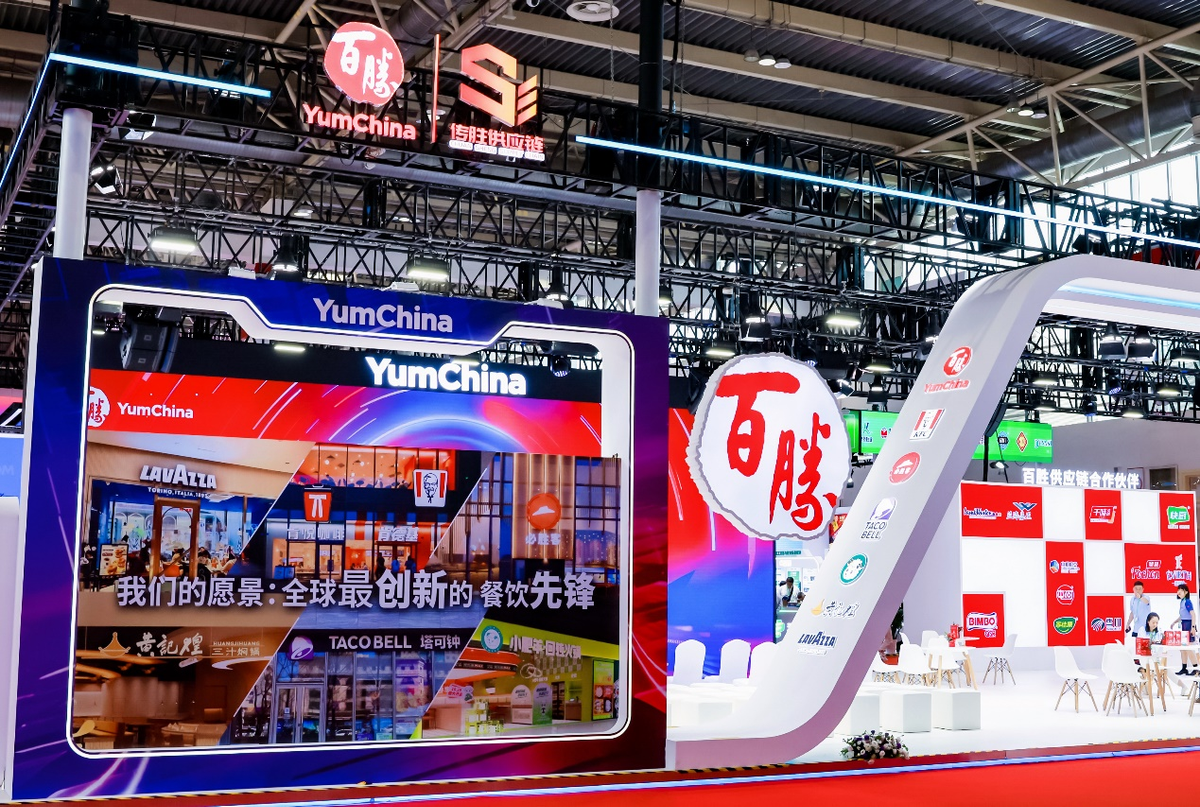
Yum China’s 2025 Sustainability Report arrives at an important stage in the company’s development. By year-end 2025, Yum China operated more than 18,000 restaurants across over 2,500 cities and towns, while management has set an ambition to exceed 30,000 stores by 2030. This expansion makes sustainability increasingly an issue of operating-system design rather than a standalone corporate responsibility function: standards for food safety, labor practices, resource use and supplier management must remain effective as the physical network becomes larger and more distributed.
The report covers Yum China Holdings and its subsidiaries and branches for the 2025 calendar year, with entities consolidated for financial reporting generally included within the greenhouse gas boundary. It states compliance with the Hong Kong Stock Exchange’s Appendix C2 ESG Reporting Code and references both the GRI Standards and SASB restaurant-industry framework.
More significant for investors is the report’s treatment of climate disclosure. Yum China has moved beyond conventional environmental KPI reporting by aligning its climate section with HKEX Part D requirements, including climate governance, risk and opportunity assessment, scenario analysis, emissions and targets. This reflects the broader shift in sustainability reporting from largely impact-oriented ESG disclosure toward information that connects sustainability issues with enterprise risk, resilience and potential financial effects.
Governance architecture and accountability
Yum China has developed a relatively mature multi-layer sustainability governance structure. The Board retains overall oversight, supported by a dedicated Food Safety and Sustainability Committee covering environmental and climate matters, supply chain issues, nutrition and food safety. At management level, a Sustainability Committee meets quarterly, while sustainability and cross-functional teams translate priorities into operational programs covering areas such as emissions, energy, water, green buildings and packaging.
A notable feature is the connection between ESG and executive performance. ESG measures have formed part of leadership performance factors since 2021, while ESG targets have been incorporated into annual Performance Share Unit awards for leadership since 2023. This strengthens accountability beyond the increasingly common practice of simply assigning ESG oversight to a board committee.
The governance challenge will increasingly be execution at scale. Yum China explicitly applies its “One System” approach to both company-owned and franchised restaurants, including food safety and quality standards. As franchise expansion becomes more important to its growth model, maintaining comparable ESG controls between directly operated and franchised locations will become an increasingly material governance issue.
Materiality approach and risk prioritisation
Yum China has conducted materiality assessments since 2017 using a process built around reviewing, identifying, prioritising and validating sustainability topics. The more extensive 2024 exercise incorporated regulatory developments, industry standards, business-model considerations, value-chain characteristics, peer benchmarking and surveys of internal and external stakeholders, resulting in 23 material topics. Management reviewed the assessment in 2025 and concluded that the findings remained applicable.
The approach is systematic and well integrated into management planning, but it remains primarily a sustainability materiality framework rather than a clearly articulated double-materiality assessment. The disclosed matrix considers importance to society and Yum China’s long-term business operations, which captures elements of both impact and business relevance, but does not separately present impact materiality and financial materiality in the manner associated with ESRS-style double materiality.
For a company with a highly complex agricultural and food supply chain, greater visibility into the financial significance of individual sustainability risks could strengthen future disclosure. Climate represents the most advanced area in this respect because Yum China has begun assessing climate risks and opportunities and considering anticipated financial effects.
Climate, supply chain, and social dimensions
Climate strategy is one of the strongest sections of the report. Yum China reports 2025 market-based greenhouse gas emissions of approximately 11.87 million tCO2e, with Scope 3 accounting for 80.4% of the footprint. Purchased goods and services dominate Scope 3, illustrating why restaurant-sector decarbonisation depends heavily on agriculture, livestock, ingredients, packaging and upstream processing rather than restaurant electricity alone.
The company has SBTi-approved near-term targets based on 2020 and a commitment to achieve net-zero value-chain emissions by 2050. Its stated 2035 targets include a 63% absolute reduction in Scope 1 and 2 emissions and a 66.3% reduction per tonne of purchased goods for relevant Scope 3 emissions. Operational measures include energy-efficiency technology, renewable electricity procurement and distributed photovoltaics, while renewable energy consumed directly by Yum China rose approximately 84% year on year in 2025.
More strategically important is the extension of climate management to suppliers. More than 40 key suppliers joined the Yum China Value Chain Green & Low-Carbon Alliance and signed emissions-reduction commitments, while supplier renewable energy consumption through its DPV and VPPA alliance reached approximately 370,000 MWh. The company plans to use its digital platform to track supplier emissions-reduction progress from 2026, potentially moving Scope 3 governance from periodic data collection toward ongoing performance management.
Supply-chain social controls are also relatively structured. Suppliers are required to comply with a Supplier Code of Conduct, and Yum China reports 100% CSR audit participation among defined critical suppliers. Third-party onsite assessments, corrective-action requirements and re-audits provide a compliance architecture alongside the company’s more developed food-safety supplier controls.
Employment
Yum China reported approximately 290,000 employees in 2025, reflecting the labor-intensive nature of the restaurant sector. More than 90% of employees work in restaurants, making frontline management practices particularly important to service quality, employee retention and operational consistency. Management highlights mechanisms including CEO and senior-management restaurant visits, the RGM Voice platform, a pilot RGM One-Stop Service Center and the Q-Smart AI management assistant.
Women represented 69% of the overall workforce and 63% of management positions in 2025, including 51% of top-management positions. Women also represented 56% of new hires and 59% of employees promoted during the year. These figures suggest that female representation extends beyond entry-level restaurant employment into management, although female participation in STEM-related roles was substantially lower at 17%.
Employee development remains another material component. Yum China reported 7.8 million training hours in 2025, equivalent to an average of 49 hours per full-time equivalent employee, with RMB269 million spent on training and development. The company also reports that RGMs, District Managers, Area Managers and Market General Managers are internally promoted, reinforcing the role of internal mobility within its frontline talent model.
Health and safety
Occupational health and safety is particularly relevant given Yum China’s large restaurant workforce and operational exposure to kitchens, equipment, logistics and repetitive work. The company reported zero work-related fatalities in 2025 and states that work-related fatalities have remained at zero since 2018. Approximately 10,960 lost days resulted from work injuries during 2025, while the lost-time injury frequency rate was 1.11 per million hours worked, compared with 1.09 in 2024 and 1.03 in 2023.
The multi-year increase in injury frequency is modest but deserves continued monitoring, particularly as restaurant numbers expand. Yum China reports 100% annual health-check coverage for restaurant management teams and office employees and 100% health-certificate coverage for restaurant employees.
Future reporting could become more decision-useful by providing additional analysis of incident type, severity and root causes alongside the headline LTIFR. For an organisation operating thousands of similar sites, this could help demonstrate whether digitalisation and operational standardisation are translating into measurable reductions in workplace risk.
Product or service responsibility
Product responsibility is central to Yum China’s ESG profile because food safety can directly affect customer welfare, regulatory compliance and brand value. The company describes an end-to-end “farm to table” system encompassing upstream agricultural controls, supplier approval and audits, logistics monitoring, restaurant operations and delivery. All food-ingredient and food-contact packaging suppliers were reported to have obtained GFSI-benchmarked certifications, while restaurant OEC audit coverage reached 100%.
Technology increasingly underpins this system. Yum China’s iFS platform uses knowledge-graph technology to monitor regulatory changes, standards and emerging food-safety issues, while intelligent remote management and camera-based systems are being deployed to identify risks closer to real time. This is strategically relevant because traditional sample-based inspections become progressively harder to rely upon as store networks expand.
Product responsibility also extends into nutrition. Yum China reports continued development of lower-salt and lower-sugar options, diversification of ingredients and expansion of the KPRO light-meal concept to more than 200 locations. These initiatives indicate movement beyond food safety toward health-related product considerations, although more quantitative nutrition outcome metrics could strengthen comparability.
Philanthropy
Yum China’s community investment increasingly draws upon capabilities connected to its core business rather than relying solely on financial donations. The One Yuan Donation program, launched in 2008, had cumulatively raised more than RMB280 million by the end of 2025, provided more than 60 million nutritious meals and helped modernise kitchen equipment at more than 1,600 rural schools.
The Rural School Kitchen Revitalization initiative is a good example of capability-linked philanthropy. Yum China combines kitchen-management expertise with equipment upgrades and nutritional education, while its rural industry programs integrate regional agricultural products into commercial supply chains.
Other long-term initiatives include the KFC Little Migratory Birds Fund for children and the Pizza Hut Little Red Hat youth-volunteering program. This portfolio suggests a transition from traditional charitable giving toward programs combining community engagement, employee participation, food expertise and supply-chain capabilities.
Metrics, targets, and data robustness
Yum China provides three-year KPI tables across environmental, employee, supplier and community indicators, improving trend visibility. The data show that Scope 3 emissions declined from approximately 10.24 million tCO2e in 2024 to 9.54 million tCO2e in 2025, while Scope 1 emissions increased from roughly 220,000 to 275,000 tCO2e. Restaurant electricity intensity nevertheless improved, with average electricity consumption falling from 260 MWh to 248 MWh per restaurant.
The report also illustrates why absolute and intensity indicators should be read together. Total electricity and water consumption increased as the business expanded, while average restaurant electricity and water consumption decreased. Packaging presents a similar complexity: total packaging use increased, while packaging intensity per RMB million of sales also increased from 2.0 tonnes in 2024 to 2.2 tonnes in 2025.
Such mixed trajectories are not necessarily contradictory. For a rapidly expanding restaurant network, absolute resource consumption may rise even when site-level efficiency improves. The next analytical step is therefore to distinguish expansion effects from efficiency improvements and assess whether absolute environmental performance remains consistent with long-term targets.
Assurance, credibility, and comparability
One of the report’s important credibility features is third-party assurance. KPMG Huazhen LLP’s Shanghai Branch issued a limited assurance report covering selected sustainability information under ISAE 3000 (Revised), with greenhouse gas work also referencing ISAE 3410.
The assured indicators include Scope 1 and Scope 2 emissions, electricity consumption, renewable-energy consumption, water indicators, the materiality-assessment process, RSPO-certified palm oil, CSR-audited critical suppliers, women in the workforce, lost-time injury frequency, work-related fatalities and supplier numbers. Significantly, the reported Scope 3 emissions figure is not among the indicators listed within the assurance scope.
This distinction matters because Scope 3 represents more than four-fifths of Yum China’s reported carbon footprint and is central to its 2050 value-chain ambition. Extending assurance progressively into material Scope 3 categories and supplier data would therefore strengthen confidence in the area that is most consequential to the company’s decarbonisation strategy.
Strategic implications for the sector
Yum China illustrates how ESG management for large restaurant groups is moving beyond individual restaurant operations into network governance. The most material sustainability impacts increasingly sit across farms, ingredient manufacturers, logistics providers, landlords, franchisees and hundreds of thousands of employees rather than within corporate offices.
This changes the nature of ESG capability. Supplier emissions platforms, digital food-safety monitoring, renewable-energy collaborations and standardised franchise controls are potentially more consequential than additional standalone ESG policies because they integrate sustainability requirements into everyday operating infrastructure.
For other food-service companies, the implication is that future ESG maturity is likely to depend increasingly on the ability to combine sustainability objectives with procurement, data architecture, operational standards and supplier relationships. Companies unable to obtain reliable upstream information may find climate and nature commitments particularly difficult to translate into measurable progress.
ESG maturity and future positioning
Yum China’s 2025 report reflects an ESG framework that is increasingly embedded within its operating model. Board oversight, sustainability-linked executive metrics, science-based climate targets, extensive supplier controls, digital monitoring systems and selected external assurance provide evidence of institutionalisation rather than isolated sustainability initiatives.
Areas for further development nevertheless remain. More explicit financial quantification of sustainability risks, broader assurance of Scope 3 emissions, deeper workplace-safety analysis and increasingly outcome-based nutrition and social metrics would improve decision usefulness. The 2025 materiality process could also evolve toward clearer separation of impacts, risks and opportunities as global sustainability reporting increasingly distinguishes these concepts.
The central test will be scalability. Moving from more than 18,000 restaurants toward a stated ambition of over 30,000 by 2030 will require Yum China to demonstrate that its sustainability controls can expand without weakening consistency, data integrity or accountability. Its investments in digital management and value-chain collaboration suggest that the company is already treating this as an operational challenge rather than simply a reporting exercise.
Pacifica ESG View
Yum China’s 2025 Sustainability Report is notable less for any single initiative than for the increasing integration of sustainability into the infrastructure used to run a very large restaurant network. Climate governance, supplier engagement, food-safety technology and employee management are increasingly connected to operating systems rather than administered as parallel ESG programs.
The largest strategic challenge is upstream. Scope 3 represents more than 80% of reported emissions, making supplier transformation central to credible progress toward net zero. The planned digital tracking of supplier reductions is therefore potentially more significant than headline renewable-energy growth. Future reports will be stronger if this data architecture is accompanied by broader Scope 3 assurance and clearer evidence of absolute progress against science-based targets.
Implications for the wider market
The report illustrates an emerging model for ESG in consumer and food-service businesses: sustainability performance increasingly depends on controlling a distributed ecosystem rather than only improving owned assets. Supplier emissions, agricultural sourcing, franchise standards, workforce practices and product responsibility all require comparable data and repeatable controls across thousands of operating locations.
For restaurant groups and other consumer-facing companies, this creates a shift from ESG disclosure toward ESG infrastructure. Digital supplier systems, operational monitoring, credible targets and assurance-ready data are likely to become increasingly important as climate disclosure matures. Yum China’s experience suggests that the competitive distinction may ultimately lie not in publishing more ESG commitments, but in demonstrating that those commitments remain measurable and enforceable as the business scales.