China's Orinko Strengthens Circular Materials Strategy Through Low-Carbon Transition and ESG Governance
Orinko’s 2025 ESG report marks a strategic shift: circular materials, climate action and ESG governance are becoming core business capabilities. With expanding PCR solutions and growing Scope 3 disclosure, the key question is whether ambition will translate into measurable results.
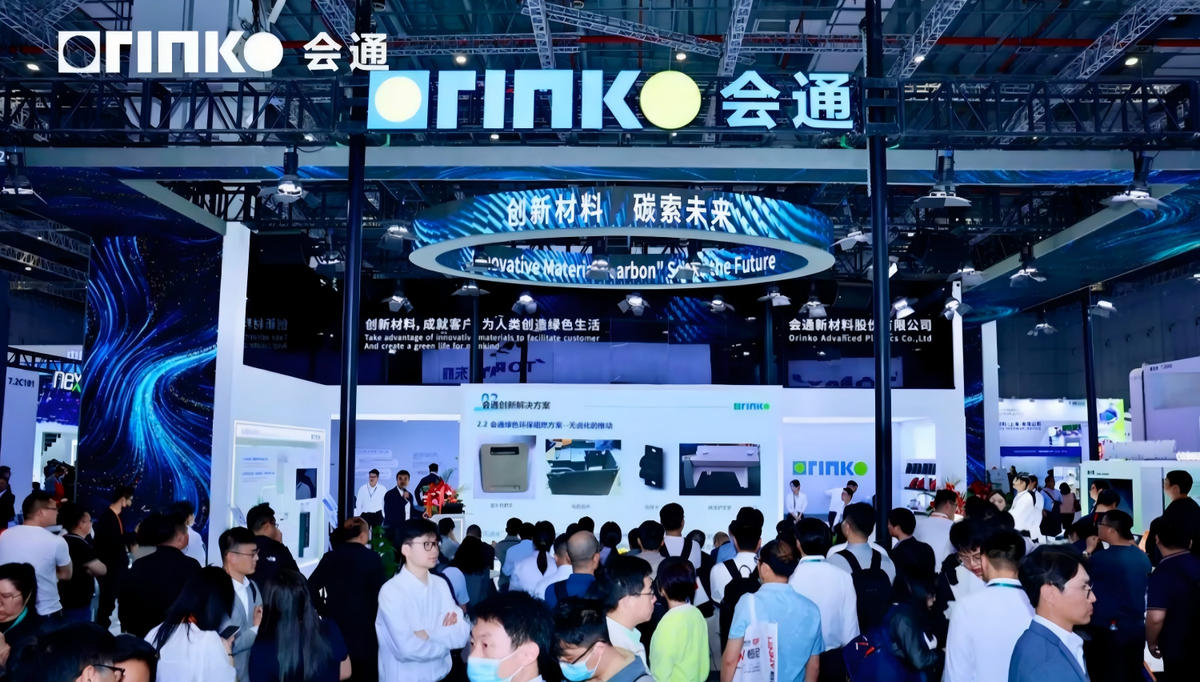
Orinko Advanced Plastics Co., Ltd. has released its 2025 Environmental, Social and Corporate Governance Report, covering the period from January 1 to December 31, 2025. The report is the company's third ESG report and covers its headquarters and wholly owned and controlled subsidiaries across its core businesses. It references the GRI Standards, UN Sustainable Development Goals, TCFD recommendations, and relevant disclosure requirements of the China Securities Regulatory Commission and Shanghai Stock Exchange.
The report matters because Orinko is presenting sustainability less as a standalone corporate responsibility exercise and more as part of its industrial strategy. For a materials manufacturer operating across automotive, home appliances, new energy and other growth sectors, the combination of circular materials, product carbon accounting and climate-risk management could become increasingly relevant to customers, regulators and international markets.
Key Sustainability Themes and Disclosures
The strongest environmental signal is the elevation of circular economy activities into a more formal business platform. In 2025, Orinko established a wholly owned subsidiary, Orinko Environmental Protection, to integrate its PCR materials value chain, from recycled resource sourcing through processing and high-value application. The company also reports two major circular models, Appliance-to-Appliance and Car-to-Car, with an appliance recycling solution reaching large-scale production and automotive closed-loop technologies targeted for further commercialisation in 2026.
The company has also expanded its carbon and energy management infrastructure. It reports greenhouse-gas inventory work across production bases in accordance with ISO 14064 principles, while identifying Scope 1 and Scope 2 emission sources and developing site-specific reduction pathways. Its 2025 ESG data disclose Scope 1 emissions of 1,380 tCO₂e, location-based Scope 2 emissions of 230,847.52 tCO₂e, market-based Scope 2 emissions of 213,65.64 tCO₂e as presented in the report, and Scope 3 emissions of 1,839,366 tCO₂e. Scope 3 therefore appears to be the dominant component of the company's reported value-chain footprint, underlining the strategic importance of procurement, logistics, recycling and downstream product applications.
Renewable and clean energy deployment is another visible priority. All production bases have implemented ISO 50001-based energy management systems, while the company continues to expand rooftop solar and digital energy monitoring. At the Anqing facility, a 5.985 MW rooftop photovoltaic system generated 6.17 GWh in 2025, and the reported share of clean energy use reached 17.8% when renewable energy certificates were included. This suggests a shift from general energy-efficiency initiatives toward more measurable clean-energy procurement and generation.
Environmental controls remained an important operational theme. The company reported 100% compliance rates for wastewater discharge and air emissions, no environmental non-compliance or penalty incidents, and 100% compliant disposal of hazardous waste. Total waste generation fell from 3,131.44 tonnes in 2024 to 2,585.62 tonnes in 2025, although hazardous waste increased from 274.86 tonnes to 312.58 tonnes, showing why stakeholders should assess individual indicators rather than assume uniformly improving performance.
On social performance, workplace safety and occupational health disclosures are notably comprehensive. Orinko reported zero work-related fatalities and serious injuries, 100% work-safety training coverage, a 100% hazard rectification rate and 100% occupational health examination coverage. The company also reported no new occupational disease cases in 2025. These disclosures suggest that formal management systems and monitoring are firmly embedded, although continued performance should be assessed over multiple reporting periods.
Talent development also received greater strategic emphasis. Orinko conducted more than 700 customised training sessions, achieved 100% employee training coverage and increased average training hours per employee to 14.7, compared with 9.5 in 2024. The launch of the Leadership Program and upgrade of the Orinko Star Training Camp suggest that workforce development is increasingly being linked to organisational transformation, globalisation and management capability rather than treated solely as a human resources compliance issue.
Governance and Strategic Signals
The most important governance development was the formal renaming of the Board's Strategic Development Committee as the Strategic Development and ESG Committee. The company has established a three-level ESG governance structure spanning board oversight, senior management coordination and operational execution, with responsibilities extending to carbon targets, climate risk, ESG strategy and annual disclosure. This structure suggests a higher degree of institutionalisation and clearer accountability than a decentralised ESG reporting process.
Governance integration is also supported by the wider board and control framework. In 2025, the company restructured its listed-company governance arrangements to reflect regulatory changes, while the Audit Committee continued to oversee financial reporting, internal controls and compliance. The Strategic Development and ESG Committee held two meetings during the year covering ESG strategy, sustainable development goals and major cross-border investments, indicating that sustainability considerations may increasingly intersect with capital allocation and international expansion decisions.
What This Report Suggests About Future Direction
Orinko's direction of travel appears to centre on converting environmental transition into product and market opportunity. The company is investing in PCR materials, bio-based materials, lightweight engineering plastics and low-carbon modified materials, while providing carbon accounting services for more than 200 products. Its circular economy strategy is therefore potentially becoming a commercial capability that can support customers facing recycled-content requirements, product-footprint expectations and supply-chain decarbonisation pressures.
The report also suggests that international sustainability requirements will become increasingly important to Orinko's strategy. The company explicitly references ISSB, TCFD and CBAM developments and is strengthening carbon management, certification and product carbon-footprint systems. For a company expanding internationally, this positioning may help prepare for more demanding customer and regulatory expectations, although stakeholders should monitor whether future reports introduce clearer time-bound emissions-reduction targets and more detailed transition metrics.
Pacifica ESG View
Orinko's 2025 report signals a company moving toward a more integrated ESG model, with circular materials, climate management and board-level governance forming the clearest strategic themes. The formal ESG committee structure and growing Scope 3 disclosure are particularly important signals of maturity. Going forward, stakeholders should monitor the conversion of circular economy investments into measurable business and environmental outcomes, the expansion of renewable energy, and whether the company develops more explicit, time-bound emissions and transition targets.