Korea's HMM Sustainability Report 2025: Decarbonisation, Climate Finance and the Transformation of Global Shipping
HMM’s 2025 Sustainability Report highlights how climate regulation, low-carbon vessels, verified emissions data and Board-level ESG governance are reshaping strategy, investment and competitiveness across the global shipping sector.
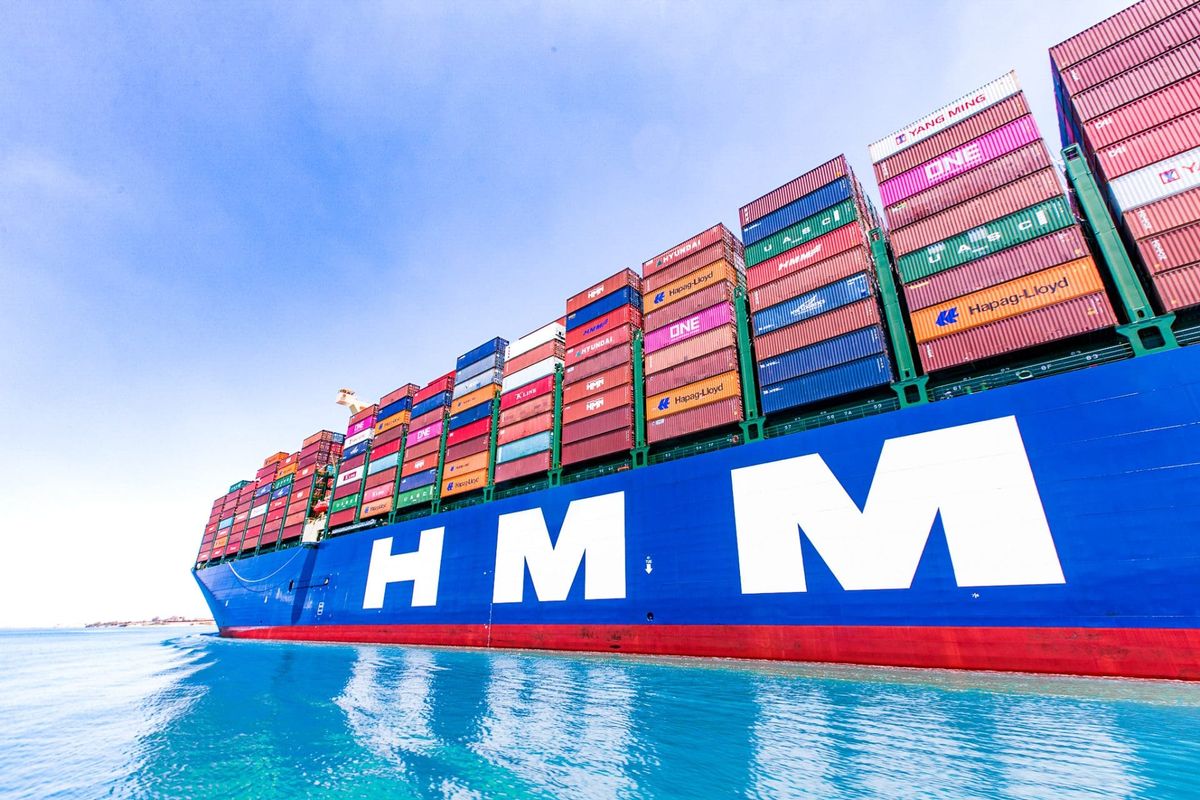
HMM Co., Ltd.’s 2025 Sustainability Report covers the period from 1 January to 31 December 2025, with selected qualitative developments from the first half of 2026. Headquartered in Busan, South Korea, HMM is a global maritime transportation company operating more than 150 vessels, over 64 service routes and a network reaching more than 100 ports. The report is HMM’s seventh sustainability report and provides three-year quantitative data to support trend analysis.
The reporting architecture is relatively advanced for the shipping sector. HMM states that the report has been prepared in accordance with GRI Standards 2021, while disclosures relating to its five material topics have been developed with reference to IFRS S1 and IFRS S2; it also references ESRS, Korean Sustainability Standards Board proposals, TCFD and SASB. This positioning reflects the increasingly complex disclosure environment confronting international shipping companies, which must simultaneously respond to climate reporting requirements, maritime emissions regulation and customer demand for value-chain carbon information.
The regulatory dimension is particularly significant because shipping decarbonisation now carries direct financial implications. HMM explicitly identifies the EU Emissions Trading System, FuelEU Maritime and IMO measures as sources of increasing compliance costs, placing carbon management closer to mainstream financial planning than conventional environmental reporting.
Governance architecture and accountability
HMM’s ESG governance structure is anchored at Board level through an ESG Committee composed entirely of independent directors. The committee is positioned as the highest decision-making body for sustainability matters, while an ESG Management Council chaired by the CEO conducts preliminary reviews and oversees implementation; a dedicated ESG Team coordinates working-level execution. This creates a relatively clear line from risk identification through strategic approval to implementation monitoring.
The structure becomes more significant when climate is examined specifically. Climate-related matters are integrated into Board oversight, the Risk Management Committee and operational teams, including the Climate Action Task Force and Technology & Innovation Institute. HMM also links climate-related KPIs for relevant executives and senior managers to compensation, including CII compliance, carbon-efficient transportation performance, alternative fuel supply chains and application of energy-saving technologies.
Board agendas in 2025 included approval of climate-related financial impact analysis, introduction of an internal carbon price and revision of the greenhouse gas reduction roadmap. This suggests that climate governance is moving beyond policy oversight toward investment, risk and financial decision-making.
Materiality approach and risk prioritisation
One of the report’s stronger methodological features is its double materiality assessment. HMM began with 103 sustainability topics, narrowed these to 16 and evaluated both the impacts of its activities on society and the environment and the potential financial consequences of sustainability-related developments. The methodology incorporates GRI, SASB, TCFD, ESRS topics, IMO priorities, stakeholder surveys, peer analysis, regulatory requirements and investment perspectives from major global asset managers.
Five material topics emerged: climate change response and GHG reduction; investment in low-carbon vessels, fuels and R&D; supply-chain ESG risk management; health and safety; and ethics and compliance. Four exceeded materiality thresholds from both impact and financial perspectives, while ethics and compliance was primarily impact-material.
Importantly, HMM attempts to connect these topics with identifiable risks, opportunities and response strategies rather than merely ranking them. For investors, this improves decision usefulness because issues such as alternative-fuel costs, regulatory exposure and supply-chain due diligence are presented as business variables rather than abstract ESG themes.
Climate, supply chain, and social dimensions
Climate is the defining ESG issue in HMM’s report. The company has brought forward its net-zero ambition from 2050 to 2045 and established a 2035 target to reduce company-wide GHG intensity by 50% from a 2024 baseline, covering Scope 1, Scope 2 and Scope 3 Category 3. Its transition strategy combines LNG- and methanol-capable vessels, alternative fuels, energy-efficiency technologies, fleet renewal and carbon-management systems.
The report goes further by quantifying climate-related financial impacts. HMM estimates approximately KRW 6 billion of additional fuel costs from typhoon avoidance in 2025, around KRW 46 billion of greenhouse gas regulatory compliance costs and approximately KRW 230 billion of incremental costs associated with dual-fuel vessels and low-carbon fuels. This is an important evolution from climate-risk identification toward financial materiality assessment.
Supply-chain ESG management is also becoming more formalised. HMM has standardised supplier ESG risk-based due diligence and identifies emerging supply-chain regulation, customer requirements and emissions disclosure as material pressures. However, company-wide supplier ESG assessment coverage fell from 86.4% in 2024 to 61.1% in 2025, while Supplier Code of Conduct signatory coverage stood at 35.1%, indicating that implementation breadth remains an area for further development.
Employment
HMM reported 4,752 employees across the company-wide reporting boundary in 2025, up from 4,592 in 2024 and 4,236 in 2023. Women represented 32.8% of employees, while the number of female managers increased from 262 to 289. The share of minority and vulnerable employees also increased to 21.6%, supported by initiatives involving employees with disabilities, foreign nationals, older employees and veterans.
There is nevertheless a visible difference between overall workforce diversity and management representation. Female managers and senior managers represented 6.3% of the total workforce, suggesting that leadership progression remains a relevant long-term human-capital indicator. HMM has introduced dedicated development programmes for female employees and has set a 2026 target to increase female representation among onshore employees from 32.8% to 33.74%.
The growing use of non-employee workers is another indicator worth monitoring. Their number rose from 989 in 2023 to 1,801 in 2025, accounting for 27.5% of the combined employee and non-employee workforce disclosed in the dataset. For shipping companies, this reinforces the importance of maintaining consistent labour, safety and human-rights controls across different employment arrangements.
Health and safety
Health and safety is appropriately classified as a material issue given the inherent risks of vessel operations, cargo handling and maritime logistics. HMM operates an ISO 45001-based management framework, company-wide safety KPIs and dedicated governance covering both onshore and onboard operations, while health and safety metrics are incorporated into management performance assessments.
The 2025 performance data require balanced interpretation. Total recordable injury rate improved from 0.22 to 0.17 incidents per 200,000 working hours, but the company reported one fatality and lost workdays increased sharply from 70 to 7,540; LTIFR also rose from 0.30 to 0.36. This indicates that frequency metrics alone cannot capture the severity dimension of occupational risk.
HMM’s detailed disclosure of cargo safety, dangerous goods controls and vessel maintenance is therefore important. Participation in international initiatives such as the World Shipping Council’s cargo-safety work, combined with controls for lithium-ion batteries and other high-risk cargoes, reflects the increasingly interconnected nature of employee, vessel and customer safety.
Product or service responsibility
For a shipping company, service responsibility centres on transportation reliability, cargo safety, emissions information, data security and customer experience. HMM operates cargo-management controls across general cargo, dangerous goods, special cargo and ultra-heavy cargo, supplemented by planned vessel maintenance and international cargo-safety collaboration.
A particularly relevant development is the Supply Chain Carbon Calculator, which estimates emissions across maritime and inland transportation and provides shippers with shipment-related carbon information. The Green Sailing Service goes further by allocating emissions reductions achieved through low-carbon fuel use to customers, potentially supporting customers seeking to address transport-related Scope 3 emissions.
Digitalisation also forms part of service responsibility. HMM operates continuous customer feedback monitoring and introduced a generative AI-based customer service system providing 24-hour information on schedules, freight rates, customs requirements and dangerous-goods transportation in 17 languages. Information governance is supported by an ISO 27001-oriented security framework, including data-loss prevention and access controls.
Philanthropy
HMM structures community activities around marine environmental protection, local community development and participation in global humanitarian initiatives. Its programmes include marine-waste recycling, beach clean-ups, employee volunteering, child welfare support, disaster donations and international relief transportation. The governance framework places social contribution under the ESG Committee and ESG Management Council rather than treating it purely as ad-hoc philanthropy.
Some initiatives are closely aligned with the company’s operating context. In 2025, HMM recycled retired vessel mooring ropes on 17 occasions, while 85 employees and family members participated in Adopt-a-Beach activities and 269 people participated in its Bluehmming plogging campaign.
This industry-linked approach provides greater strategic coherence than unrelated charitable donations. Future reporting could strengthen impact assessment by distinguishing activity measures such as participants or donations from longer-term environmental and social outcomes.
Metrics, targets, and data robustness
HMM provides three-year ESG datasets covering emissions, energy, environmental investment, safety, workforce diversity, human rights and supply-chain performance. The GHG inventory is particularly significant: DNV verified 2025 Scope 1 emissions of approximately 6.36 million tCO2e, location-based Scope 2 emissions of approximately 18,052 tCO2e and Scope 3 emissions of approximately 2.80 million tCO2e across nine disclosed categories.
Energy data demonstrate the scale of the transition challenge. Fuel oil still represented 90.45% of vessel energy consumption in 2025, while renewable energy accounted for only 0.48%, although biofuel consumption more than doubled and biomethanol appeared for the first time. The issue is therefore not whether HMM has initiated a fuel transition, but the speed at which alternative fuels can become material within a fleet consuming more than 24 million MWh annually.
Environmental investment rose substantially to KRW 773.9 billion in 2025, of which approximately KRW 770.9 billion related to climate response. Most expenditure was associated with new vessels, illustrating the capital-intensive nature of maritime decarbonisation.
Assurance, credibility, and comparability
HMM commissioned DNV to provide independent limited assurance over the Sustainability Report. The engagement was conducted under AA1000AS v3 Type 1 limited assurance and DNV’s VeriSustain protocol, with reference to ISAE 3000, and included sample-based testing, interviews and an onsite review.
GHG information received a separate limited-level verification engagement under ISO 14064-3:2019 with a 5% materiality threshold. DNV’s verification covered Scope 1, Scope 2 and nine Scope 3 categories under an operational-control boundary and concluded with an unmodified opinion.
There are nevertheless boundaries to the assurance. DNV states that supplier, contractor and third-party sustainability practices were excluded and external stakeholders were not interviewed. For a company whose material topics increasingly extend into supply chains, future assurance expansion toward selected value-chain indicators could enhance confidence in these disclosures.
Strategic implications for the sector
HMM’s report illustrates how shipping decarbonisation is increasingly becoming a capital-allocation issue. Carbon pricing, fleet replacement, alternative-fuel premiums and energy-efficiency investments can materially affect operating economics, while customers are simultaneously seeking lower-carbon transportation to reduce their own Scope 3 footprints.
This creates both transition risk and potential commercial opportunity. HMM’s Green Sailing Service generated KRW 457 million of green revenue in 2025, down from KRW 1.59 billion in 2024, indicating that the market remains relatively small compared with the company’s overall revenue but provides an early indicator of demand for differentiated low-carbon freight products.
The larger strategic question for shipping companies is therefore how quickly low-carbon services can move from niche offerings to mainstream freight solutions. Fuel availability, infrastructure, technology maturity, carbon regulation and customer willingness to pay will determine the pace of that transition.
ESG maturity and future positioning
HMM demonstrates relatively mature ESG architecture through Board-level governance, quantified double materiality, climate scenario analysis, internal carbon pricing, climate-related financial impact assessment and externally verified emissions data. These elements indicate a movement from sustainability reporting toward integration with risk management and strategic planning.
The next stage will be more difficult. Achieving a 50% reduction in GHG intensity by 2035 requires scaling alternative fuels far beyond current levels, while safety performance, supplier assessment coverage and supply-chain governance require continued attention. The company will also need to demonstrate whether substantial investments in low-carbon vessels translate into measurable absolute and intensity-based emissions improvements.
For investors, the most useful future disclosures would increasingly connect decarbonisation expenditure, regulatory costs, fuel choices and green-service revenue with financial planning. That would make the transition from ESG reporting to integrated sustainability-related financial information more visible.
Pacifica ESG View
HMM’s 2025 Sustainability Report reflects one of the clearest examples of how climate regulation is moving sustainability into the financial core of the shipping industry. Board oversight, an internal carbon price, climate financial-impact analysis, a verified Scope 1–3 inventory and substantial investment in low-carbon vessels provide a comparatively developed foundation.
The report is also appropriately transparent about unresolved issues. Fossil fuels still dominate vessel energy consumption, supplier ESG coverage declined, and the 2025 fatality and increase in lost workdays underline the continuing importance of operational safety.
HMM’s next phase of ESG maturity will therefore be defined less by adding new frameworks than by demonstrating measurable transition outcomes from the systems and capital investments it has already established.
Implications for the wider market
HMM illustrates a broader transformation in global shipping: decarbonisation is becoming simultaneously a regulatory requirement, capital expenditure challenge, customer proposition and financial risk.
For shipping companies, compliance with carbon regulation alone will not be sufficient. Competitive positioning may increasingly depend on fleet efficiency, access to scalable alternative fuels, credible emissions data and the ability to provide customers with verifiable transport-related carbon information.
The report also demonstrates the growing convergence between maritime regulation and mainstream sustainability reporting. As IFRS S2-style climate disclosure, supply-chain due diligence and carbon-cost exposure become increasingly interconnected, shipping companies will need sustainability, finance, operations and fleet investment decisions to operate within a much more integrated management framework.