Apical Sustainability Report 2025: From Traceability to Transition Readiness in the Palm Oil Value Chain
Apical Group’s 2025 Sustainability Report highlights progress in traceability, Scope 3 accounting, supplier engagement and smallholder inclusion, while showing how tighter climate and deforestation requirements are reshaping the palm oil sector.
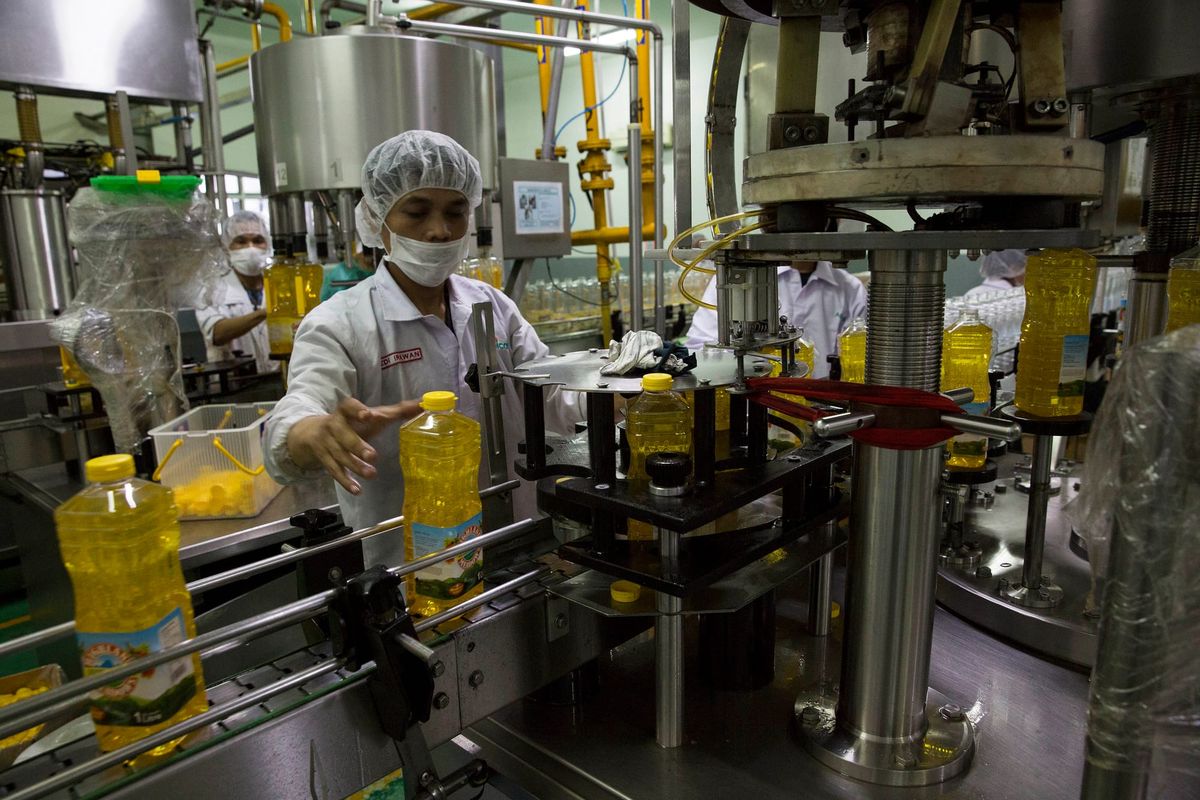
Apical Group’s 2025 Sustainability Report covers the period from 1 January to 31 December 2025 and encompasses operations in Indonesia, China and Spain, including eight refineries, five biodiesel plants, two kernel-crushing plants and six oleochemical plants, with additional human-resources data from Malaysia and Singapore. The report is prepared with reference to the GRI Standards 2021 and links relevant disclosures to the UN Sustainable Development Goals.
The report arrives at an important point for the palm oil sector. European market access is increasingly linked to traceability, geolocation and deforestation due diligence under the EU Deforestation Regulation. Following the EU's latest amendments, the EUDR is scheduled to apply to large and medium-sized operators from 30 December 2026 and to most micro and small operators from 30 June 2027. This makes Apical's near-complete plantation traceability, supplier risk profiling and EUDR-oriented supply-chain work commercially relevant rather than simply voluntary sustainability initiatives.
Climate reporting is moving in a similar direction. Apical's incorporation of scenario analysis, Scope 3 emissions and climate governance broadly follows the architecture now embedded in IFRS S2, which fully incorporates the TCFD recommendations. The report therefore increasingly sits at the intersection of traditional GRI impact reporting and emerging investor-focused sustainability disclosure.
Governance architecture and accountability
Apical presents a three-tier sustainability governance structure comprising strategic oversight by the Agri Business Board, executive leadership through the Leadership Team and operational implementation through dedicated sustainability and business functions. The Board oversees material ESG issues including climate risks, human rights, NDPE commitments and supply-chain performance, while sustainability matters are reviewed at quarterly Board meetings. The Group President, RGE President and RGE Managing Director provide another layer of executive coordination, including oversight of Apical2030 KPIs.
This architecture is more developed than a model in which sustainability remains primarily a reporting function. Apical states that sustainability considerations are incorporated into procurement, investment decisions, governance oversight and business strategy, while increasingly granular data enable supplier-level analysis and risk segmentation.
A notable feature is the connection between governance and financing. The Group reports meeting all three KPIs under its sustainability-linked loan in 2025. Such mechanisms can strengthen accountability where KPI definitions, verification and financial consequences are sufficiently robust.
Materiality approach and risk prioritisation
Apical conducted a high-level review of its material topics with an external consultant, consolidating 29 topics into ten core topics. The assessment combined document review, peer benchmarking, stakeholder surveys and interviews, followed by senior-management validation. Twenty-two respondents participated in the survey, supplemented by four interviews with external business stakeholders including customers and a financial institution.
The resulting topics cover biodiversity and deforestation, climate change, resource efficiency, responsible sourcing, governance and ethics, labour and human rights, stakeholder relations, product responsibility, human capital and community impact. This provides a relatively coherent representation of Apical's operational and value-chain impacts.
The principal limitation is that the methodology remains predominantly impact- and stakeholder-oriented rather than a full double-materiality or enterprise-value assessment. As investor-focused reporting develops, Apical could strengthen this process by more explicitly connecting material sustainability issues with revenue exposure, capital expenditure, operating costs, asset resilience and financing implications.
Climate, supply chain, and social dimensions
Supply-chain management is arguably the strongest component of the report. Apical states that it does not own plantations or mills and therefore depends heavily on third-party suppliers. Its A-SIMPLE framework integrates new-supplier screening, risk profiling, traceability, satellite monitoring, grievance processes, supplier engagement and independent verification.
In 2025, Apical reported 100% traceability to mill and 99.98% traceability to plantation for crude palm oil, alongside 100% plantation traceability for crude palm kernel oil and palm kernel. It also reported that 96% of sourced CPO volumes were "Delivering" on no-deforestation commitments under NDPE IRF v5.8, while 81% were "Delivering" on no-deforestation and no-peat requirements under version 6.0. The distinction between the two metrics is important because it avoids presenting traceability itself as equivalent to full sustainability compliance.
Climate disclosure has advanced significantly. Apical reported approximately 1.9 million tCO2e of Scope 1 and 2 emissions and 43.66 million tCO2e of Scope 3 emissions in 2025. Life-cycle assessments covering more than half of the supply base indicate that approximately 96% of product-carbon-footprint emissions originate upstream. This reinforces the strategic connection between climate action, sourcing and supplier transformation.
Employment
Apical employed 4,430 people at the end of 2025 across its operating footprint. Approximately 87.8% were permanent employees, while women represented 18.17% of the workforce. The latter reflects the operational profile of refining and processing activities but also identifies an area where recruitment, career progression and workforce planning can be tracked over time.
Employee turnover was 22.44%, representing 994 departures, while 1,027 people were hired, producing a hiring rate of 23.18%. These figures suggest a relatively active labour market around the business rather than workforce contraction, with total employment increasing modestly by 0.63%.
Human-capital investment increased during the year. Average training reached 14.86 hours per employee, up from 11.42 hours in 2024, with management development, technical competencies and sustainability incorporated into training programmes. Apical also reported that 1,589 refinery employees, representing 38% of employees, were covered by collective bargaining agreements.
Health and safety
Apical's occupational health and safety framework incorporates hazard identification and risk assessment, incident investigation, emergency planning, employee participation, contractor controls and site-level safety committees. Five additional Indonesian facilities obtained occupational health and safety management certification during 2025, adding a formal systems component to operational safety management.
The performance data show a mixed picture. Total recordable work-related injuries declined from 25 cases in 2024 to 11 in 2025, a reduction of 56%, and the Group maintained zero fatalities. However, high-consequence injuries increased from three to eight, while lost workdays increased to 362.
This distinction is analytically important. A lower total injury count does not automatically indicate a reduction in severe-risk exposure. Apical's disclosure of the deterioration in high-consequence incidents adds credibility and identifies high-temperature processes, mechanical hazards and movement within active work areas as continuing operational priorities.
Product or service responsibility
Product responsibility is particularly material for a processor supplying food, oleochemicals, animal nutrition and renewable-fuel markets. Apical's framework combines critical control points, internal and third-party audits, certified-product segregation and monitoring through its Plant Information Management System. Product-quality risks are also reviewed quarterly by the Risk Management Committee.
The Group maintains certifications including FSSC 22000, ISO 9001, GMP, HACCP and ISO 17025, together with relevant local requirements. It reported zero incidents of non-compliance relating to product health and safety regulations in 2025.
The creation of the Apical Innovation Centre adds another dimension: sustainability is increasingly connected with product development, alternative formulations and customer applications. The strategic value will depend on whether future reporting can quantify environmental benefits rather than relying primarily on descriptions of innovation activities.
Philanthropy
Apical's community programmes extend beyond conventional corporate donations and are increasingly structured around livelihoods, smallholders and landscape resilience. Its Sustainable Living Village programme expanded to 15 villages, while 2,834 independent smallholders had achieved RSPO certification through the SMILE programme by the end of 2025.
Community programmes reported outcomes including a 55% reduction in identified stunting cases, nutritional support for 81 children, upgrades to 45 community healthcare facilities, training for 75 teachers, support for micro-enterprises and planting of 500 mangrove trees. The Group also uses Social Impact Assessments to guide community intervention, completing assessments for two additional facilities in 2025.
For ESG analysis, this outcome-oriented framing is preferable to reporting philanthropic expenditure alone. Future disclosure could nevertheless benefit from clearer multi-year impact indicators showing whether improvements remain sustained after individual interventions end.
Metrics, targets, and data robustness
Apical2030 provides ten time-bound targets across four pillars, which creates a useful basis for evaluating performance rather than focusing solely on annual activities. Progress is uneven, and the report generally makes this visible. Scope 1 and 2 emissions intensity was 16.03% below the 2020 baseline but increased 6.51% year-on-year, while renewable-energy use fell significantly because of biomass supply constraints.
Other targets also show implementation gaps. Apical aims to protect 150,000 hectares of forest or peatland by 2030, compared with 27,758 hectares identified as protected by 2025, while only one supplier biogas plant had been achieved against a target of 20. Water-use intensity remained above the 2020 baseline despite improving relative to 2024.
The completion of a GHG Protocol-based Scope 3 inventory represents a significant data-maturity step. However, Apical explicitly notes that its earlier 2023 estimate is not directly comparable with 2024-2025 because the methodology changed. Maintaining methodological consistency and explaining future recalculations will therefore be important for credible trend analysis.
Assurance, credibility, and comparability
The sustainability information was independently assured by Control Union (Malaysia), with assurance work covering operations in Indonesia, China and Spain and providing a moderate level of assurance. The assurance results were reported to senior leadership and the Sustainability Report was reviewed and approved by the Leadership Team.
The assurance statement applies AA1000AS Type 2 Moderate Assurance, examining both the AccountAbility Principles and selected sustainability performance information. This is stronger than an assurance engagement focused solely on narrative principles because it includes testing of specified performance data.
Looking forward, reporting comparability may increasingly be shaped by investor-focused sustainability assurance and disclosure frameworks. Apical's climate reporting is already moving toward the governance-strategy-risk-metrics architecture associated with IFRS S2, and the ISSB continues to develop implementation guidance and nature-related disclosure requirements.
Strategic implications for the sector
Apical's report illustrates how the competitive parameters of palm oil are changing. Traceability, deforestation verification, human-rights due diligence and product-carbon data are increasingly becoming prerequisites for accessing customers, financing and regulated markets rather than standalone ESG differentiators.
The EUDR reinforces this shift because palm oil is explicitly among the commodities covered by the regulation, requiring relevant operators to demonstrate that products are deforestation-free and legally produced. Midstream processors therefore have a growing role as data intermediaries between plantations, mills, customers and regulators.
Climate creates a second structural challenge. With most lifecycle emissions concentrated upstream, refinery efficiency alone cannot deliver value-chain decarbonisation. Supplier-specific emissions data, methane management, peatland practices, fertiliser use and land-use change will increasingly determine the credibility of palm oil companies' transition strategies.
ESG maturity and future positioning
Apical's 2025 report indicates a transition from policy formation toward systems-based implementation. Governance structures, near-complete traceability, supplier segmentation, scenario analysis, Scope 3 accounting, community programmes and external assurance provide a relatively mature foundation.
The next stage is likely to require greater integration between sustainability information and enterprise economics. Climate scenarios could be linked more explicitly to financial impacts, adaptation expenditure and capital allocation; supply-chain due diligence could disclose more quantified remediation outcomes; and nature-related dependencies could be assessed using more location-specific methods. This direction is consistent with the ISSB's ongoing work on nature-related risks, which is considering location-specific assessment and nature-related scenario analysis.
The principal test of maturity will therefore be less about adding new policies and more about demonstrating measurable outcomes, comparability and decision-useful connections between sustainability performance and business resilience.
Pacifica ESG View
Apical's 2025 Sustainability Report shows a company moving beyond high-level palm-oil commitments toward increasingly operational ESG systems. Near-complete plantation traceability, supplier risk profiling, a full Scope 3 inventory and structured climate governance provide stronger foundations for responding to tightening market expectations.
The report is also notable for disclosing areas where progress is incomplete: renewable-energy use weakened, Scope 1 and 2 emissions intensity rose year-on-year, several Apical2030 targets remain distant, and high-consequence safety incidents increased. This balance improves analytical usefulness.
Future progress will depend increasingly on connecting these operational indicators with financial exposure, transition investment and measurable supplier outcomes. For Apical, ESG maturity is therefore shifting from demonstrating systems and commitments toward demonstrating whether those systems consistently change environmental and social outcomes.
Implications for the wider market
Apical's disclosures illustrate a wider transition across agricultural commodity supply chains. Traceability is becoming the infrastructure upon which deforestation due diligence, carbon accounting, human-rights management and customer assurance are built.
For palm-oil processors and traders, EUDR readiness will require more than plantation coordinates. Companies will need credible supplier governance, reliable data, risk classification, remediation processes and evidence capable of withstanding customer and regulatory scrutiny. Meanwhile, Scope 3 accounting is making upstream agricultural practices increasingly relevant to corporate climate strategy.
The competitive divide may therefore shift from companies that publish sustainability commitments to those capable of producing traceable, verifiable and decision-useful ESG information across thousands of upstream relationships. In that environment, data quality and supplier capability become strategic infrastructure rather than reporting functions.