South Korea’s Hyundai LNG Shipping Sustainability Report 2025: Decarbonisation, Maritime Safety and ESG Execution in a Tighter Regulatory Environment
South Korea’s Hyundai LNG Shipping Sustainability Report 2025 highlights progress in emissions efficiency, maritime safety, ESG governance and supplier oversight as EU ETS, FuelEU Maritime and IMO climate rules reshape the shipping sector.
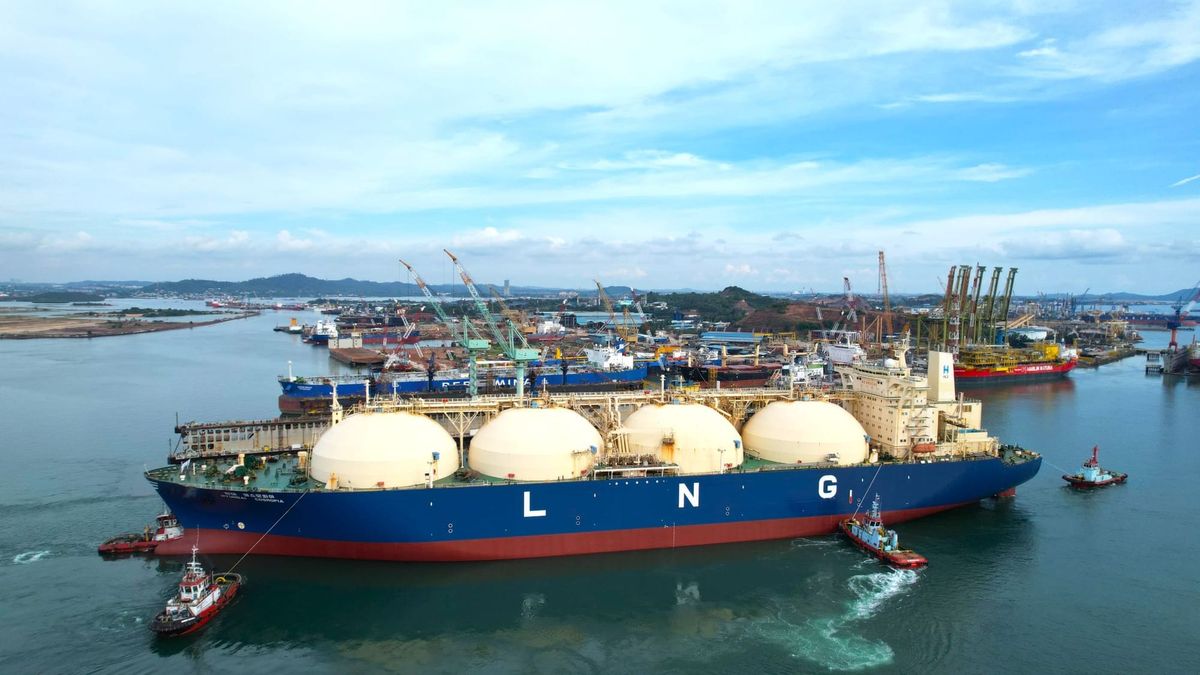
Hyundai LNG Shipping’s Sustainability Report 2025 provides a detailed view of how a specialist LNG carrier is responding to increasingly complex environmental, safety and governance expectations in global shipping. The report principally covers fiscal year 2024, from January to December, with some developments from the first half of 2025 included where relevant. It is prepared with reference to the GRI Standards 2021 and also maps disclosures to the UN Sustainable Development Goals, TCFD and SASB.
The regulatory backdrop is particularly significant because shipping is moving from largely efficiency-based environmental management toward increasingly explicit carbon constraints. Hyundai LNG Shipping identifies EU Emissions Trading System requirements, FuelEU Maritime, IMO carbon-intensity requirements and evolving IMO greenhouse-gas standards as material regulatory risks. For LNG shipping operators, this means emissions performance is becoming connected not only with environmental reputation but also with vessel competitiveness, operating costs, chartering decisions and potentially asset value.
The company reported KRW460.5 billion in 2024 sales and operates in a sector where long-term charter relationships can provide revenue stability while exposing operators to long-dated technology choices. This makes the transition challenge distinctive: ships commissioned today may remain operational through multiple rounds of tightening climate regulation. ESG analysis therefore needs to assess both current performance and whether fleet, technology and risk-management decisions are sufficiently adaptable for the next phase of maritime decarbonisation.
Governance Architecture and Accountability
Hyundai LNG Shipping has established an ESG framework organised around environmental management, social responsibility and transparent governance. Climate and environmental issues are overseen through an Environment, Safety and Health Committee involving the CEO, senior executives and relevant departments, while the Financial Planning & Analysis function monitors broader environmental-management implementation. This provides a visible connection between sustainability topics and senior management rather than leaving them solely within operational or compliance teams.
The company also operates an integrated risk-management framework under guidelines established in 2023. Risks are identified, analysed and classified according to likelihood and impact, with specific countermeasures assigned. Notably, failure to comply with EU ETS, FuelEU Maritime requirements, CII performance and future IMO GHG standards appears explicitly within the corporate risk framework, demonstrating that maritime sustainability regulation is being treated as an enterprise risk rather than a reporting issue.
Governance indicators provide additional context. The company held 14 board meetings during the reporting year, comprising four regular and ten extraordinary meetings, with a reported attendance rate of 95%. Ethical management training reached 645 participants across 104 sessions with a reported participation rate of 100%, while no corruption cases or violations of environmental and unfair-trade regulations were reported.
Materiality Approach and Risk Prioritisation
A notable feature of the report is the use of double materiality assessment. Hyundai LNG Shipping evaluates issues through both financial materiality—how sustainability issues can affect the company—and impact materiality—how its activities affect society and the environment. Stakeholder groups considered include customers, shareholders and investors, employees, suppliers and local communities, supported by channels ranging from board and labour-management meetings to surveys and grievance mechanisms.
The assessment incorporates GRI and ISO-related standards, industry benchmarking, stakeholder surveys and external ESG expert review. Environmental management and climate response emerge among the company’s core material topics, alongside safety and disaster prevention, customer satisfaction and sound corporate management. The structure is relevant because it moves the report beyond a catalogue of ESG activities and attempts to prioritise issues according to business and stakeholder significance.
However, the methodology remains more management-oriented than financially quantified. The report identifies risks and provides qualitative assessments of likelihood and severity, but it does not yet translate most climate or transition risks into detailed financial effects, scenario-linked asset exposure or capital-at-risk measures. This represents a potential area for future development as sustainability reporting increasingly converges with financial risk analysis.
Climate, Supply Chain and Social Dimensions
Hyundai LNG Shipping reduced combined Scope 1 and Scope 2 emissions from 930,483 tCO₂e in 2022 to 865,425 tCO₂e in 2023 and 836,475 tCO₂e in 2024. Emissions intensity also fell from 6.69 g/dwt-km to 5.16 g/dwt-km over the same period. The downward trend is significant because it suggests improving operational carbon efficiency rather than relying solely on policy commitments.
The company states a long-term objective of reducing GHG emissions intensity by 40% by 2030 compared with a 2008 baseline, consistent with the IMO framework referenced in the report. Its 2025 intensity goal is 3.89 g/dwt-km, implying that further improvement will be required beyond the progress already recorded. Measures include weather-routing services, weather-monitoring systems, electronic engine-control systems, silicon-based hull coatings and broader digital optimisation of vessel operations.
Technology investment is therefore becoming an important part of the transition strategy. Eco-friendly investment increased from KRW2.364 billion in 2022 to KRW5.45 billion in 2024, while the company is developing an AI-based carbon-emissions management system. The direction of travel suggests increasing use of vessel data and digital tools to connect fuel consumption, navigation and regulatory compliance.
Supply-chain governance is less carbon-centric but increasingly structured around ESG assessment. Hyundai LNG Shipping incorporates safety, health, anti-corruption and fair-trading provisions within major supplier arrangements and conducts ESG assessments of selected business partners. The report highlights 40 companies undergoing supply-chain ESG assessments in 2024, seven more than in the previous year, indicating an expanding though still developing supplier oversight system.
Employment
Human-capital management is important for a shipping operator because performance depends on both shore-based specialists and highly trained seafarers. Hyundai LNG Shipping reported 167 new hires in 2024 and no layoffs, while investments in employee education increased as a proportion of sales from 0.05% in 2022 to 0.07% in 2024. Training hours for both shore-based staff and seafarers also increased compared with the previous year.
Employee welfare expenditure reached approximately KRW3.4 billion in 2024, up substantially from KRW2.5 billion in 2023. The company operates labour-management councils for both shore personnel and seafarers and reported no labour disputes or strikes. This combination of training, welfare expenditure and structured labour dialogue suggests that workforce stability is treated as an operational requirement rather than simply a social disclosure.
Human-rights governance is also becoming more formalised. The report records a 91% human-rights impact assessment completion rate and zero reported cases of discrimination, bullying, sexual harassment or violence. Future reporting could become more informative if it provides greater segmentation of workforce demographics, retention and human-rights risks across seafaring and shore-based roles.
Health and Safety
Safety is one of Hyundai LNG Shipping’s most financially material social issues because maritime incidents can generate consequences for employees, cargo owners, coastal environments and vessel operations simultaneously. Safety and health investment rose from KRW1.152 billion in 2022 to KRW2.291 billion in 2024, while the reported disaster rate declined from 0.86% to 0.52%. No serious disasters were reported during the three-year period.
The company reported zero vessel accidents and detentions in 2024 and provides approximately 18 hours of safety training per seafarer. Its management framework is supported by ISO 45001 certification, alongside ISO 9001 for quality management and ISO 14001 for environmental management. These systems provide procedural foundations, although effective maritime safety ultimately depends on operational culture, maintenance, competency and consistent implementation onboard vessels.
For investors and charterers, the declining incident trend is positive but should be viewed as an area requiring continuous rather than completed improvement. A single severe maritime incident can outweigh several years of incremental safety gains. The materiality of safety therefore justifies the company’s continued emphasis on prevention, training, vessel integrity and emergency preparedness.
Product or Service Responsibility
For Hyundai LNG Shipping, service responsibility is primarily reflected in safe, reliable and efficient transportation rather than consumer product characteristics. Customer satisfaction reached 96.4 points in 2024, and the company describes mechanisms for collecting customer feedback and incorporating it into operational improvements. Maintaining strong customer relationships is particularly important in LNG shipping because charter contracts can be long term and customers often have demanding operational, safety and environmental requirements.
Digitalisation is increasingly connected with service quality. The report describes continued digital investment, including navigation optimisation, real-time fuel-efficiency monitoring and systems designed to improve both operational stability and environmental performance. This creates a potential convergence between customer service, carbon management and vessel efficiency.
As charterers strengthen their own Scope 3 and supply-chain decarbonisation strategies, shipping providers may increasingly be evaluated on verified emissions intensity and voyage-level data. Hyundai LNG Shipping’s digitalisation initiatives may therefore have value beyond internal efficiency if they can support more granular and credible emissions information for customers.
Philanthropy
Community engagement is organised around three themes: sustainable oceans, future generations and reducing inequality. The company undertakes employee-participatory programmes including volunteering and community initiatives, rather than relying exclusively on financial donations. Community donations increased from KRW70 million in 2022 and 2023 to KRW82.3 million in 2024.
Examples include mural volunteering at elementary schools in Seoul and Busan, support for the Korea Maritime and Ocean University ETRS Center, and procurement from Bear Better, a social enterprise employing people with developmental disabilities. In 2024, Hyundai LNG Shipping purchased approximately KRW9.2 million of products from the enterprise for employee welfare and related purposes.
These initiatives provide evidence of structured community participation, but they should remain proportionate within an assessment of ESG performance. For a shipping company, the most material social contribution ultimately remains safe employment, reliable transportation, responsible supply-chain practices and avoidance of environmental harm.
Metrics, Targets and Data Robustness
The report provides three-year trend data for many core indicators, making it possible to assess direction rather than viewing a single reporting year in isolation. GHG emissions, emissions intensity and disaster rates decreased, while environmental investment, safety expenditure, training investment and community donations increased. This multi-year presentation is one of the stronger aspects of the disclosure.
Environmental data show some complexity beyond the headline carbon trend. Scope 1 emissions dominate the footprint at 836,382 tCO₂e in 2024, while office electricity generates only 94 tCO₂e of Scope 2 emissions. This concentration means that meaningful decarbonisation depends principally on vessel fuel, operating efficiency and eventually lower-carbon propulsion rather than conventional corporate renewable-electricity measures.
The report does not present a comprehensive Scope 3 inventory comparable to its Scope 1 and 2 disclosure. That gap matters increasingly as charterers, financiers and international sustainability frameworks seek more complete value-chain information. Developing Scope 3 boundaries and clarifying upstream fuel lifecycle emissions could strengthen future comparability, particularly as maritime regulation increasingly incorporates well-to-wake carbon intensity.
Assurance, Credibility and Comparability
The 2025 Sustainability Report underwent independent assurance by ESG Innovation Network. The assurance was conducted under AA1000AS v3 using a Type 2 approach and a Moderate Level of assurance, covering both the application of accountability principles and aspects of data reliability. The verifier assessed inclusivity, materiality, responsiveness and impact and stated that no matters were identified indicating material misstatement in the information reviewed.
The assurance statement also confirms review of the reporting processes, material-issue determination, sustainability data development and internal management systems, with GRI Standards 2021 and ISO 26000 used as reference points. Type 2 assurance adds credibility because it extends beyond assessing principles alone to consider the reliability of specified sustainability performance information.
Nevertheless, users should distinguish moderate assurance from the higher confidence associated with reasonable assurance and should examine the precise indicators within the assurance scope. Over time, stronger alignment between maritime emissions data used for IMO, EU MRV and other regulatory purposes and externally assured sustainability information could further improve consistency.
Strategic Implications for the Sector
Hyundai LNG Shipping illustrates the broader transition challenge facing LNG shipping. LNG remains strategically important to energy security in many markets, yet vessels transporting it operate within an increasingly carbon-constrained maritime system. Operators therefore face simultaneous pressure to maintain fleet reliability, improve efficiency, comply with evolving carbon regulation and avoid technological lock-in.
The regulatory risk table in the report is particularly revealing. EU ETS compliance, FuelEU Maritime, CII performance and future IMO GHG requirements are treated alongside traditional financial, governance and operational risks. This suggests that environmental regulation is moving into the core economics of shipping rather than remaining an external sustainability requirement.
Digital efficiency measures can provide near-term reductions, but the longer-term challenge will involve propulsion technologies, fuel pathways and fleet renewal. LNG carriers may need to evaluate bio-LNG, synthetic methane, ammonia, hydrogen-derived fuels, carbon capture and other options as technologies and regulatory frameworks evolve. The report does not commit to a single pathway, which is reasonable given continuing uncertainty, but maintaining technological flexibility is likely to remain strategically important.
ESG Maturity and Future Positioning
Hyundai LNG Shipping demonstrates an increasingly structured ESG management system, with senior governance, double materiality assessment, climate risk integration, third-party assurance and multi-year performance data. Its declining emissions intensity, expanding environmental and safety investment, supplier assessments and ISO-certified management systems indicate progress beyond basic ESG disclosure. The company also appears to recognise that regulatory compliance and operational sustainability are becoming closely interconnected.
The next stage of maturity would involve deeper quantification. Financial impacts of climate scenarios, full value-chain emissions, vessel-level transition pathways and clearer links between sustainability targets and investment planning would allow stakeholders to assess transition readiness more precisely. These enhancements would be particularly relevant for a capital-intensive industry where vessels have long operating lives.
Hyundai LNG Shipping’s future positioning will therefore depend less on publishing additional ESG policies than on converting existing management systems into measurable transition performance. Its 2024 results show positive efficiency trends, but increasingly stringent maritime carbon rules mean that the benchmark itself is continuing to move.
Pacifica ESG View
Hyundai LNG Shipping’s Sustainability Report 2025 reflects a company moving from conventional maritime ESG management toward closer integration of carbon regulation, vessel efficiency, safety and enterprise risk. The decline in emissions from 930,483 tCO₂e in 2022 to 836,475 tCO₂e in 2024, alongside improving emissions intensity and higher environmental investment, provides measurable evidence of progress. At the same time, the dominance of vessel Scope 1 emissions and absence of a comprehensive Scope 3 inventory show where future reporting can deepen. The most important signal is that EU ETS, FuelEU Maritime, CII and IMO GHG requirements are already embedded in corporate risk analysis. For Hyundai LNG Shipping, ESG maturity will increasingly be judged by how effectively this governance architecture influences fleet, fuel and capital decisions.
Implications for the Wider Market
The report demonstrates why shipping ESG is becoming increasingly operational and financially relevant. Carbon intensity, vessel technology, safety performance and emissions data are progressively influencing compliance costs, charterer expectations and asset competitiveness. Other Asian shipping companies may face growing pressure to combine IMO and EU regulatory data with externally assured sustainability reporting and more complete value-chain emissions information. Double materiality and supplier ESG assessment are also moving into maritime reporting, broadening scrutiny beyond vessel emissions alone. The emerging market direction suggests that stronger ESG performers will not necessarily be those with the most ambitious narratives, but those able to demonstrate credible emissions trajectories, safe operations, adaptable fleets and reliable data across increasingly complex regulatory regimes.