Huawei 2025 ESG Review: China’s Technology Giant on Climate, Supply Chains and Digital Trust
An in-depth analysis of Huawei’s 2025 Sustainability Report, examining its climate strategy, Scope 3 emissions, supply chain responsibility, workforce, digital trust, ESG governance and readiness for evolving global disclosure expectations.
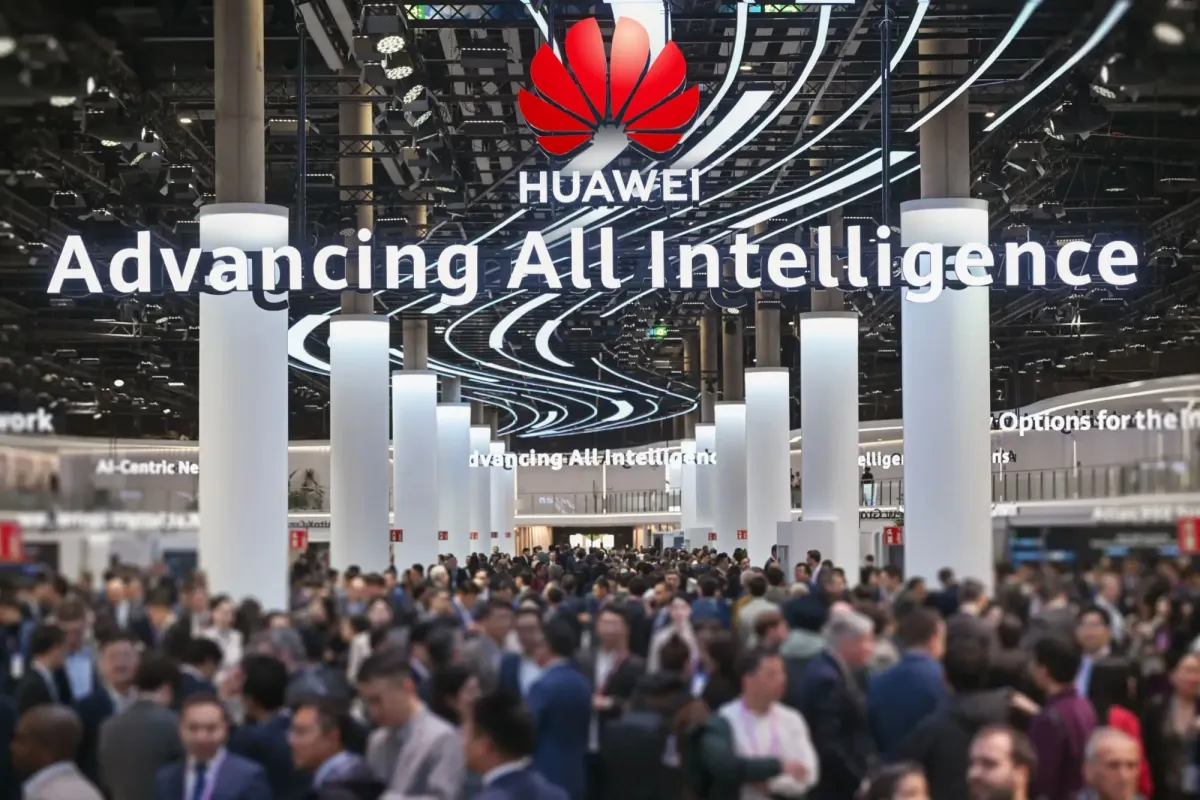
Huawei’s Sustainability Addendum to Huawei 2025 Annual Report reflects a reporting model that has become increasingly common among large global companies: sustainability information is no longer treated as a standalone corporate-responsibility publication, but integrated with mainstream annual reporting. Huawei has published annual sustainability reporting since 2008 and, since 2023, has combined its sustainability report with its annual report while allowing business units and regional subsidiaries to publish additional reports where local compliance or stakeholder requirements warrant them. The 2025 reporting boundary covers entities over which Huawei has control or significant influence and the reporting period runs from 1 January to 31 December 2025. The sustainability information is prepared in accordance with the GRI Standards and supported by a separate sustainability addendum and GRI content index.
The broader reporting environment is shifting toward greater integration between impact reporting and financially material sustainability information. IFRS S1 requires disclosure of sustainability-related risks and opportunities that could affect cash flows, access to finance or cost of capital, while IFRS S2 applies that investor-oriented logic specifically to climate. In Europe, companies subject to the CSRD report under ESRS, and the European Commission adopted revised ESRS in July 2026 to reduce reporting burden while retaining coverage of issues including climate, biodiversity and human rights. Huawei does not position this addendum as an ISSB or ESRS report, but its increasing use of impacts, risks and opportunities—or IROs—shows movement toward the terminology now shaping international sustainability disclosure.
Governance architecture and accountability
Huawei reports a three-layer sustainability governance structure comprising the Board of Directors, the Corporate Sustainable Development Committee and its sub-committees, and the Corporate Sustainable Development Working Group. According to the addendum, this structure is intended to integrate sustainability IROs into strategy implementation, major decision-making, risk management and daily operations. The company also describes its sustainability management system as being built around the Plan-Do-Check-Act cycle and aligned with references including ISO 26000 and the RBA Code of Conduct.
This is a relatively mature organizational foundation, but the addendum provides less visibility into the mechanics of board accountability than investors increasingly expect. For example, it does not quantify how frequently the Board reviews individual sustainability topics, whether sustainability indicators influence senior executive remuneration, or how climate and other ESG competencies are assessed at board level. Those disclosures would strengthen comparability with investor-focused frameworks such as IFRS S1 and S2, where governance over sustainability-related risks and opportunities is a core disclosure area.
Materiality approach and risk prioritisation
One of the more significant developments in Huawei’s 2025 disclosure is the explicit presentation of major sustainability topics as impacts, risks and opportunities. Climate change is connected to physical disruption from earthquakes, typhoons and floods, potential reconstruction and supply-backup expenditure, and transition-related R&D requirements for increasingly energy-efficient products. At the same time, Huawei identifies opportunities in clean power generation, mobility electrification and green ICT infrastructure. Similar IRO framing is applied to supply-chain sustainability, human rights, regulatory compliance, EHS, biodiversity, digital inclusion and cyber security.
The limitation is that the addendum does not itself provide a detailed methodology showing how these topics were scored, prioritized or validated. Its GRI index instead directs readers to the main annual report for the process used to determine material topics. Consequently, the document demonstrates broad issue identification more clearly than it demonstrates an ESRS-style double-materiality assessment linking impact severity, likelihood and financial effects to thresholds. For global companies facing converging GRI, ISSB and European reporting expectations, making this analytical bridge more visible would improve decision-usefulness.
Climate, supply chain, and social dimensions
Climate performance illustrates both the strength and complexity of Huawei’s ESG profile. In 2025, Huawei reported 110,745 tCO2e of Scope 1 emissions, 3.18 million tCO2e of market-based Scope 2 emissions and 6.59 million tCO2e of Scope 3 emissions, meaning that approximately two-thirds of its reported footprint sits in the value chain. Purchased goods and services alone accounted for about 4.74 million tCO2e. The company therefore increasingly treats decarbonization as a procurement and logistics challenge rather than simply an operational-energy issue.
Huawei reports that suppliers representing at least 90% of procurement spending are assessed annually for CSR risk, with more than 1,600 major suppliers rated and 238 onsite CSR audits undertaken in 2025. This architecture is increasingly relevant as supply-chain regulation moves from policy commitments toward risk-based due diligence; the EU’s corporate sustainability due-diligence regime, for example, addresses adverse human-rights and environmental impacts in company operations and value chains, although its requirements and scope continue to evolve. Huawei’s supplier controls therefore represent both operational risk management and potential regulatory readiness.
Employment
Huawei reported approximately 213,000 employees across 166 countries and regions at the end of 2025, with 53.7% working in R&D and a 63.8% localization rate among employees outside China. Women represented 22% of the workforce, up from 20.5% in 2021, while employees aged 30–50 accounted for the majority of personnel. The company states that employment practices are governed by its Caring for Employees Policy and Business Conduct Guidelines covering discrimination, working hours, compensation, freedom of association, privacy and other workplace rights.
Human-capital investment is particularly visible in skills development. Average training was 48.7 hours per employee in 2025, more than 15,000 mentors supported new employees, and over 29,000 internal trainers delivered lectures. More than 10,000 employees also moved internally into new roles through Huawei’s mobility mechanisms. However, some workforce indicators remain unavailable or undisclosed in the GRI index, including new-hire and turnover information, parental leave data and the gender remuneration ratio, limiting external assessment of retention and pay-equity outcomes.
Health and safety
Huawei’s occupational health and safety approach is more operationally detailed than many other social disclosures. The company states that its EHS management system covers all operational activities and employees and is supported by ISO 45001-based processes, dedicated EHS personnel and a three-tier prevention framework covering inherently safer design, process safety management and emergency response. In 2025, delivery managers conducted more than 2,400 site visits, while engineering-project safety campaigns, emergency drills and extensive subcontractor training reinforced implementation.
Technology is increasingly embedded in that control environment. Huawei reports that AI-assisted EHS audits using multimodal large models were deployed at 94% of customers’ network sites, supporting identification of PPE, fire-extinguisher, electrical and access-control risks. The combination of conventional management systems and AI-enabled monitoring is notable, although future reporting would benefit from outcome indicators that demonstrate whether these systems are reducing injury frequency and severity over multiple years rather than focusing primarily on activity measures.
Product or service responsibility
For an ICT company, product responsibility extends well beyond conventional product safety. Huawei explicitly identifies cyber security, privacy protection and responsible AI as material sustainability issues, reflecting the growing overlap between technology governance and ESG. The targets table reports zero Level-1 cyber security incidents and zero Level-1 personal-data leaks in 2025, while the GRI index links customer privacy and product health-and-safety disclosures to more detailed sections of the main annual report.
Service resilience is another material dimension. More than 6,000 Huawei engineers supported a 24/7 global network-support system and responded to more than 300 major events and natural disasters in 2025, underlining the societal importance of communications infrastructure during emergencies. For the ICT sector, this suggests that ESG assessment increasingly needs to consider reliability, digital safety, privacy, AI governance and infrastructure resilience alongside environmental footprints.
Philanthropy
Huawei’s community programs are more closely connected with its technology capabilities than a traditional donation-led philanthropy model. Its digital-inclusion activities focus on education, environment, health and development, with more than 60 global and local partners participating since the initiative began in 2019. By the end of 2025, Huawei reported that education projects had reached more than 1,790 schools and over 700,000 beneficiaries, while its ICT Academy had trained more than 1.8 million students.
Nature-related projects also illustrate how the company applies digital capabilities to public-interest outcomes. Examples include sensors monitoring mangrove ecosystems in Brazil and an AI-enabled coral identification system developed with partners in China that identified 60 coral species and 74 fish species. These initiatives are distinct from a full assessment of Huawei’s own nature-related dependencies and impacts, however. TNFD increasingly encourages companies to examine dependencies, impacts, risks and opportunities across governance, strategy, risk management and metrics, suggesting a potential next step from “technology for conservation” toward systematic corporate nature-risk disclosure.
Metrics, targets, and data robustness
Huawei’s targets-and-metrics section is one of the addendum’s strongest features because it consolidates economic, social, environmental and governance data across three years. The company achieved its target of reducing Scope 1 and Scope 2 emissions intensity per unit of sales revenue by 16% from a 2019 baseline, reaching 1.90 tCO2e per CNY million of revenue in 2025. It also reports that all top 100 suppliers by procurement spending had carbon-reduction targets, while the average energy efficiency of major products was 3.4 times the 2019 level, exceeding a 2.7-times target.
Absolute trends provide an important counterpoint. Electricity consumption increased from 5.64 billion kWh in 2023 to 9.44 billion kWh in 2025, Scope 3 emissions rose from 4.84 million to 6.59 million tCO2e, and China-region water consumption increased from 18.96 million to 28.67 million cubic metres. This illustrates why intensity improvements should be assessed together with absolute environmental pressures. Positively, Huawei transparently restated historical employee-training data after changing its calculation formula, an important indicator of developing data governance.
Assurance, credibility, and comparability
Huawei engaged BSI to provide independent assurance over the sustainability information, adding an important credibility layer to the reporting architecture. The external statement describes a limited assurance engagement conducted in accordance with ISAE 3000 (Revised) and covers both GRI-based report preparation and specified sustainability performance information, using procedures including management interviews, document review, assessment of materiality processes and review of reported sustainability data. The assurance statement therefore provides more than a generic verification claim, although limited assurance inherently provides a lower level of confidence than reasonable assurance.
Comparability remains more mixed. Huawei offers three-year data for many important indicators and separately reports market- and location-based Scope 2 emissions, which supports trend analysis. Yet several GRI indicators are unavailable or subject to confidentiality restrictions—including parts of workforce, remuneration, materials and other datasets—creating gaps for analysts seeking systematic peer comparisons. Continued convergence between sustainability reporting and financial-reporting disciplines is likely to increase expectations around boundary consistency, estimation methodology, internal controls and assurance-ready datasets.
Strategic implications for the sector
Huawei’s disclosures illustrate a structural ESG shift across the technology sector. The sustainability footprint of digitalization increasingly sits simultaneously in rising electricity demand, semiconductor and mineral supply chains, product energy efficiency, data centers, cyber security, AI governance and infrastructure resilience. This makes narrow carbon reporting inadequate: climate, human rights, minerals, circularity, digital responsibility and operational resilience increasingly need to be managed as interconnected enterprise risks.
The report also highlights a strategic tension surrounding AI. Digital technologies can improve energy systems, biodiversity monitoring and workplace safety, but the expansion of data-intensive infrastructure increases electricity and resource demand. Huawei itself recognizes the sharp growth in electricity demand associated with large data centers while positioning digital power and energy-efficient technologies as part of the response. For technology companies generally, credible ESG strategy will increasingly depend on demonstrating that the environmental and social benefits enabled by technology are not evaluated separately from the impacts required to build and operate that technology.
ESG maturity and future positioning
Huawei’s 2025 reporting demonstrates a relatively developed ESG management system, particularly in supply-chain controls, occupational safety, greenhouse-gas accounting, stakeholder engagement and quantitative performance tracking. The disclosure is moving beyond CSR narratives toward IRO-based management and increasingly connects sustainability with operational resilience, product design and procurement decisions. Its reported 2025 EcoVadis score of 80, supplier-audit coverage, independently assured reporting and extensive management-system certifications provide additional indicators of institutionalization rather than isolated ESG initiatives.
The next stage of maturity would be deeper integration rather than simply additional indicators. Stronger disclosure of financial effects from material sustainability risks, climate scenario analysis, nature-related dependencies and impacts, board-level accountability, absolute transition objectives and value-chain decarbonization pathways would make the reporting more comparable with emerging ISSB, ESRS and TNFD expectations. These should be viewed as strategic disclosure options rather than assumptions about Huawei’s future reporting direction. The underlying management infrastructure disclosed in the report suggests that much of the organizational foundation required for such evolution already exists.
Pacifica ESG View
Huawei’s 2025 Sustainability Addendum is strongest where sustainability intersects directly with operating systems: supplier qualification and auditing, EHS controls, energy and carbon accounting, circular resource management and digital infrastructure resilience. Its expanding IRO language also indicates a gradual transition from conventional CSR disclosure toward risk-based sustainability management.
The principal gap is not the quantity of ESG activity disclosed, but the connection between those activities and enterprise-level financial analysis. Greater visibility into financial effects, transition planning, nature-related dependencies, board accountability and absolute decarbonization trajectories would make the report more useful for capital-market analysis. The direction of travel is nevertheless clear: sustainability is increasingly embedded within Huawei’s operating architecture rather than treated as a parallel reporting exercise.
Implications for the wider market
Huawei’s report illustrates the changing benchmark for large technology and manufacturing groups. ESG expectations increasingly extend from operational emissions to upstream suppliers, critical minerals, employee safety, cybersecurity, responsible AI, circularity and the resilience of essential infrastructure. Regulatory developments around ISSB reporting, European sustainability reporting and supply-chain due diligence reinforce that shift.
For peers, the practical implication is that ESG maturity will increasingly be judged by management systems and data architecture rather than the breadth of sustainability narratives alone. Companies capable of linking supplier information, operational controls, climate data, human-rights due diligence and financial risk management are likely to be better positioned for increasingly interoperable reporting and assurance requirements.