From Product Safety to Climate Resilience: Inside the ESG Evolution of China’s Medical Technology Leader Mindray
China’s Mindray is embedding ESG across medical technology, linking product safety, climate resilience, responsible innovation, workforce development and sustainable supply chains with its global growth strategy.
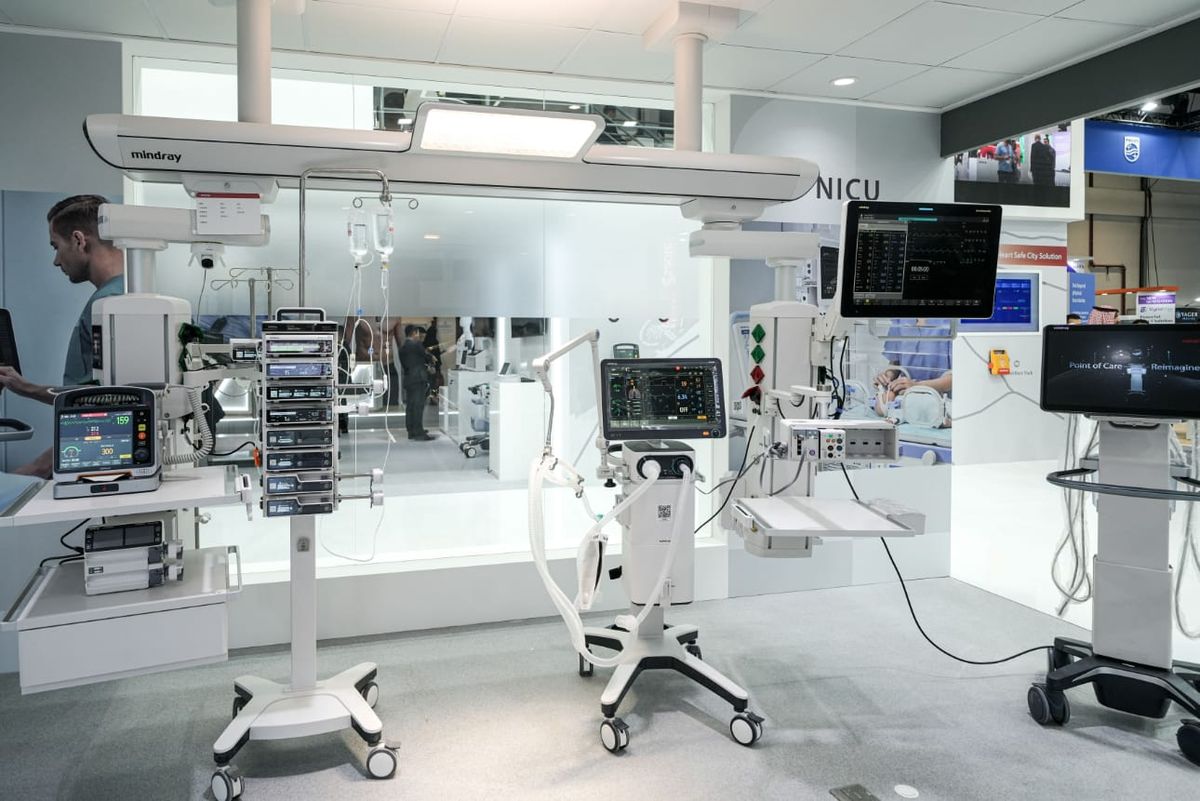
Mindray’s 2025 Sustainability Report is its eighth sustainability report and covers the Group’s activities from 1 January to 31 December 2025. It is prepared primarily against the Shenzhen Stock Exchange’s Self-Regulatory Guidelines No. 17 for Companies Listed on Shenzhen Stock Exchange—Sustainability Report (For Trial Implementation), while also referencing the GRI Standards and the UN Sustainable Development Goals. Economic and social indicators cover consolidated entities, while environmental indicators generally cover production, R&D and office facilities; notably, German subsidiary DiaSys separately published a sustainability report using the EU’s Voluntary Sustainability Reporting Standard for SMEs (VSME).
This combination reflects a broader evolution in sustainability reporting: Chinese listed companies increasingly need to connect domestic exchange requirements with internationally recognised concepts such as climate risk, value-chain emissions and double materiality. For a medical-device company operating through 64 international subsidiaries across roughly 40 countries, regulatory interoperability is particularly relevant because product, labour, environmental and supply-chain expectations vary significantly across markets.
Governance architecture and accountability
Mindray has moved beyond treating ESG primarily as a reporting function. Its architecture includes the Board, the Strategy and Sustainability Committee, an ESG Executive Committee and six specialised subcommittees covering corporate governance, innovation, value-chain collaboration, green development, human resources and social responsibility. Importantly, selected ESG indicators—including carbon emissions, product safety, workforce diversity and technological innovation—are linked to the remuneration of relevant directors and senior management.
The strength of this model is the attempt to translate broad sustainability commitments into functional ownership. The next maturity test is whether the company can demonstrate more explicitly how sustainability performance affects capital allocation, product-development decisions and executive assessment outcomes—not merely that such connections exist.
Materiality approach and risk prioritisation
Mindray applies a double-materiality approach covering both impacts on the economy, environment and society and sustainability matters that may affect business performance. Stakeholders including executives, employees, investors, suppliers, customers and media participate in impact assessment, while financial materiality considers the availability, reasonableness, uncertainty and usefulness of financial information, supplemented by external expert advice. In 2025, Mindray retained 22 sustainability issues and identified three as both impact- and financially material: product quality and safety, smart healthcare, and climate change.
This prioritisation is particularly appropriate for medical technology. Product safety directly affects patients and regulatory access; smart healthcare connects innovation with cybersecurity, AI governance and healthcare accessibility; and climate change increasingly influences manufacturing continuity, logistics and operating costs. The framework could become more decision-useful if future reporting quantifies the expected financial exposure or opportunity associated with these material topics.
Climate, supply chain, and social dimensions
Climate disclosure is one of the report’s stronger areas. Mindray uses IPCC SSP1-1.9, SSP2-4.5 and SSP5-8.5 scenarios for physical risk and IEA NZE, APS and STEPS scenarios for transition risk, considering short-, medium- and long-term horizons across production sites, R&D centres, suppliers and key markets. Risks such as typhoons and flooding are connected to potential asset damage, production interruption, supply disruption and additional expenditure rather than being described only in environmental terms.
The supply-chain framework is similarly operational. Mindray had 1,419 Tier 1 suppliers at year-end, incorporates labour rights, health and safety, climate, conflict minerals and business ethics into supplier requirements, and uses supplier screening, audits and ESG performance evaluation throughout the supplier lifecycle. In 2025, 1,800 supplier ESG questionnaires were returned, representing 95.49% participation; all new suppliers underwent environmental and social assessment, while 32 suppliers receiving a D ESG rating were provided improvement coaching.
Employment
Mindray employed 21,288 people at the end of 2025, with women representing 34.78% of employees; 17.28% of the workforce consisted of foreign employees. The report also discloses a 12.9% overall turnover rate, compared with 14.8% in 2024, although overseas turnover remained higher at 16.8%.
Human-capital development is relatively metrics-rich: all employees received training, totalling approximately 701,156 hours, or 32.94 hours per employee, supported by a RMB17.34 million training budget. The report also provides evidence of internationalisation through local hiring, management development and internal mobility, but future disclosure could go further by linking workforce indicators to productivity, critical-skill retention and innovation capability.
Health and safety
Occupational health and safety combines management systems, digital tools, engineering controls and quantitative performance. ISO 45001 certification covered 87.6% of operations including APT Medical, while health and safety investment increased to RMB24.84 million in 2025. The lost-time injury rate fell from 0.022 in 2024 to 0.016, although the recordable incident rate increased from 0.026 to 0.029; no work-related fatalities were reported during the past three years.
This mixed movement illustrates why safety performance should not be assessed through a single indicator. Mindray’s disclosure of both leading measures—training, investment, inspection and risk controls—and lagging indicators is useful, although greater explanation of the drivers behind the increased recordable incident rate would strengthen accountability.
Product or service responsibility
For a medical-device manufacturer, product responsibility is arguably the most financially consequential ESG issue, and Mindray treats it accordingly. Product safety is integrated from design and verification through production and post-market surveillance, supported by accredited laboratories, approximately 7,155 specialised laboratory tests in 2025 and 141 product-safety certification certificates.
Post-market disclosure is particularly useful because Mindray reports four voluntary product recalls in 2025 rather than presenting a zero-incident narrative. It recorded 261 domestic and 392 overseas product and service complaints, all of which received responses, while reporting no major product or service safety or quality incidents and no regulatory warnings. This provides a more credible picture of product stewardship: mature quality systems are demonstrated not by the absence of issues, but by detection, escalation, remediation and learning.
Philanthropy
Mindray’s social investment is closely connected to its healthcare capabilities rather than being limited to general charitable donations. Through Operation Smile, it supported facilities in China and Colombia; in China, 312 cleft patients had been screened and 189 received free repair surgeries by the end of 2025, while the Colombian centre screened more than 1,400 cleft patients. The company also entered a multi-year partnership with Mercy Ships, with more than 350 Mindray devices operating aboard its hospital ships.
Its AED programme provides another measurable social-impact pathway. During 2025 Mindray conducted approximately 501 first-aid sessions, donated 305 AEDs and reported that its AEDs had cumulatively helped save 427 people suffering sudden cardiac arrest in public locations in China. The strategic value lies in the alignment between community investment, medical expertise and healthcare access.
Metrics, targets, and data robustness
Mindray has a 2030 target to reduce Scope 1 and Scope 2 GHG intensity by 25% from a 2021 baseline. Excluding APT Medical, Scope 1 and 2 intensity declined from 2.41 tonnes CO₂e per RMB million revenue in 2021 to 2.19 in 2025, although it increased slightly from 2.13 in 2024. This distinction matters: the long-term trend remains downward, but annual progress is not linear.
A notable development is Scope 3 expansion. Reported Scope 3 emissions reached 103,473 tonnes CO₂e in 2025, compared with 94,210 tonnes in 2024, while the inventory expanded from business travel and downstream transportation to include operational waste and employee commuting. This is progress in coverage, but it also illustrates a comparability challenge: changes in inventory boundaries can make year-on-year movements difficult to interpret without category-level reconciliation.
Assurance, credibility, and comparability
The report includes an independent assurance statement by SGS-CSTC Standards Technical Services Co., Ltd. The assurance uses AA1000 Assurance Standard v3 Type 2 at a moderate level together with ISAE 3000 limited assurance, and evaluates the report against GRI Standards and the Shenzhen Stock Exchange sustainability reporting guidelines.
This adds credibility beyond management self-declaration, particularly because the engagement considers both reporting information and AA1000 principles such as inclusivity, materiality, responsiveness and impact. However, limited/moderate assurance should not be interpreted as equivalent to reasonable assurance. As sustainability information increasingly enters investor and regulatory decision-making, clearer identification of specifically assured KPIs and the methodology applied to estimates—especially Scope 3—would further improve comparability.
Strategic implications for the sector
Mindray illustrates how ESG priorities in medical technology differ from those in carbon-intensive industries. Carbon remains important, but patient safety, product lifecycle management, AI governance, cybersecurity, supply resilience and healthcare accessibility can have equally direct implications for enterprise value. The company’s Responsible AI architecture, including an AI Technical Committee and ISO/IEC 42001 certification, is therefore strategically relevant rather than peripheral to ESG.
The report also suggests that environmental innovation may increasingly converge with product engineering. Examples such as a portable ultrasound system with 48% lower power consumption, 34% smaller dimensions and 43% lower weight illustrate how material efficiency and energy efficiency can potentially support both environmental and commercial objectives. For the sector, the emerging question is less whether ESG can be added to medical-device strategy and more whether sustainability parameters can be embedded into product specifications and lifecycle economics.
ESG maturity and future positioning
Overall, Mindray appears to be moving from ESG disclosure maturity toward ESG operational integration. Governance responsibilities are defined, double materiality is applied, climate scenario analysis has been introduced, Scope 3 coverage is expanding, supply-chain ESG assessment is increasingly systematic, and product responsibility is supported by unusually detailed operational evidence. These features position the report above a purely compliance-driven disclosure model.
The principal opportunity for the next stage is deeper quantification. More category-complete Scope 3 accounting, clearer financial effects of climate scenarios, quantified supplier decarbonisation outcomes, longer-term workforce trend analysis and stronger links between sustainability metrics and business performance would allow readers to evaluate not only management processes but their effectiveness. The transition from describing ESG systems to demonstrating measurable enterprise outcomes will ultimately determine the strength of Mindray’s future sustainability positioning.
Pacifica ESG View
Mindray’s 2025 report demonstrates a relatively advanced sustainability management system for a Chinese medical-technology company, particularly in product responsibility, climate scenario analysis, supplier ESG management and human-capital disclosure. Its strongest characteristic is the connection between ESG and core operational issues rather than the volume of sustainability initiatives disclosed. Scope 3 expansion and independent assurance further improve credibility, although evolving boundaries and limited assurance still require careful interpretation. The next meaningful step would be to connect sustainability risks, targets and actions more explicitly with financial consequences, capital allocation and measurable value-chain outcomes.
Implications for the wider market
For medical-device and healthcare-technology companies, Mindray demonstrates that ESG maturity increasingly extends beyond carbon reporting. Product safety, responsible AI, supply resilience, workforce capability, patient access and post-market surveillance can all represent material sustainability issues with direct strategic consequences. Companies that integrate these topics into risk management and operational data systems may be better positioned to respond to increasingly sophisticated sustainability reporting requirements. At the same time, the market should distinguish between extensive disclosure and demonstrated performance: stronger assurance, consistent boundaries and outcome-based metrics will become increasingly important measures of reporting quality.