Japan’s Sumitomo Chemical Expands TNFD, Climate and Product Stewardship Disclosures
apan’s Sumitomo Chemical Sustainability Report 2025 highlights climate transition, TNFD-aligned nature risk, circularity, responsible procurement, product stewardship and the growing challenge of translating mature ESG governance into measurable business outcomes.
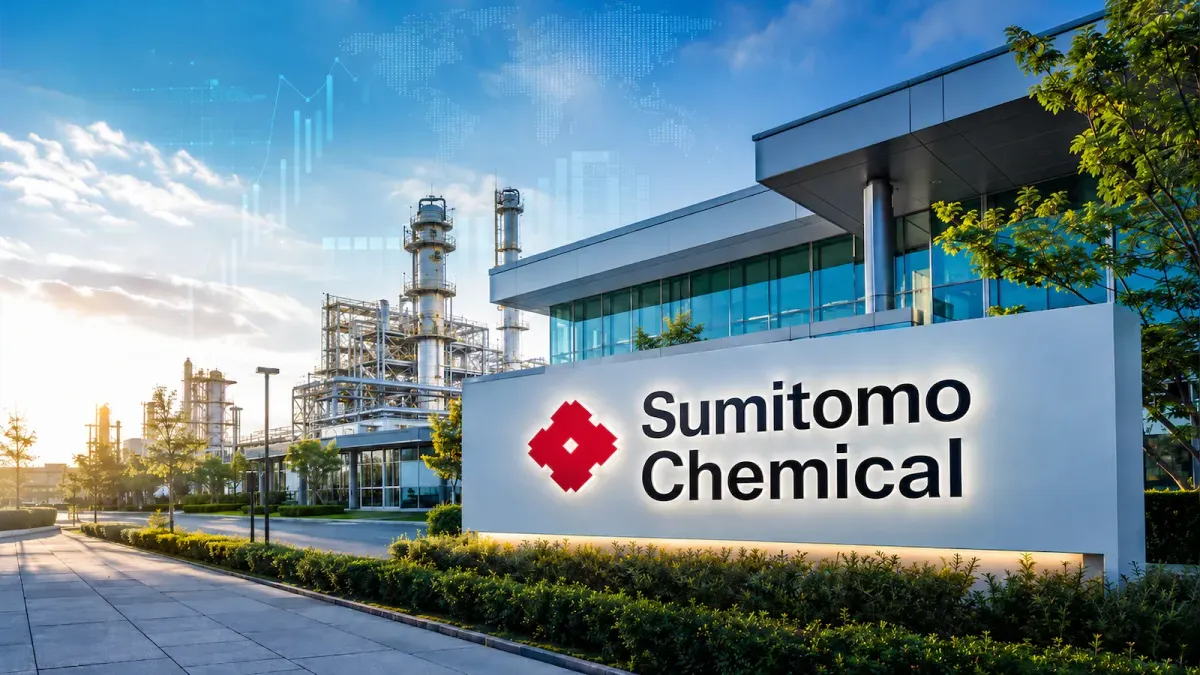
Japan’s Sumitomo Chemical has published its Sustainability Report 2025, covering Sumitomo Chemical Co., Ltd. and its consolidated subsidiaries. For Japanese Group companies, the principal reporting period is April 2024 to March 2025, while overseas Group companies generally report on a calendar-year basis. The report was published in October 2025 and references the GRI Standards, Japan’s Environmental Reporting Guidelines, ISO 26000, the Task Force on Climate-related Financial Disclosures and the Taskforce on Nature-related Financial Disclosures.
The report should be viewed alongside Sumitomo Chemical’s Integrated Report rather than as a stand-alone corporate publication. The company explicitly positions the Sustainability Report as the detailed ESG component of a wider reporting architecture, while its Integrated Report focuses more directly on strategy, performance and value creation. Selected quantitative indicators carrying a designated assurance mark are independently assured by KPMG AZSA Sustainability, with calculation methodologies separately disclosed.
For a Japanese multinational chemical manufacturer, this reporting structure is increasingly relevant. Chemical companies face simultaneous pressure from climate policy, product-level carbon requirements, chemicals regulation, human-rights due diligence, circularity expectations and nature-related risks. The result is that sustainability reporting for the sector is progressively shifting away from broad corporate responsibility narratives and towards evidence of how environmental and social risks are embedded in operating models, technology portfolios and capital allocation.
Governance Architecture and Accountability
Sumitomo Chemical’s sustainability governance has a clear management-level anchor. Its Sustainability Promotion Committee is chaired by the President and includes executive officers responsible for business sectors and corporate functions as well as presidents of overseas regional headquarters. Outside directors and a standing Audit & Supervisory Committee member participate as observers, giving sustainability discussions a direct connection with senior governance structures.
The committee generally meets twice annually and considers subjects including management strategy, biodiversity, international disclosure requirements and employee engagement. In fiscal 2024, it reviewed international sustainability developments and assessed medium- and long-term issues from both risk and opportunity perspectives before making recommendations to operating departments. This architecture suggests that sustainability is being treated increasingly as a management coordination issue rather than the responsibility of a specialised ESG function alone.
An important feature is the link between the sustainability system and other specialist governance mechanisms. Responsible Care, human rights, carbon neutrality and other topics have dedicated committees or councils, while the Sustainability Promotion Committee provides an overarching integration mechanism. For a diversified chemical group, this federated model may be more practical than attempting to centralise highly technical environmental, safety and product-risk issues within a single ESG team.
Materiality Approach and Risk Prioritisation
Sumitomo Chemical distinguishes between “material issues for sustainable value creation” and issues forming the “foundation for business continuation.” The first category includes environmental contribution, food supply, healthcare and ICT alongside innovation, digital transformation and human capital. The second includes occupational safety, industrial safety and disaster prevention, product safety, human rights, cybersecurity, compliance and anti-corruption.
This distinction is analytically important. Rather than presenting every ESG topic on the same level, the company separates areas capable of creating future business value from areas necessary to preserve its licence to operate. It resembles the emerging ESG management logic in which opportunities, dependencies and downside risks are evaluated separately even when they ultimately form part of the same sustainability strategy.
The materiality process considers importance to both business and society, stakeholder requirements, expert dialogue, international frameworks and external ESG assessments. Identified issues are discussed by the Sustainability Promotion Committee, approved by the Board and incorporated into the Corporate Business Plan. The report states that the material issues will be reviewed again in fiscal 2025, which is particularly relevant as global reporting frameworks increasingly expect sustainability-related risks and opportunities to be reassessed rather than treated as static lists.
Climate, Supply Chain and Social Dimensions
Climate remains one of the Group’s most financially and operationally significant sustainability challenges. Scope 1 and Scope 2 emissions increased from 5.03 million tonnes in FY2023 to 5.55 million tonnes in FY2024, although they remained materially below the FY2013 baseline of 9.54 million tonnes. Sumitomo Chemical continues to target a 50% reduction by 2030, equivalent to approximately 4.77 million tonnes, and notes that it was the first diversified chemical company to obtain Science Based Targets approval in 2018.
The near-term increase demonstrates why transition performance should not be assessed solely by the existence of a net-zero or science-based target. Industrial decarbonisation is dependent on plant configuration, energy infrastructure, feedstocks, production volumes and technology economics. Sumitomo Chemical describes measures including conversion from coal, petroleum coke and heavy oil towards LNG, improved gas turbines, boiler retirement, efficiency projects and longer-term carbon recycling technologies.
The report also approaches climate transition from the product side. Battery-related materials supplied during FY2024 are estimated to contribute to 14.28 million tonnes of avoided lifecycle emissions over the following ten years. Meanwhile, Sumika Sustainable Solutions-designated products generated ¥554.3 billion of sales in FY2024 against a FY2030 target of ¥1.2 trillion. These indicators attempt to connect environmental contribution with product-market strategy, although stakeholders should distinguish carefully between reductions within Sumitomo Chemical’s own inventory and estimated avoided emissions enabled by products.
Supply-chain governance is similarly becoming more structured. Sumitomo Chemical’s procurement principles favour suppliers active in sustainability and establish Group-wide expectations concerning transparency, compliance and human rights. Supplier self-assessment tools cover ethics, anti-bribery, workplace safety, human rights and other sustainability risks, while the company also asks suppliers involved in higher-risk minerals or raw materials to extend responsible practices upstream.
Nature-related disclosure is another significant development. Sumitomo Chemical is registered as a TNFD Adopter and applies the LEAP approach to identify dependencies, impacts, risks and opportunities. Its initial analysis identifies the Agro & Life Solutions business as an important nature interface and highlights water stress associated with crop-protection manufacturing in India, demonstrating a move from broad biodiversity commitments towards location- and activity-specific risk analysis.
Employment
Sumitomo Chemical’s employment strategy emphasises development, global talent mobility, diversity and work-life balance. Its “SUMIKA Learning Square” combines technical, safety, management, language, digital and career-development programmes, while self-selected training is intended to increase employee ownership of professional development.
DE&I performance presents a more mixed picture. The company has established a target for women to represent at least 15% of employees promoted to managerial positions over the five-year period from FY2023 to FY2027. The cumulative result through FY2024 was 14.3%, while the percentage of women already holding positions equivalent to section manager or above declined from 9.5% in FY2022 to 9.1% in FY2024.
Other workforce indicators show more positive movement. Male participation in childcare-related leave reached 97.5%, compared with a target above 90%, while average monthly overtime decreased from 20.9 hours in FY2022 to 18.3 hours in FY2024. These figures suggest that the Group’s human-capital agenda includes measurable behavioural outcomes rather than relying solely on policy commitments.
Health and Safety
Safety is particularly material for a chemical producer because occupational incidents can rapidly become environmental, operational, regulatory and reputational events. Sumitomo Chemical describes “Making safety our first priority” as a core principle and integrates employees, contractors and partner companies within its safety-management approach. Five of its Works have obtained ISO 45001 certification, with the remaining Works moving towards ISO 45001 and related Japanese occupational safety certification.
The results show improvement but not complete elimination of risk. Group lost-workday injuries fell from 23 in FY2023 to 16 in FY2024, and the Group-wide frequency rate declined from 0.27 to 0.21. Importantly, there were no fatal accidents across Sumitomo Chemical, consolidated Group companies or contractors during FY2024, compared with contractor fatalities in each of the preceding three years.
The company nevertheless acknowledges that severe accidents have not historically been fully eliminated and therefore continues to emphasise process-risk assessments, emergency preparedness, hazard training and safety culture. This transparency is important: in a process-intensive industry, credible safety reporting depends as much on recognising residual risk as on highlighting declining injury rates.
Product or Service Responsibility
Product stewardship is one of the most sector-specific aspects of Sumitomo Chemical’s ESG framework. The company applies lifecycle risk management from product development and manufacturing through customer use and disposal, reflecting the growing regulatory expectation that chemical manufacturers understand downstream impacts rather than focusing only on factory compliance. It also references the Global Framework on Chemicals adopted in 2023 and participates in international industry initiatives including GPS and JIPS.
In FY2024, Sumitomo Chemical conducted 75 product-safety risk assessments, including assessments of new products and reassessments of products already in the market. It combines chemical-substance assessment with application-related methods such as Failure Mode and Effects Analysis, reflecting the different ways in which risk can arise from intrinsic chemical properties and actual product use.
Customer responsibility extends beyond compliance. Customer inquiries and product-quality improvement requests are stored in internal systems and shared among production sites, research laboratories and sales teams to support corrective action and product improvement. However, logistics quality remains an area to monitor: FY2024 included one Rank B incident and 23 Rank D incidents, with ten involving shipment errors or incorrect deliveries.
Philanthropy
Sumitomo Chemical’s community programmes combine corporate giving, employee participation and local engagement. During FY2024, the company recorded 317 major donations across areas including community development, education, welfare, research, environmental initiatives and disaster support. Its wider Group companies conducted approximately 400 social-contribution activities in Japan and overseas.
The company also uses matching-gift programmes with employees and labour representatives, including support for OISCA environmental projects and ASHINAGA educational programmes. This model connects philanthropy with employee participation and environmental or social themes, although these activities should remain analytically distinct from the company's more material ESG impacts arising from chemicals, energy consumption, product stewardship and supply chains.
Metrics, Targets and Data Robustness
One of the report’s strengths is the use of multi-year KPIs linked to defined material issues. Environmental indicators cover Group Scope 1 and 2 emissions, energy efficiency, recycled plastic usage, sales of sustainable solutions and estimated avoided emissions, while human-capital indicators include managerial gender diversity, childcare leave, training and employee health.
The data also reveal where ambition remains ahead of performance. Recycled plastics used in manufacturing increased to approximately 11,440 tonnes in FY2024 but remains far below the 200,000-tonne annual target for 2030. Similarly, Sumika Sustainable Solutions sales declined from ¥682.8 billion in FY2022 to ¥554.3 billion in FY2024, making the ¥1.2 trillion target a significant commercial as well as sustainability challenge.
Such gaps are analytically useful. Mature ESG reporting should allow stakeholders to distinguish target-setting from target delivery, and Sumitomo Chemical’s multi-year presentation generally makes that assessment possible.
Assurance, Credibility and Comparability
The report includes an Independent Practitioner’s Limited Assurance Report, with KPMG AZSA Sustainability providing assurance over selected quantitative indicators identified within the publication. Sumitomo Chemical also publishes calculation standards for environmental and social data, helping users understand how particular indicators are defined and aggregated.
Limited assurance strengthens confidence in covered metrics but should not be interpreted as assurance over every sustainability statement or strategic claim in the report. The selective nature of assurance remains common across corporate ESG reporting and reinforces the importance of clearly identifying which indicators have been externally tested.
Comparability is strengthened by several years of historical performance data, but stakeholders should remain attentive to different reporting boundaries. The report distinguishes between Group-level and non-consolidated indicators, and Japanese and overseas reporting periods are not completely aligned. Clear boundary disclosure helps, although further convergence between sustainability and financial reporting scopes would make performance analysis easier over time.
Strategic Implications for the Sector
Sumitomo Chemical illustrates how sustainability strategy in the chemicals industry is becoming a combination of operational decarbonisation, product transition and value-chain responsibility. Climate performance cannot be addressed solely through renewable electricity because high-temperature industrial processes, feedstocks and chemical reactions create hard-to-abate emissions. Consequently, technology development, circular feedstocks, process redesign and customer-enabled emissions reduction become strategically important alongside direct emissions reduction.
Nature risk is likely to become similarly important. Sumitomo Chemical’s TNFD analysis demonstrates that the relevant exposure is not necessarily concentrated around corporate headquarters or even core chemical plants; it may appear at particular manufacturing locations or through agricultural value chains and water dependencies. This type of location-specific analysis may increasingly influence procurement, plant investment, product development and supply-chain resilience across the sector.
Product stewardship may also become a more prominent ESG differentiator as regulation tightens around chemical substances, circularity and product lifecycle impacts. Companies able to integrate regulatory intelligence, toxicity assessment, customer application data, recycling technologies and product-level environmental performance may be better positioned to respond to increasingly granular customer and regulatory demands.
ESG Maturity and Future Positioning
Sumitomo Chemical’s Sustainability Report 2025 reflects a comparatively established ESG management architecture, particularly in climate governance, Responsible Care, product stewardship, human rights and quantitative KPI tracking. Its use of TCFD and TNFD frameworks, science-based climate targets, structured supplier assessment and independently assured indicators indicates that sustainability is increasingly embedded in formal management systems.
At the same time, maturity should not be confused with completed transition. Scope 1 and 2 emissions increased in FY2024, women remain underrepresented in management, major circular-material targets require substantial scaling, and occupational safety continues to demand constant attention. The next phase will therefore depend less on adding new policies and more on demonstrating that governance and technology investment produce consistent measurable outcomes.
The company's positioning as an “Innovative Solution Provider” also raises an important strategic question: how effectively can environmental and social solutions become meaningful future revenue streams? The answer will increasingly determine whether sustainability functions primarily as risk management or becomes a source of competitive differentiation.
Pacifica ESG View
Sumitomo Chemical’s 2025 report demonstrates a mature transition from broad ESG commitments towards structured sustainability management. Its strongest features are the separation between value-creation opportunities and licence-to-operate risks, detailed climate and product stewardship systems, emerging TNFD analysis and measurable multi-year KPIs. The report also exposes genuine transition challenges: Scope 1 and 2 emissions rose in FY2024, circular-material targets remain distant and management diversity has significant room to improve. For stakeholders, the key issue is therefore no longer whether Sumitomo Chemical has sustainability governance in place, but whether that governance can accelerate operational decarbonisation, scale circular technologies and translate sustainable solutions into commercially material growth.
Implications for the Wider Market
Sumitomo Chemical provides a useful reference point for other Asian industrial companies. ESG expectations are moving beyond disclosure toward integration of climate, nature, human rights, product safety and supply-chain risk into mainstream management systems. Chemical and other heavy-industry companies will increasingly need to show not only reductions within their own operations but also how products influence downstream emissions, resource efficiency and customer transition strategies. At the same time, TNFD-style location analysis suggests that nature and water risks may become more operationally relevant than many companies currently assume. The wider market should therefore expect sustainability reporting to become more technically detailed, more value-chain focused and increasingly connected with investment, innovation and product strategy.