Malaysia’s Sunway Berhad Sustainability Report 2025: Stronger Governance, Broader Scope 3 and Climate Ambition
Malaysia’s Sunway Berhad Sustainability Report 2025 highlights stronger ESG governance, expanded Scope 3 disclosure, climate action, renewable energy growth and increasing integration of sustainability into business strategy.
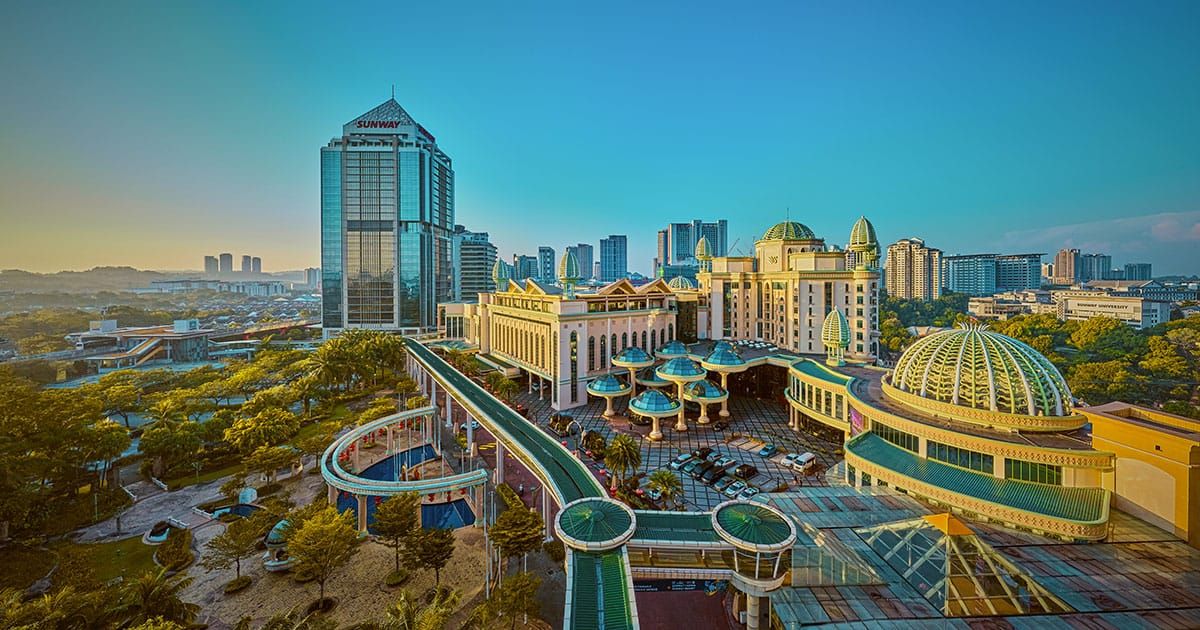
Sunway Berhad has released its Sustainability Report 2025, covering the financial year from 1 January to 31 December 2025 and primarily encompassing its Malaysian operations, which account for approximately 94% of Group revenue. The report is prepared in accordance with the IFRS Sustainability Disclosure Standards and references GRI Standards, SASB, TNFD and other sustainability frameworks, reflecting the increasingly demanding disclosure environment facing Malaysian listed companies. Sunway also reports that the document has been reviewed internally and subject to external assurance, including separate assurance over its greenhouse gas emissions data.
The report is significant because it shows Sunway moving beyond stand-alone sustainability initiatives towards a more structured connection between ESG performance, financial planning and business decision-making. Its sustainability strategy is organised around five 2030 goals covering carbon reduction, responsible value chains, workforce, community inclusivity and governance, alongside a commitment to achieve net-zero carbon emissions by 2050. The company says it is increasingly shifting from establishing sustainability frameworks towards refining, scaling and optimising existing solutions.
Key Sustainability Themes and Disclosures
Climate remains one of the clearest strategic priorities. Sunway reported combined Scope 1, 2 and 3 emissions of 814,284 tonnes CO2e in 2025, compared with 644,427 tonnes in 2024, while Scope 1 and 2 emissions increased from 259,049 tonnes to 273,754 tonnes. Scope 3 accounted for 540,530 tonnes CO2e, illustrating the growing importance of value-chain emissions and also reflecting the company's continued expansion of its Scope 3 inventory; eight of the 15 Scope 3 categories are now disclosed.
The increase in absolute emissions makes Sunway's decarbonisation challenge visible rather than obscuring it behind target language. Overall emissions intensity also rose slightly from 0.084 tonnes CO2e per RM1,000 in 2024 to 0.086 in 2025, meaning stakeholders should continue watching whether operational and renewable-energy initiatives can ultimately decouple emissions growth from business expansion. The company retains its Net Zero Carbon Emissions by 2050 roadmap and uses internal carbon pricing as one mechanism for connecting environmental performance with financial discipline and preparation for future carbon regulation.
Renewable energy and efficiency provide more positive operating signals. Solar installations across 34 assets generated approximately 22 GWh in 2025 and avoided more than 16,800 tonnes CO2e, while renewable electricity represented about 5% of electricity consumption against a 2030 target of at least 40%. Sunway also reported that 52% of waste was diverted from landfill, exceeding its 40% target, while water intensity across managed assets was 35% below the 2015 baseline; however, non-municipal sources represented only 5% of total water consumption, leaving further room to strengthen water resilience.
Nature is also becoming more visible within Sunway's environmental agenda. The company strengthened its Biodiversity Policy in 2025 to align with TNFD requirements, while biodiversity and ecological impacts are treated as material sustainability issues and linked to a separate TNFD Report. This suggests that Sunway is beginning to extend its environmental risk lens beyond carbon towards dependencies and impacts associated with land, ecosystems and nature-sensitive assets, which is particularly relevant across property development, hospitality, leisure and construction.
On social performance, Sunway maintained zero fatalities in 2025, although its occupational accident rate of 1.2 per 1,000 workers remained above its 2030 target of 0.95. Twelve of 18 identified sites have obtained ISO 45001 certification, while employees averaged 44 learning hours, exceeding the company's target of 36 hours. The combination of safety targets, certification and workforce development indicators provides measurable accountability, while the accident-rate gap remains an area requiring continued operational attention.
Sunway also reported more than RM7.3 million of community contributions and 84,121 beneficiaries, alongside healthcare, education and disaster-relief initiatives. In its supply chain, 89% of procurement spending was directed to local suppliers, and 100% of new suppliers completed its Supplier Risk Assessment, which has been enhanced using Malaysia's Simplified ESG Disclosure Guide. The approach indicates a gradual shift from procurement based primarily on commercial criteria towards structured environmental and social risk screening and supplier ESG capability-building.
Governance and Strategic Signals
Governance is one of the report's strongest indicators of increasing ESG maturity. The Board Sustainability Committee holds responsibility for sustainability-, climate- and nature-related risks and opportunities, including reviewing ESG targets and monitoring the sustainability scorecard, while the Management Sustainability Committee supports implementation across business divisions. Sunway has also established an IFRS S1 and S2 Working Committee, co-chaired by the Chief Financial Officer and Head of Sustainability, linking sustainability, risk and strategy functions more directly.
Importantly, sustainability indicators have been incorporated into senior-management performance evaluations and remuneration since 2021, including energy efficiency, renewable generation, waste, occupational safety and ESG ratings. On business conduct, Sunway reported that 88% of operations were assessed for corruption-related risks, 92% of employees received anti-corruption training and no confirmed corruption or fraud incidents were reported for 2025. These mechanisms suggest ESG accountability is increasingly being embedded into management systems rather than remaining solely within the sustainability function.
What This Report Suggests About Future Direction
Sunway's direction of travel appears to be towards deeper integration of sustainability with enterprise risk, capital allocation and financial reporting. Its adoption of IFRS S1 and S2, scenario analysis for physical and transition climate risks, expanded Scope 3 accounting and TNFD-related work indicate preparation for a reporting environment in which ESG information will increasingly need to demonstrate financial relevance rather than simply describe corporate initiatives.
The next test is likely to be execution. Investors and other stakeholders should monitor whether absolute emissions and emissions intensity begin declining, whether Sunway can move materially closer to its 40% renewable electricity target, and whether remaining Scope 3 categories and supplier disclosures are progressively incorporated. Greater quantitative disclosure of nature-related risks and clearer financial effects of sustainability-related risks would also further strengthen the connection between sustainability strategy and enterprise value.
Pacifica ESG View
Sunway's 2025 report signals a relatively mature transition from ESG reporting towards ESG management, particularly through board oversight, remuneration-linked KPIs, IFRS-aligned disclosure and expanding climate and nature risk assessment. The strongest signal is not that every indicator improved—emissions and occupational accident performance show continuing challenges—but that these gaps are increasingly visible within formal governance and target-setting systems. Stakeholders should watch whether this governance architecture translates into measurable reductions in absolute emissions, faster renewable-energy adoption and deeper value-chain decarbonisation over the next reporting cycles.