Sharp Corporation Expands Circular Economy and Closed-Loop Recycling in Its 2025 Sustainability Report
Sharp Corporation’s Sustainability Report 2025 highlights progress in net zero targets, circular economy initiatives, and AI-driven product innovation, signalling a shift toward technology-enabled sustainability across its global operations.
Sharp Corporation has released its Sustainability Report 2025, outlining ESG strategy, targets, and performance for fiscal year 2024 (April 2024–March 2025).
The report serves as the company’s primary non-financial disclosure, aligned with major frameworks including GRI, SASB, and the UN Global Compact, and covering global operations across its electronics, device, and solutions businesses.
For stakeholders, the report is notable as it reflects how a legacy electronics manufacturer is repositioning sustainability as a driver of innovation, energy transition, and supply chain responsibility within a rapidly evolving technology landscape.
Key sustainability themes and disclosures
Climate transition remains a defining priority. Sharp targets net zero CO₂ emissions from business activities (Scopes 1 and 2) by 2030 and across its entire supply chain by 2050, supported by science-based targets and RE100 participation.
Operational progress is evident, with greenhouse gas emissions reduced by 39.9% from a FY2021 baseline to 820,000 tons CO₂ in FY2024, indicating acceleration toward near-term decarbonisation milestones.
The report also highlights Scope 3 dominance, with product use accounting for the majority of emissions, reinforcing the importance of energy-efficient product design.
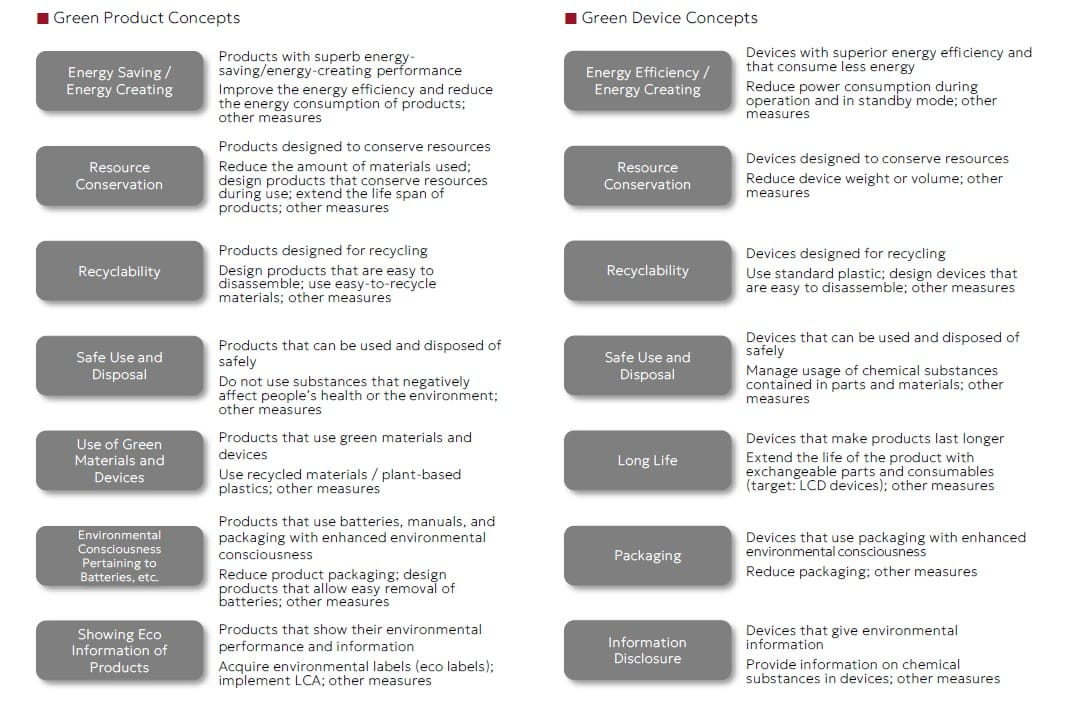
Circular economy initiatives are increasingly embedded. Sharp reports closed-loop plastic recycling technologies, cumulative recycled plastic use exceeding 21,000 tons since 2001, and a final landfill disposal rate of 0.33%, reflecting strong waste minimisation performance.
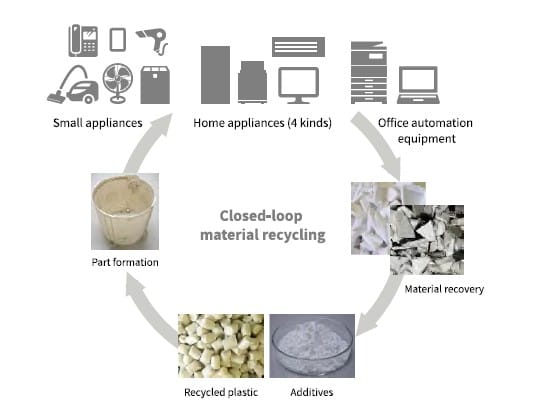
Water stewardship and resource efficiency are also addressed, including a 5% improvement in water intensity in FY2024 and deployment of closed-loop recycling systems at major production sites.
On the product side, sustainability is closely linked to innovation. Examples include AIoT-enabled appliances for energy optimisation, solar-linked home systems, and ultra-low power displays, which contribute to avoided emissions estimated at 122,000 tCO₂ in FY2024.
Social disclosures emphasise human capital development, DEI, and supply chain responsibility, including ESG training coverage, disability employment (~2.45%), and structured supplier due diligence aligned with RBA standards.
Governance and strategic signals
Sharp demonstrates a structured ESG governance framework anchored at the top. The Sustainability Committee, chaired by the CEO, oversees strategy, with subcommittees established to accelerate execution across key topics such as climate, circular economy, and biodiversity.
Materiality is systematically defined using a dual lens of societal impact and financial relevance, incorporating international standards (GRI, SASB, ISSB) and stakeholder input.
The company also aligns with major global initiatives including SBTi (1.5°C certification), TCFD, TNFD Forum, and RE100, reinforcing its commitment to internationally recognised ESG frameworks.
Risk management integration is another signal. Sharp identifies 118 enterprise risks across environmental, financial, legal, and operational categories, embedding ESG-related risks—particularly climate and supply chain—into core business risk management processes.
Importantly, governance framing positions sustainability as both risk mitigation and value creation, particularly through energy solutions, AI-enabled products, and new technology domains such as EV ecosystems and digital infrastructure.
What this report suggests about future direction
Sharp’s Sustainability Report 2025 points to a strategic shift toward technology-enabled sustainability, where ESG is increasingly embedded into product innovation rather than treated as a standalone compliance function.
The focus on AIoT, energy solutions, and low-power electronics suggests positioning in energy efficiency and electrification value chains, which are likely to see sustained growth under global decarbonisation trends.
At the same time, the strong emphasis on Scope 3 emissions and supplier engagement indicates a gradual move toward full value chain accountability, particularly relevant for electronics manufacturers with complex global supply chains.
The continued expansion of circular economy initiatives—especially closed-loop recycling—signals a direction of travel toward resource circularity at scale, which may become a differentiating factor in regulatory and customer-driven markets.
Overall, the report suggests that Sharp is aligning its transformation strategy with ESG priorities, using sustainability as a lever to support both operational efficiency and long-term business resilience.
Pacifica ESG View
Sharp’s 2025 disclosure reflects a maturing ESG strategy anchored in climate targets, circularity, and innovation. Its progress on emissions reduction and product-led sustainability strengthens credibility. The key forward signal lies in scaling AI-driven energy solutions and embedding Scope 3 accountability across its supply chain, which will determine how effectively ESG translates into competitive advantage.