MR D.I.Y. Sustainability Report 2025: ESG Governance, Climate Risks and Responsible Retail Transformation in Malaysia
MR D.I.Y.’s 2025 Sustainability Report highlights progress in ESG governance, climate disclosure, supply chain management, employee safety and community investment, while revealing challenges in rising emissions, Scope 3 coverage and independent assurance.
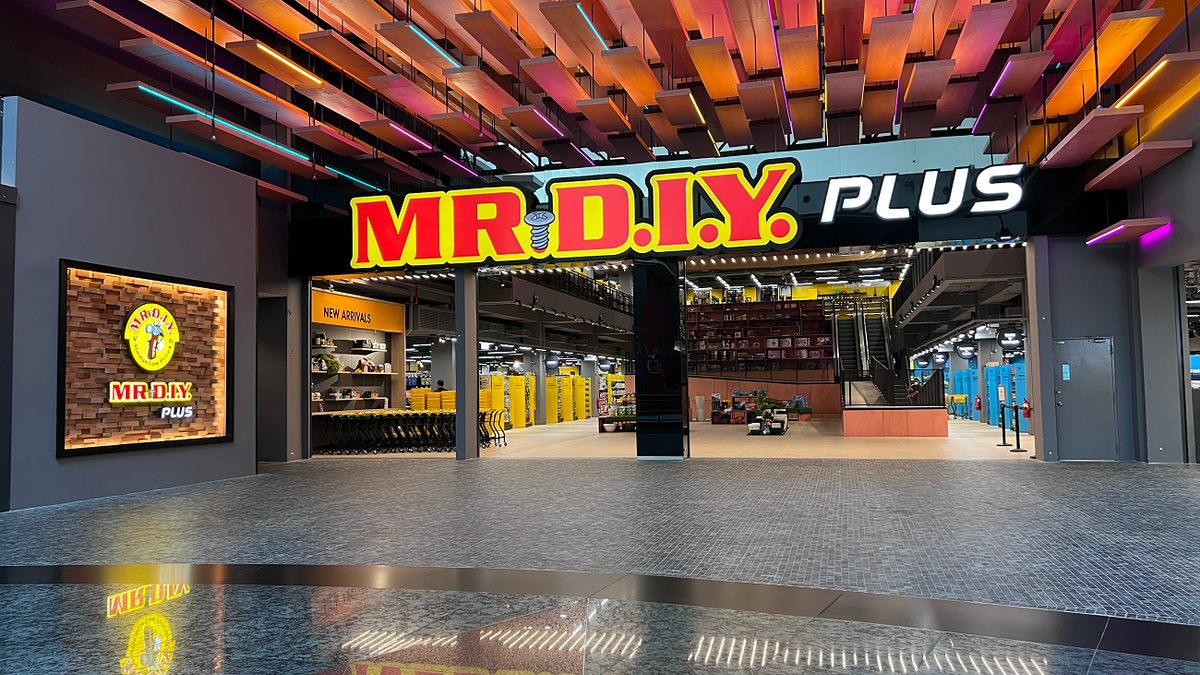
MR D.I.Y. Group is one of Malaysia’s leading value retailers, operating 1,584 physical stores across Malaysia and Brunei as of the end of 2025. Its retail ecosystem includes MR D.I.Y., MR D.I.Y. Express, MR D.I.Y. PLUS, MR. TOY and MR. DOLLAR, supported by an expanding e-commerce platform. With more than 18,000 stock-keeping units across hardware, household products, electrical goods, stationery, toys and other categories, the Group operates a high-volume business model built around affordability, convenience and procurement efficiency.
The Group’s Sustainability Report 2025, titled Rooted in Responsibility. Growing with Purpose., examines how environmental, social and governance considerations are integrated into this operating model. Unlike businesses whose sustainability strategies focus primarily on industrial production, MR D.I.Y.’s material exposures arise from its extensive store network, electricity consumption, logistics operations, product sourcing and customer-facing activities. Its sustainability performance must therefore be assessed against both operational efficiency and the wider environmental and social consequences of large-scale retail consumption.
Reporting Background and Regulatory Context
The 2025 publication represents MR D.I.Y.’s fifth sustainability report and covers the financial year ended 31 December 2025. Its reporting boundary includes the listed entity and subsidiaries in Malaysia and Brunei, while associate companies outside the Group’s full management control are excluded. This distinction is important when interpreting reported emissions, workforce indicators and other operational metrics, particularly given the Group’s investment interests beyond its consolidated operations.
The report is prepared in accordance with Bursa Malaysia’s Main Market Listing Requirements and references the third edition of the Sustainability Reporting Guide, GRI Universal Standards and the SASB standard for Multiline and Specialty Retailers & Distributors. A notable development is the introduction of its first IFRS S2 climate-related disclosure statement, with supporting information referenced through an IFRS S2 content index. The transition reflects Malaysia’s broader movement towards internationally comparable sustainability reporting under the National Sustainability Reporting Framework (NSRF).
However, the existence of an IFRS S2 content index should not be interpreted as evidence of complete compliance with every requirement. Several disclosures refer readers to the accompanying Integrated Annual Report, while certain indicators are identified as not applicable or unavailable. The combined publications should therefore be examined when evaluating climate-related financial information, scenario analysis and disclosure completeness.
Governance Architecture and Accountability
MR D.I.Y. has established a multi-level sustainability governance structure led by its Board of Directors, supported by the Board Sustainability Committee, Management Team and Sustainability Committee. The Chief Operating Officer chairs the management-level Sustainability Committee, which includes representatives from finance, procurement, human resources, retail operations, logistics, legal, internal audit and other business functions. Quarterly reporting provides a formal mechanism for monitoring sustainability activities and communicating progress.
An important governance feature is the linkage between executive directors’ remuneration and sustainability performance, including achievement of ESG targets and continued inclusion in the FTSE4Good Bursa Malaysia Index. This creates an explicit connection between executive accountability and sustainability outcomes. Nevertheless, the report provides limited detail within its sustainability governance discussion on the weighting of individual ESG indicators in remuneration decisions.
The Group also maintains a Code of Business Ethics, anti-corruption controls, whistleblowing arrangements and supplier conduct requirements. These mechanisms help address governance risks associated with extensive procurement relationships and decentralised retail operations. The effectiveness of this framework ultimately depends on implementation, incident monitoring and the ability to demonstrate that compliance mechanisms produce measurable outcomes.
Materiality Approach and Risk Prioritisation
MR D.I.Y. undertakes a comprehensive materiality assessment every two years, with its latest assessment conducted for FY2025. The process involved internal stakeholder engagement, peer benchmarking, consideration of GRI and SASB frameworks, and a workshop examining emerging global risks and opportunities. Management reviewed the results, and the Board approved 18 material sustainability matters.
The five highest-ranked issues were financial performance, customer satisfaction, product quality and safety, product accessibility and affordability, and data privacy and security. Climate action ranked fourteenth, while waste management, biodiversity and water consumption occupied lower positions. This prioritisation reflects the Group’s emphasis on business continuity, consumer trust and the commercial foundations of value retail.
The assessment uses two dimensions: significance to stakeholders and significance to MR D.I.Y.’s business. It should not automatically be equated with the double materiality approach used under European Sustainability Reporting Standards, which separately evaluates impacts on people and the environment alongside financial risks and opportunities. For future reporting, more explicit assessment of upstream manufacturing impacts, resource consumption and value-chain emissions could provide a fuller perspective on sustainability-related dependencies and externalities.
Climate, Supply Chain and Environmental Dimensions
Climate management is among the most consequential long-term challenges identified in the report. MR D.I.Y.’s Scope 1 emissions increased from 12,218 tCO₂e in 2024 to 16,523 tCO₂e in 2025, while Scope 2 emissions rose from 146,707 to 160,727 tCO₂e. Purchased electricity consumption increased to 231,489 MWh, reflecting the energy demands of an expanding retail footprint.
The Group has implemented efficiency measures, including variable refrigerant volume air-conditioning systems, automated warehouse operations and GPS-supported logistics optimisation. Solar panels had been installed at five of its sixteen distribution facilities, with renewables representing 11.7% of energy consumption across distribution facilities. However, renewable energy accounted for just 0.4% of total reported Group energy consumption, indicating that renewable deployment remains relatively limited at the overall operational level.
Scope 3 reporting covers only business travel and employee commuting, representing 364 and 12,554 tCO₂e respectively in 2025. The exclusion of other potentially material categories, including purchased goods and services, upstream transportation and distribution, and end-of-life treatment of sold products, restricts understanding of the Group’s full value-chain footprint. The commitment by 92 suppliers to report their emissions is a constructive starting point, although supplier commitments are not equivalent to verified emissions inventories.
On supply chain governance, MR D.I.Y. reports that 36.2% of procurement expenditure was directed towards local suppliers, exceeding its 30% target. It also increased the number of vendors onboarded to its Vendor Code of Conduct to 808. Supplier screening includes licensing, regulatory compliance, intellectual property protection and expectations concerning labour rights, environmental responsibility and anti-corruption.
Environmental resource management extends beyond carbon emissions. The Group reuses carton boxes up to 18 times, promotes reusable shopping bags and has expanded its eco-product offering to 6.9% of revenue. Nevertheless, carton-box consumption per 1,000 transactions increased from 0.28 kg in 2024 to 0.38 kg in 2025, illustrating that improvements in selected circularity initiatives do not necessarily translate into consistent reductions across all resource-efficiency indicators.
Employment and Human Capital Development
Human capital management is central to MR D.I.Y.’s ability to sustain its extensive store and distribution network. The Group reported 742,384 employee training hours in 2025, equivalent to an average of 34.5 hours per employee, compared with 27.4 hours in 2024. Training expenditure remained relatively stable at RM4.35 million, suggesting increased training delivery without a proportionate increase in expenditure.
The Group has introduced digital learning platforms, structured career development programmes and succession planning initiatives. Its inclusion strategy also involves collaboration with Malaysia’s Department of Social Welfare through the Job Coaching Programme, supporting employment opportunities for people with disabilities. Women accounted for 51% of management employees, although female representation on the Board declined from 50% in 2024 to 33% in 2025.
Employee retention remains a significant operational consideration. The Group recorded 7,911 employee departures in 2025, compared with 8,194 in the previous year, while the reported in-store turnover rate remained relatively high at 39.3%. In addition, two substantiated complaints concerning human rights violations or employment-related legal breaches were recorded, compared with none in the preceding two years. These indicators highlight the importance of sustained attention to employee engagement, grievance resolution, working conditions and labour rights as the business expands.
Occupational Health, Safety and Employee Well-being
MR D.I.Y.’s occupational health and safety approach covers retail stores, warehouses and distribution operations, where employees face risks associated with manual handling, equipment use, transportation and other operational activities. The Group references Malaysia’s occupational safety legislation and ISO 45001 principles, supported by onboarding, safety inspections, toolbox meetings and emergency preparedness exercises. Warehouse automation, including conveyors and autonomous mobile robots, is also used to reduce exposure to selected physically demanding activities.
Workplace safety performance improved in 2025. Lost-time injuries declined from 18 in 2024 to 11, while the Lost Time Injury Frequency Rate (LTIFR) decreased from 0.38 to 0.23. The Group recorded zero work-related fatalities, trained 9,082 employees on safety and health standards, and increased safety inspections from 33 to 49.
These improvements suggest progress in operational risk management, although the LTIFR remained above the Group’s zero-injury target. Continued monitoring of injury severity, occupational hazards and corrective actions would help assess whether the improvements are sustained. For a geographically dispersed retailer, consistent safety implementation across individual locations is particularly important.
Product and Service Responsibility
Product responsibility represents one of MR D.I.Y.’s highest-priority ESG issues because its reputation depends on delivering affordable products without compromising safety or regulatory compliance. The Group applies supplier screening, documentation reviews, product risk assessments and selected on-site inspections. Its quality management framework covers both third-party brands and own-brand products, supported by a product recall process and inventory traceability systems.
However, the number of stock-keeping units subject to recalls increased from four in 2024 to thirteen in 2025. This increase warrants attention, although recall counts alone cannot establish whether overall product quality deteriorated or whether detection and reporting improved. Additional disclosures on recall severity, affected product quantities and corrective-action effectiveness would strengthen the assessment of consumer safety performance.
Customer experience is another prominent area of investment. MR D.I.Y. reports a 99.4% customer satisfaction and experience score, alongside the processing of more than 60,000 customer responses monthly and resolution of all recorded customer complaints during the year. Its customer relationship management systems, chatbot services and digital feedback channels support more systematic engagement, although transparent survey methodologies and complaint-resolution criteria would improve comparability.
Philanthropy and Community Engagement
Community investment is delivered primarily through Yayasan MR D.I.Y., established in 2023 to support education, community development, environmental protection, and arts and culture. In 2025, the Foundation invested approximately RM1.64 million in community programmes, representing a 33.6% year-on-year increase. Reported beneficiaries reached approximately 398,800 individuals, compared with 95,500 in 2024.
Education represents a major focus of the Group’s philanthropic activities. Its STEM Discovery on Wheels programme reached more than 190,000 students, particularly in underserved communities, while other initiatives included the DIY Made Simple Competition and improvements to educational facilities at the National Science Centre. Environmental programmes included turtle conservation partnerships and tree-planting activities.
The substantial increase in beneficiaries indicates broader programme reach, but beneficiary numbers primarily measure activity rather than enduring social outcomes. More detailed evaluation of educational attainment, sustained community participation and environmental results would strengthen evidence of long-term impact. This distinction is relevant to companies seeking to demonstrate that philanthropic expenditure translates into measurable social value.
Metrics, Targets and Data Robustness
MR D.I.Y.’s sustainability performance scorecard provides a structured view of progress against operational and environmental targets. The Group exceeded several milestones, including its 30% local procurement target and its customer satisfaction objective. Eco-product revenue also increased to 6.9%, moving towards the 2030 target of 10%.
Nevertheless, climate and resource-efficiency metrics reveal a more mixed picture. Total Scope 1 and Scope 2 emissions increased, electricity intensity at standalone stores remained above the stated baseline, and renewable energy adoption across distribution facilities stood at 11.7% against a 2030 objective of 30%. The Group’s target of reducing diesel consumption per 1,000 transactions by 20% also remains incomplete, despite an improvement to 25.6 litres in 2025.
The report benefits from three-year historical comparisons and numerical indicators across multiple ESG topics. However, greater methodological transparency concerning emissions factors, organisational boundaries, normalisation methods and supplier data quality would strengthen analytical reliability. As store numbers increase, separating operational growth from efficiency improvements becomes increasingly important.
Assurance, Credibility and Comparability
The Group states that its Internal Audit function reviewed the 2025 Sustainability Report and verified selected information against internal records. This provides an internal control mechanism for sustainability reporting, but it is distinct from independent external assurance performed by a separate assurance practitioner. The report does not present an independent external assurance opinion over the full sustainability disclosures.
The use of GRI, SASB and IFRS S2 references contributes to greater reporting structure and facilitates comparison with other retailers. Nevertheless, comprehensive comparability depends on consistent measurement boundaries, complete value-chain information and transparent accounting methodologies. The limited Scope 3 inventory is particularly relevant because many environmental impacts associated with retail products arise outside the retailer’s direct operations.
Independent assurance under an internationally recognised framework, such as ISSA 5000, could represent a future step in reporting development, subject to applicable requirements and assurance scope. Such assurance would not eliminate sustainability risks but could provide greater confidence in the reliability of selected reported information and underlying processes.
Strategic Implications for the Retail Sector
MR D.I.Y.’s disclosures illustrate the relationship between commercial efficiency and environmental performance in high-volume retail. Centralised procurement, automation, inventory optimisation and logistics planning can contribute to cost savings while potentially reducing resource consumption per transaction. However, expanding retail networks can also increase absolute electricity demand, packaging volumes, transportation activity and value-chain emissions.
Supply chain transparency is likely to become increasingly important as retailers respond to evolving expectations concerning product traceability, labour standards and environmental claims. MR D.I.Y.’s Vendor Code of Conduct and supplier emissions engagement provide foundations for deeper due diligence. Future development could include risk-based supplier segmentation, more systematic environmental and social assessments, and monitoring of corrective actions.
Product sustainability also presents strategic opportunities and potential reputational risks. The growth of eco-product revenue indicates customer interest in alternatives with environmental attributes, but credible classification criteria and supporting evidence will be essential. Retailers should be able to distinguish verified environmental benefits from broad sustainability descriptions that may be difficult to substantiate.
ESG Maturity and Future Positioning
MR D.I.Y.’s sustainability framework demonstrates an established level of governance, structured reporting and operational performance monitoring. Its materiality assessment, Board oversight, remuneration linkages, supplier conduct requirements and multi-year performance indicators provide evidence of institutionalised sustainability management. Progress in occupational safety, customer engagement and community investment further supports this assessment.
At the same time, several disclosures point to opportunities for greater maturity. These include expanding Scope 3 emissions coverage, strengthening supplier-level due diligence, improving climate-related financial quantification and obtaining independent assurance. The divergence between increasing absolute emissions and selected efficiency improvements also highlights the need for a more comprehensive decarbonisation pathway.
The Group’s future ESG positioning will depend less on the number of sustainability initiatives undertaken than on its ability to demonstrate measurable outcomes across an expanding business. Connecting sustainability performance with capital allocation, procurement decisions, store development and long-term climate resilience would strengthen the relationship between ESG management and enterprise value.
Pacifica ESG View
MR D.I.Y.’s Sustainability Report 2025 reflects a retailer progressing from compliance-oriented disclosure towards more structured sustainability governance. Its strengths include Board-level accountability, measurable operational targets, growing supplier engagement and improvements in workplace safety.
However, the increase in absolute emissions, limited Scope 3 coverage, continued employee turnover challenges and absence of independent external assurance indicate areas where further development is warranted.
The Group’s central sustainability challenge is balancing rapid retail expansion and affordable consumption with measurable environmental improvement. Its next stage of ESG maturity will depend on strengthening value-chain accountability, climate-transition planning and the credibility of reported performance.
Implications for the Wider Market
MR D.I.Y.’s experience highlights a broader challenge facing retailers across Malaysia and Southeast Asia: operational efficiency does not necessarily translate into reductions in absolute environmental impacts.
As sustainability reporting expectations evolve, companies may face increasing pressure to quantify upstream emissions, substantiate environmental product claims and demonstrate effective supplier due diligence.
Retail businesses with extensive procurement networks should prioritise reliable value-chain data, risk-based supplier engagement and transparent performance indicators. Independent assurance and stronger integration between sustainability strategy and financial decision-making could further support investor confidence and sector-wide comparability.