Fortescue’s FY2026 Sustainability Report: Advancing Industrial Decarbonisation, Responsible Mining and Sustainable Growth in Australia
Fortescue’s FY2026 Sustainability Report highlights Australia’s mining decarbonisation journey through renewable energy investment, fleet electrification, responsible mining, Indigenous partnerships and ESG governance, alongside progress toward its 2030 Real Zero Target.
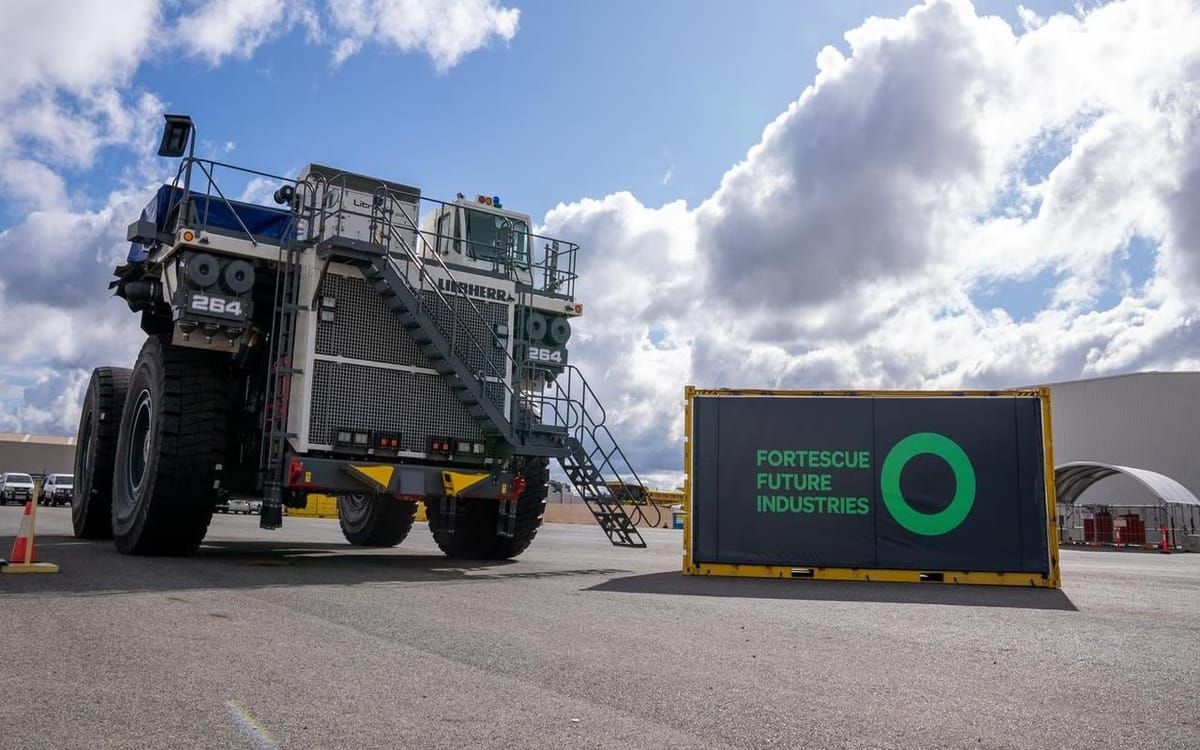
Fortescue Ltd (ASX: FMG), one of Australia's major iron ore producers, is pursuing a strategic transformation that combines mining, renewable energy and industrial decarbonisation technologies. With substantial operations in Western Australia's Pilbara region, the company is seeking to strengthen its competitiveness while supporting the transition toward lower-emissions industrial production.
Its FY2026 Sustainability Report reflects this ambition, highlighting investments in renewable infrastructure, electrified mining equipment, environmental stewardship and Indigenous economic participation. Fortescue's stated purpose of accelerating global decarbonisation rapidly and profitably positions sustainability as an integral element of its long-term business strategy.
Reporting Context and Scope
Fortescue's FY2026 Sustainability Report covers the financial year from 1 July 2025 to 30 June 2026, encompassing its Metals and Energy segments and operations under management or operational control.
Prepared with reference to the Global Reporting Initiative (GRI) Standards, the report also considers material sustainability issues identified through the Fortescue Risk Management Framework. Its disclosure structure focuses on three interconnected pillars: Climate, Nature and People.
The report forms part of a broader sustainability reporting suite, including separate Climate Statements, a Climate Transition Plan and an ESG Databook. This approach enables more detailed disclosure of climate-related financial risks, transition strategies and quantitative performance.
Governance and Oversight Mechanisms
Fortescue integrates sustainability oversight into its corporate governance framework, with the Board responsible for monitoring strategic risks, major investments, operational performance and sustainability commitments.
Three Board committees support relevant oversight responsibilities: the Safety and Sustainability Committee, Audit, Finance and Risk Management Committee, and People, Remuneration and Nomination Committee.
At management level, the Executive Sustainability Committee coordinates sustainability-related priorities across business functions. The committee met five times during FY2026, supporting cross-functional coordination and reporting to relevant Board committees.
The company's governance arrangements reflect an emphasis on aligning sustainability responsibilities with operational decision-making, capital allocation and enterprise risk management.
Material Topics and Risk Lens
Fortescue identified 11 material sustainability topics across Climate, Nature and People following its FY2026 materiality review. The assessment considered GRI 14: Mining Sector Standard, feedback from more than 230 internal stakeholders, industry benchmarking and recurring investor concerns.
Climate change emerged as the highest-priority topic among internal stakeholders, reflecting the strategic importance of industrial decarbonisation and renewable energy investment.
Nature-related priorities include water management, tailings, biodiversity, mine closure and rehabilitation. These issues are particularly relevant to mining operations, where land disturbance, resource consumption and environmental approvals influence long-term operational resilience.
Human rights, Indigenous peoples' rights, cultural heritage and workforce safety are equally important considerations. Fortescue's expanded supplier due diligence, worker grievance mechanisms and community engagement initiatives demonstrate efforts to address social impacts throughout its operations and supply chains.
Metrics, Targets and Performance Signals
Fortescue's Real Zero Target aims to eliminate Scope 1 and Scope 2 emissions from its Australian terrestrial iron ore operations by 2030. Its broader climate commitments include reducing shipping emissions intensity by 50% and enabling a 7.5% reduction in customers' steelmaking emissions intensity by 2030, alongside achieving net-zero Scope 3 emissions by 2040.
During FY2026, the company made substantial progress in developing renewable energy infrastructure:
- Solar: More than 300,000 panels installed at the 190 MW Cloudbreak Solar Farm.
- Wind: Construction commenced on the 133 MW Nullagine Wind Project.
- Battery Storage: 370 MWh commissioned across Eliwana and North Star Junction.
- Transmission: 550 kilometres of high-voltage power network completed.
Nevertheless, Scope 1 and Scope 2 emissions within the Real Zero Target boundary increased from 2.60 million tonnes CO₂e in FY2025 to 2.72 million tonnes in FY2026, reflecting higher production activity and energy demand.
Beyond climate, Fortescue reported A$99 million in social investment, 40.5% female representation in senior leadership and 11% Aboriginal and Torres Strait Islander workforce participation.
Its Billion Opportunities program awarded more than A$1 billion in contracts to Indigenous businesses during FY2026, bringing cumulative awards since 2011 to over A$7.6 billion.
These results demonstrate how sustainability investment encompasses both industrial transformation and economic participation.
Credibility, Assurance and Transparency
Fortescue's reporting demonstrates a structured approach to sustainability disclosure, supported by performance indicators, materiality assessments and independent verification of selected information.
Third-party verification covers selected safety, workforce, training, cultural heritage and Indigenous employment indicators. Climate-related financial disclosure assurance is addressed separately within the FY2026 Annual Report.
The company also acknowledges reporting limitations associated with newly acquired entities and provides transparency regarding its emissions trajectory and transition dependencies.
Importantly, workplace conduct remains an area requiring sustained attention. Fortescue disclosed 98 psychosocial matters reported to the Western Australian regulator during FY2026 and a class action filed in July 2026 involving workplace misconduct allegations, which remain subject to legal proceedings.
Transparent reporting of these matters, alongside remediation initiatives, provides stakeholders with a more balanced understanding of sustainability performance.
Strategic Positioning and ESG Maturity
Fortescue's sustainability strategy is increasingly connected to its commercial transformation from a conventional iron ore producer toward a diversified mining, energy and technology business.
Its investments in renewable power infrastructure, battery-electric mining equipment and low-emissions technologies provide a foundation for reducing operational dependence on fossil fuels.
Meanwhile, Green Metal initiatives and partnerships with steel industry customers may support emerging demand for lower-emissions materials, potentially strengthening Fortescue's positioning within evolving industrial supply chains.
The combination of climate investment, Indigenous partnerships, environmental risk management and governance oversight indicates an increasingly integrated approach to sustainability.
However, achieving its ambitious transition objectives will depend on technology deployment, infrastructure delivery, regulatory approvals and maintaining commercial competitiveness.
Pacifica ESG View
Fortescue's FY2026 sustainability performance illustrates an ambitious approach to integrating decarbonisation with industrial competitiveness. Its renewable energy infrastructure investments, expanding electrification program and Indigenous economic participation provide tangible evidence of implementation.
Although operational emissions increased during the reporting year, the company's transparent acknowledgment of this trajectory offers important context for assessing its transition strategy.
For investors and stakeholders, Fortescue's long-term ESG credibility will depend on converting major capital investments into measurable emissions reductions while maintaining strong safety, workforce and environmental performance.
Forward-looking Signals
Fortescue's next phase of sustainability development will be shaped by renewable electricity deployment, mining fleet electrification and commercial opportunities in lower-emissions iron and steel production.
Key indicators include whether operational emissions begin declining from FY2028 as projected, progress toward the 2030 Real Zero Target, and the scalability of Green Metal technologies.
Further development of product-level emissions information, supplier traceability and sustainability assurance could strengthen customer confidence and market positioning.
Successful execution may enable Fortescue to demonstrate how industrial decarbonisation can support both environmental objectives and long-term commercial resilience.