ENN Energy’s 2025 ESG Report: Advancing Low-Carbon Energy, Intelligent Operations and Sustainable Growth in China
ENN Energy's 2025 ESG Report highlights China's energy transition through lower operational emissions, renewable energy expansion, intelligent safety management and stronger ESG governance, while addressing Scope 3 emissions and long-term decarbonization challenges.
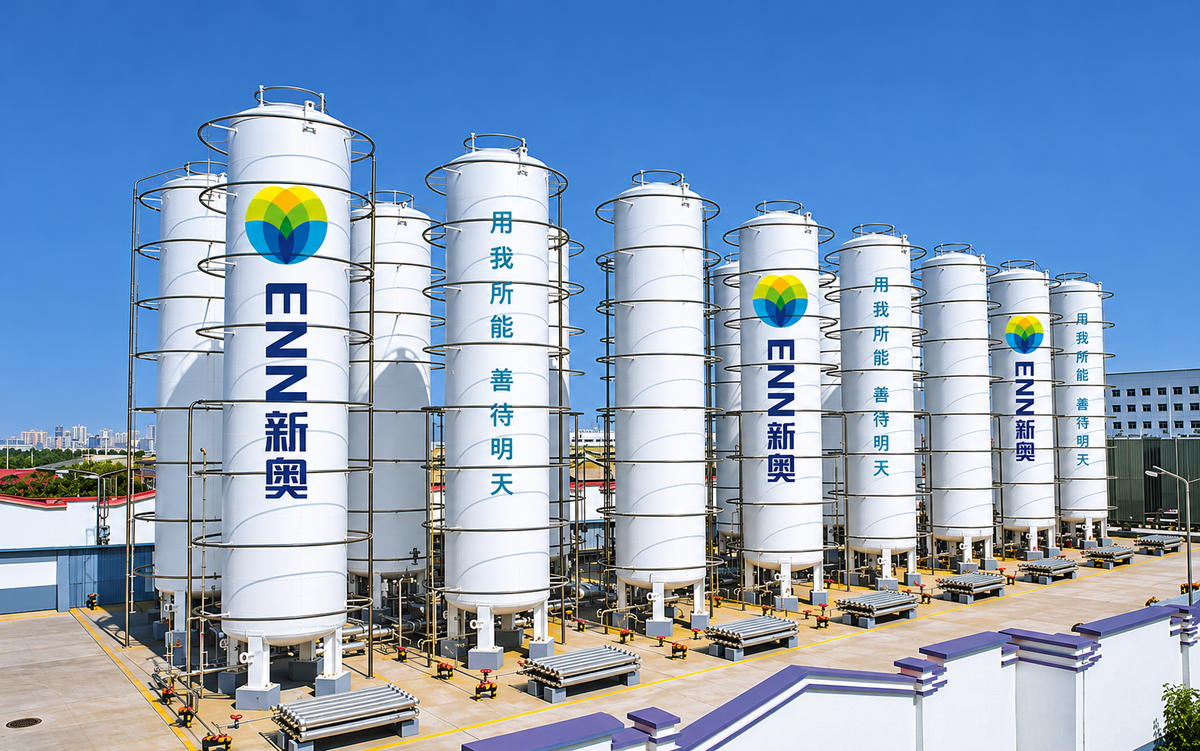
ENN Energy Holdings Limited (HKEX: 2688), a major Chinese clean energy distributor, continues to position sustainability alongside operational resilience and intelligent innovation. Established in 1993 and listed in Hong Kong since 2001, the company operates across city gas distribution, integrated energy services and smart home solutions.
As of December 2025, ENN Energy operated 264 city gas projects, serving 32.76 million residential households and 316,000 commercial and industrial customers. With a connected population exceeding 147 million, its infrastructure provides a substantial platform for improving energy efficiency, expanding lower-carbon services and supporting China's energy transition.
Reporting Context and Scope
ENN Energy's ninth Environmental, Social and Governance Report covers January 1 to December 31, 2025, with a reporting boundary aligned with its consolidated financial statements. Prepared in accordance with the Hong Kong Stock Exchange's ESG Reporting Code, it also references the GRI Standards, ISSB sustainability disclosure standards and TNFD framework.
The report follows the company's “Shaping a Sustainable Future” 4S strategy, emphasizing innovation, low-carbon development, intelligence and safety. This integrated approach connects sustainability commitments with energy infrastructure management, customer services and long-term business transformation.
Governance and Oversight Mechanisms
ENN Energy operates a three-tier sustainability governance structure comprising its ESG Committee, ESG Working Group and specialized task forces. The ESG Committee oversees strategy, targets and performance, while operational teams coordinate implementation across business functions.
In 2025, the ESG Committee convened twice to review ESG performance, climate-related issues and policy developments. The company also strengthened board governance through updated committee responsibilities and director capability development.
Board diversity remains an established priority. Female directors represented 27% of the Board, approaching the company's target of 30% by 2027. These arrangements demonstrate increasingly structured oversight, although continued performance monitoring remains essential to translating governance commitments into measurable outcomes.
Material Topics and Risk Lens
ENN Energy identified 24 material ESG topics through stakeholder engagement, regulatory benchmarking and industry analysis. Its assessment incorporated 246 valid stakeholder responses, covering investors, employees, customers, regulators, suppliers and other interested parties.
Material priorities include safe and stable gas supply, climate change, emissions management, occupational safety, customer protection and corporate governance. These topics reflect the operational realities of a large energy distribution network, where infrastructure reliability and environmental performance are closely connected.
Climate risk assessment follows the TCFD approach, while nature-related assessments reference TNFD recommendations. The company has also conducted biodiversity assessments at more than 300 key stations, indicating an expanding understanding of environmental dependencies beyond carbon emissions.
Metrics, Targets and Performance Signals
ENN Energy reported combined Scope 1 and Scope 2 greenhouse gas emissions of 112,799.81 tonnes CO₂e in 2025, compared with 205,360.61 tonnes in 2024, representing an approximately 45% reduction. Scope 1 emissions declined to 33,909.60 tonnes CO₂e, while Scope 2 emissions reached 78,890.21 tonnes CO₂e.
However, Scope 3 emissions increased to approximately 62.50 million tonnes CO₂e, principally driven by the use of sold products. This distinction highlights the importance of addressing downstream emissions alongside improvements in operational efficiency.
The company's 2030 ambitions include reducing city gas emissions intensity by 50% and integrated energy production emissions intensity by 48%, both against 2019 baselines. ENN Energy also targets net-zero emissions in its own operations by 2050 without relying on purchased offsetting instruments.
Renewable and integrated energy development remained significant. Cumulative grid-connected capacity included 1,294 MW of photovoltaic projects, 716 MW of biomass projects and 239 MWh of energy storage.
Safety performance is another strategic indicator. ENN Energy invested RMB 1.031 billion in safety initiatives, while its reported lost-time injury frequency rate reached 0.22, compared with its 2030 target of 0.20.
Credibility, Assurance and Transparency
ENN Energy's sustainability reporting demonstrates an established commitment to quantitative disclosure, supported by multi-year performance indicators and externally assessed information.
Its 2025 report includes an independent limited assurance statement under ISAE 3000 (Revised) covering selected sustainability indicators, including Scope 1 and Scope 2 emissions, energy consumption, employee information and safety metrics. The assurance engagement does not extend to every disclosure in the report.
External ESG assessments provide additional perspectives. ENN Energy disclosed an MSCI ESG rating of AAA, a CDP score of B, an S&P Global ESG Score of 79 and a Sustainalytics ESG Risk Rating of 19.3, classified as Low Risk.
These assessments complement the company's reporting practices, although they should not be interpreted as substitutes for comprehensive verification of sustainability outcomes.
Strategic Positioning and ESG Maturity
ENN Energy's sustainability strategy increasingly connects traditional gas infrastructure with intelligent energy management, decarbonization solutions and operational digitalization.
In 2025, the company invested RMB 753 million in research and development and reported 2,418 valid patents. Its application of AI-enabled service tools, intelligent monitoring and digital procurement illustrates how technology is being integrated into everyday operations.
Supply chain governance provides another indicator of organizational maturity. ENN Energy managed 8,760 suppliers and reported 100% assessment coverage of its 92 significant suppliers, strengthening its ability to identify and respond to procurement-related ESG risks.
The issuance of RMB 608 million in carbon-neutral green asset-backed securities further demonstrates efforts to connect sustainable infrastructure investment with capital market financing.
Collectively, these initiatives suggest a transition from compliance-oriented ESG management toward a more integrated model linking sustainability, innovation and business competitiveness.
Pacifica ESG View
ENN Energy's 2025 ESG disclosures present a company strengthening the connection between sustainability governance and core energy operations. Improvements in operational emissions, digital safety management, supplier oversight and green financing provide tangible evidence of progress.
Its expanding integrated energy portfolio offers opportunities to support customers' decarbonization requirements. Nevertheless, substantial downstream Scope 3 emissions remain a defining challenge. Continued transparency regarding emissions boundaries, methane management and measurable transition outcomes will be important to evaluating long-term sustainability performance.
Forward-looking Signals
ENN Energy's combination of natural gas infrastructure, integrated energy capabilities and digital technologies may support further expansion into customer-oriented energy efficiency and decarbonization services.
Future indicators worth monitoring include progress against 2030 emissions-intensity targets, reductions in methane emissions, renewable energy deployment and the evolution of Scope 3 emissions from sold products.
Broader independent assurance and more detailed disclosures linking climate risks to financial implications could further strengthen investor confidence. The company's ability to demonstrate measurable value from intelligent energy solutions will remain an important indicator of its transition trajectory.