Japan Suntory’s Sustainability Strategy: Connecting Water, Climate, Nature and Value-Chain Resilience
Suntory’s 2025 Sustainability Report demonstrates how water stewardship, climate action, nature, human rights and responsible sourcing are becoming interconnected business priorities. Our analysis examines governance, TNFD readiness, value-chain resilience and long-term ESG maturity.
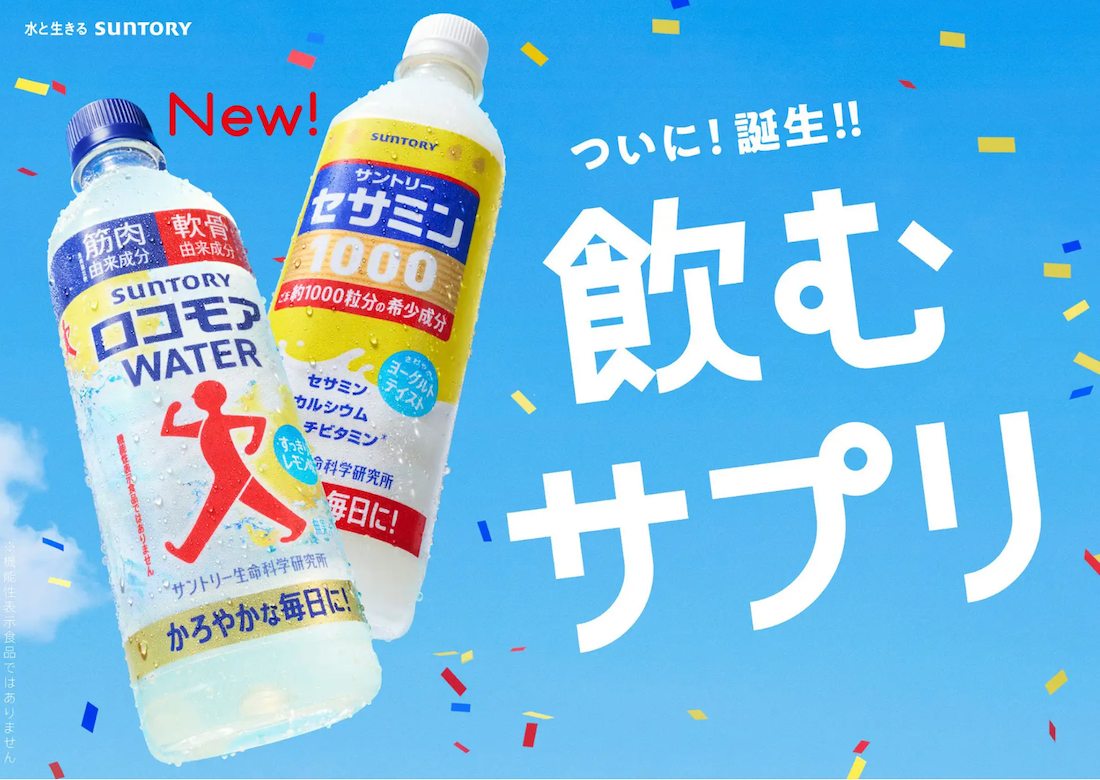
Suntory Group’s 2025 sustainability publication is structured as a broad sustainability information compendium rather than a conventional annual ESG report. Its 330-page scope covers environmental management, TNFD- and TCFD-aligned disclosure, water, biodiversity, climate, packaging, human rights, procurement, employment, product responsibility, community programmes, governance and performance data. This breadth reflects the increasingly interconnected nature of sustainability reporting, in which climate, nature, workforce and value-chain impacts can no longer be treated as separate disclosure exercises.
The report is especially relevant to the regulatory direction established by frameworks such as the ISSB standards, the European Sustainability Reporting Standards and emerging nature-related disclosure expectations. Suntory’s 2023 materiality review explicitly applied a double-materiality concept, evaluating both financial effects on the company and impacts on people and the environment. The approach is therefore directionally aligned with European reporting practice, even though the publication does not present itself as a formal CSRD sustainability statement or provide a complete ESRS index.
The company also integrates TNFD and TCFD concepts into its environmental analysis. This is strategically appropriate for a beverage group whose business depends on water availability, agricultural ingredients, ecosystem health, packaging systems and energy-intensive production. The main implication is that Suntory increasingly treats environmental sustainability as a business-continuity and resource-security issue, rather than solely as corporate responsibility.
Governance Architecture and Accountability
Suntory’s sustainability governance has a defined connection to executive management and the board. The Global Sustainability Committee is chaired by the Chief Sustainability Officer, supported by executive officers and representatives from business and functional divisions worldwide. It reviews priority themes, including water, climate, raw ingredients, packaging, health and human rights, while environmental and social progress, risks and opportunities are reported to the Board of Directors quarterly.
The governance architecture becomes more operational through specialist forums. A Scope 3 reduction body develops emissions roadmaps, the Containers and Packaging Task Force oversees progress towards packaging targets, and a cross-functional Human Rights Working Team coordinates due diligence and risk responses. The report indicates that the human rights team meets monthly and involves sustainability, supply chain, human resources, legal and compliance personnel.
A further positive feature is the inclusion of sustainability factors in executive remuneration. However, the report does not clearly disclose the weighting, calculation methodology or threshold levels attached to those factors. Greater transparency over the proportion of variable compensation linked to measurable water, emissions, packaging or human-capital outcomes would make accountability more assessable.
Materiality Approach and Risk Prioritisation
Suntory identified ten material issues and grouped them under seven themes: water, climate action, containers and packaging, raw ingredients, human rights, health and enriching life. The analysis considered external impacts through scale, scope, irreversibility and likelihood, alongside financial impacts through magnitude and likelihood. Stakeholder inputs included consumer surveys, engagement with NGOs and experts, and employee dialogue.
The matrix places water stewardship, climate change, sustainable packaging, responsible sourcing, human rights and alcohol-related responsibility among the most prominent issues. This prioritisation is credible for a beverage group: physical water constraints can affect production, climate change can alter crop yields, packaging regulations can increase costs, and responsible marketing is central to maintaining consumer and regulatory trust.
The materiality process is stronger in issue identification than in financial quantification. The report discusses risks and opportunities, but generally does not translate them into expected revenue exposure, capital expenditure requirements, impairment risks or ranges of possible financial effect. Developing this connection would help Suntory move from strategic sustainability analysis towards decision-useful sustainability-related financial disclosure.
Climate, Supply Chain and Social Dimensions
Suntory has set a 2050 objective of net-zero greenhouse gas emissions across its value chain, supported by 2030 targets to reduce direct operational emissions by 50% and value-chain emissions by 30% from a 2019 baseline. In 2024, the respective reductions stood at 32% and 13%. The difference suggests that operational decarbonisation is progressing faster than value-chain transformation, which is common in consumer-goods companies where agriculture, ingredients, packaging and logistics account for substantial indirect emissions.
The company reports using 100% renewable purchased electricity at alcohol and non-alcohol manufacturing sites and R&D facilities in Japan, the Americas and Europe. It estimates that this reduces annual emissions by approximately 230,000 tonnes, while additional measures include solar generation, biomass boilers and green-hydrogen development.
Nature and climate risks converge most clearly in agricultural sourcing. Suntory applies climate scenarios including lower-temperature and 4°C pathways when considering droughts, floods, crop yields and shifts in suitable cultivation areas. It is also pursuing regenerative agriculture and supplier collaboration relating to coffee, barley and other agricultural materials.
The supply-chain governance framework includes a Basic Policy on Sustainable Procurement and Partner Guidelines covering forced labour, child labour, freedom of association, working hours, living wages, safety and environmental requirements. Suppliers are asked to sign the guidelines, use Sedex and cascade relevant commitments through their own supply chains. Suntory states that serious violations, combined with unwillingness to improve, may result in termination of the relationship.
Employment
Suntory reports 41,357 employees globally in 2024, with 19,820 in Japan, 7,501 in the Americas, 4,897 in Europe and 9,139 across Asia and Oceania. Employee engagement survey participation in Japan remained high at 93%, while 86% of respondents expressed pride in working for the Group.
Investment in employee development increased, with annual training expenditure reaching ¥392,000 per employee in the principal Japanese entities. The Group also operates structured leadership, cross-border and self-directed learning programmes, although participation in voluntary training declined from 3,810 employees in 2022 to 1,942 in 2024. This decline deserves explanation because expenditure alone does not demonstrate learning effectiveness or equitable access.
Gender indicators show gradual progress but continuing structural gaps. Women represented 28.4% of employees and 12.5% of managers in the principal Japanese entities in 2024, while the reported female-to-male salary ratio for all employees was 71.8%. Suntory attributes the difference to age, tenure, occupational composition and management representation, but the persistence of the gap indicates that workforce progression remains an important area for monitoring.
Health and Safety
Suntory’s Japanese operations reported a lost-time incident rate of 0.14 in 2024, down from 0.21 in 2023, with no occupational fatalities. A total of 768 employees received occupational health and safety education. Safety performance is incorporated into plant evaluation, and employee representatives participate in health and safety committees at site and company levels.
The company also discloses workforce health measures, including 100% health-examination coverage, 94.5% participation in stress checks and a reduction in average illness- or injury-related absence to 0.6 days. These indicators demonstrate systematic employee-health monitoring, although most disclosed health and safety data is limited to Japanese operations or selected entities.
For a group with production, warehousing, logistics and agricultural exposure worldwide, wider reporting of contractor incidents, serious injuries, near misses and regional safety performance would improve comparability. The current data supports a positive assessment of Japan-based controls, but it does not yet provide a complete global safety profile.
Product or Service Responsibility
Product responsibility is a particularly material issue because Suntory sells alcoholic beverages, soft drinks, water and health-related products. The report links health impacts to responsible drinking, responsible marketing, consumer wellbeing and product quality rather than treating responsibility as limited to regulatory compliance.
The company’s procurement policy also requires suppliers to maintain quality and safety standards, reinforcing the connection between upstream controls and finished-product integrity. Suntory evaluates suppliers on product quality, supply capability, safety, environmental performance and social contribution.
The report provides extensive descriptions of quality management and consumer engagement but less consolidated outcome data on recalls, substantiated complaints, non-compliant marketing cases or product-related regulatory breaches. Greater disclosure of these indicators would enable readers to assess whether policies and management systems consistently prevent adverse consumer outcomes.
Philanthropy
Suntory’s community strategy is rooted in its long-standing “Giving Back to Society” philosophy. Activities include water education, access to safe water, children and youth programmes, arts, culture and sports. The Mizuiku water-education programme has expanded internationally, while the company reports that its water education and safe-water initiatives reached a total of 1.75 million people in 2024.
Community investment was reported at ¥7.5 billion for 2024. This is a useful financial indicator, but its significance would be clearer if accompanied by programme-level outcomes, geographic allocation, beneficiary definitions and longer-term impact evaluation.
The most strategically connected community programmes are those linked to watersheds and local resilience, because they address a resource shared by the company, communities and ecosystems. Such initiatives are more closely tied to operational dependency than conventional charitable donations, although careful measurement is still needed to distinguish corporate contribution from broader ecological and public-sector outcomes.
Metrics, Targets and Data Robustness
Suntory’s environmental targets are generally time-bound and baseline-based. Water intensity at owned plants had declined by 30% from 2015 by 2024, compared with the 2030 target of 35%. Water-replenishment activities covered 36% of owned plants globally, while the company aims to replenish more than 100% of water used at at least half of its owned plants, including all facilities in highly water-stressed areas.
Packaging progress is less advanced. Suntory aims to use recycled or bio-based materials for all PET bottles by 2030, while the global proportion reached 35% in 2024. The figure was higher in Suntory’s Japanese non-alcoholic beverage business, where sustainable materials accounted for 58% of PET-bottle weight.
Data boundaries require careful reading. Environmental data covered 27 production plants in Japan and 52 overseas plants in 2024, while personnel indicators have individually defined scopes. Changes in overseas plant coverage from prior years can affect trend comparability, making boundary reconciliations and restatement policies important.
Assurance, Credibility and Comparability
Selected performance indicators marked with a star were independently assured by KPMG AZSA Sustainability under ISAE 3000 and ISAE 3410. This adds credibility to key emissions and performance data and demonstrates alignment with established assurance practice.
However, assurance is selective rather than report-wide. The usefulness of the assurance statement would be strengthened by a clearer summary of assured indicators, assurance level, materiality threshold, organisational boundaries and any identified limitations. Readers should therefore distinguish between independently assured data and narrative disclosures that remain management representations.
Comparability is also constrained by differing scopes across environmental, workforce and safety datasets. A unified reporting-boundary table, together with explanations for acquisitions, divestments and changes in plant coverage, would make year-on-year analysis more reliable.
Strategic Implications for the Sector
Suntory’s reporting illustrates how beverage-sector sustainability is moving towards integrated management of water, climate, nature, agriculture and packaging. Companies in the sector increasingly need to assess not only factory efficiency but also watershed conditions, crop resilience, supplier labour practices, circular infrastructure and consumer health impacts.
The report also highlights the challenge of Scope 3 delivery. Suntory has already made substantial progress in operational emissions, but value-chain emissions and sustainable packaging remain further from their 2030 endpoints. Closing these gaps will likely require deeper supplier contracting, agricultural transition support, packaging-system partnerships and product-design changes rather than relying primarily on internal operational measures.
Water may become the most distinctive competitive and resilience factor. Companies with credible watershed science, community engagement and replenishment methods may be better positioned to manage local constraints, but claims such as “water positive” will require transparent location-specific methodologies and evidence that replenishment creates additional, durable benefits.
ESG Maturity and Future Positioning
Suntory demonstrates an advanced ESG governance and disclosure foundation. Board reporting, executive oversight, specialist working groups, double materiality, climate scenarios, TNFD alignment, science-based targets and limited external assurance all indicate that sustainability is integrated into management structures.
Its next stage of maturity will depend less on adding policies and more on strengthening outcome evidence. Priorities include quantifying financial effects, accelerating Scope 3 and packaging progress, expanding global workforce and safety coverage, disclosing clearer supplier due-diligence results, and connecting executive incentives to measurable performance.
The company appears comparatively well prepared for more demanding sustainability disclosure environments. Nevertheless, readiness should not be equated with full compliance with any particular reporting regime. A formal CSRD-, ISSB- or jurisdiction-specific assessment would still require detailed gap analysis, entity-level boundaries, financially connected metrics and disclosure controls.
Pacifica ESG View
Suntory’s 2025 sustainability reporting reflects a mature understanding of the dependencies linking beverages, water, agriculture, climate and society. Its strongest features are board-connected governance, double materiality, measurable environmental targets and a distinctive water-stewardship platform. The principal challenge is execution across the value chain: Scope 3 reductions and global sustainable-packaging progress remain materially behind operational decarbonisation. Future credibility will increasingly depend on location-specific nature outcomes, quantified financial effects, global social-data coverage and transparent evidence of supplier remediation. Suntory has built much of the required architecture; the next test is whether that architecture produces sufficiently rapid and comparable outcomes before 2030.
Implications for the Wider Market
For beverage and consumer-goods companies, Suntory’s approach shows that climate reporting alone is becoming insufficient. Water security, biodiversity, agricultural resilience, packaging circularity, human rights and consumer health must be assessed as connected business issues. Sector leaders will need board oversight and targets, but also granular supplier data, traceability, credible transition plans and independently assured performance. Companies that continue to report these subjects in isolation may struggle to explain their real exposure to regulators and investors. The broader market is likely to place increasing emphasis on implementation evidence: not only what policies exist, but where impacts occur, how performance is measured and whether value-chain partners are changing their practices.