Australia’s Telecommunications ESG Transition: An Analysis of Optus Sustainability Report 2026
Optus’ 2026 Sustainability Report reflects the evolving ESG priorities of Australia’s telecommunications sector, covering climate resilience, Scope 3 emissions, circularity, digital inclusion, customer protection, responsible AI, supply chain management and stronger governance.
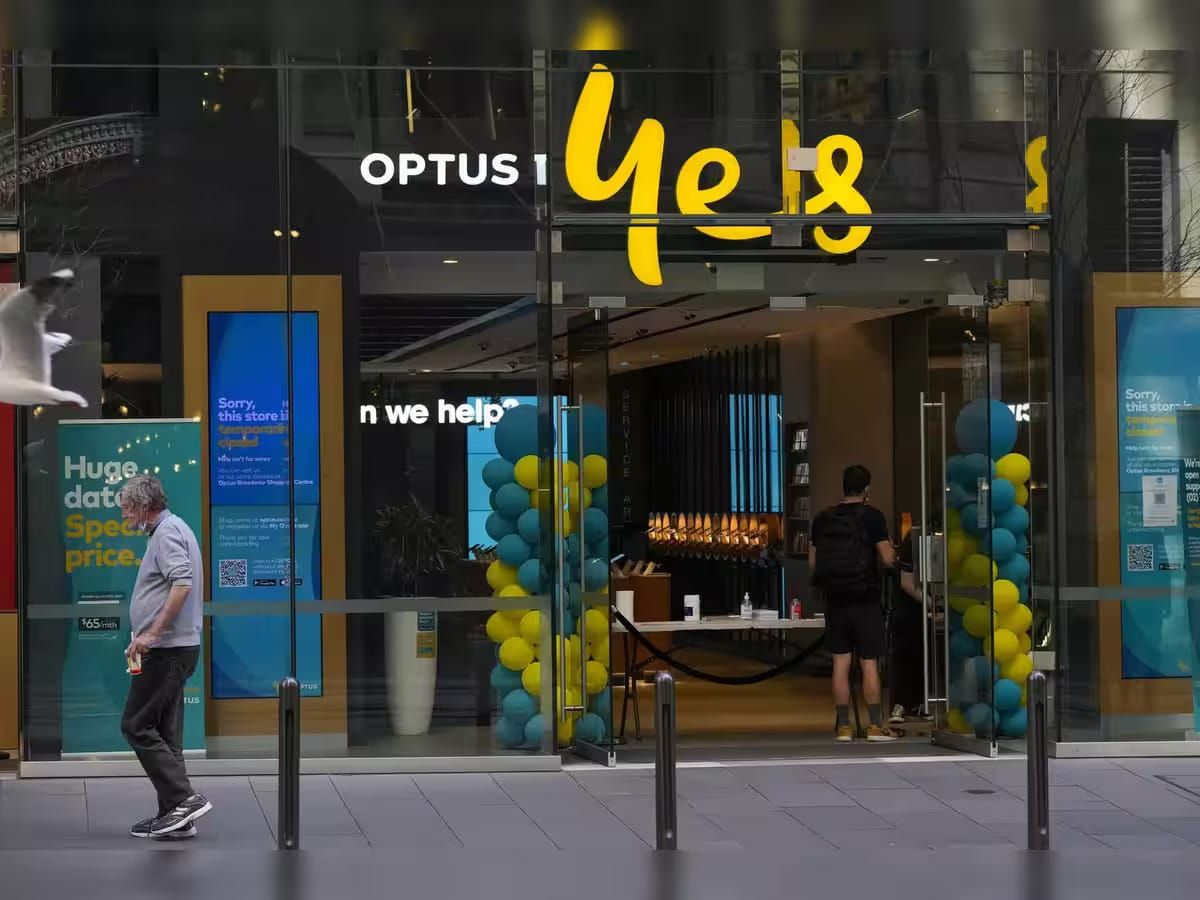
Optus’ 2026 Sustainability Report is notable not simply for its environmental and social programs, but for the way sustainability is increasingly framed as an issue of operational discipline, resilience and public trust. Covering 1 April 2025 to 31 March 2026, the report is Optus’ 27th annual sustainability report and the first full-year account of performance under its refreshed 2030 sustainability strategy. Optus operates at considerable national scale, with network coverage reaching 99.1% of Australians, more than 12 million customer services and 7,281 employees.
The context is unusually consequential. Australia has entered mandatory climate-related financial reporting: AASB S2 is mandatory for qualifying entities, with phased commencement beginning from annual periods starting on or after 1 January 2025, while the broader AASB S1 sustainability standard remains voluntary. Optus states that it has separately issued its inaugural statutory FY26 sustainability report aligned with AASB S2, covering climate governance, strategy, risks and opportunities. This means the voluntary sustainability report increasingly sits alongside, rather than substitutes for, investor-oriented statutory climate disclosure.
Governance Architecture and Accountability
Optus strengthened its sustainability governance during FY26 by formalising responsibilities across the Board, Risk Committee, Executive Committee and Sustainability Team. The Board approves the 2030 sustainability strategy and oversees metrics, targets and emerging sustainability risks; the Risk Committee focuses on the risk-management framework; and the Executive Committee oversees strategy execution and implementation of controls. Cross-functional teams are additionally convened for specific sustainability and climate-related projects.
More significant than the organisational chart is the report’s linkage between sustainability governance and recent operational failures. The September 2025 Triple Zero disruption resulted from human errors and process failures during a network upgrade and prevented some emergency calls from connecting. The Board commissioned an independent review led by Dr Kerry Schott AO, accepted all 21 recommendations and established a dedicated implementation program, while Kearney was appointed to provide additional oversight, quality assurance and verification of network-management improvements. For an infrastructure operator, this illustrates how ESG governance is expanding beyond traditional environmental oversight into operational reliability, customer safety and accountability.
Materiality Approach and Risk Prioritisation
Optus states that its 2030 strategy was developed following a sustainability materiality analysis considering both financial and non-financial impacts of priority sustainability topics on the business and stakeholders. The resulting framework has three pillars: Digital Empowerment, Healthy Planet and Responsible Business. This gives the report a relatively clear strategic architecture rather than treating ESG as a collection of unrelated initiatives.
However, the published report provides limited methodological detail about the materiality process itself. It does not provide a detailed materiality matrix, stakeholder weighting methodology or comprehensive list of assessed impacts, risks and opportunities. As sustainability reporting moves toward decision-useful risk disclosure, greater transparency around how issues are prioritised—and how those priorities connect to enterprise risk, capital allocation and financial effects—could make future reporting materially stronger.
Climate, Supply Chain and Social Dimensions
Climate strategy combines decarbonisation with network adaptation. Optus reports that Scope 1 and 2 market-based emissions declined 17% year-on-year as its renewable electricity power purchase agreement operated for the full financial year. Renewable electricity increased from 21% to 35% of total electricity demand, while solar deployment and the decommissioning of legacy infrastructure contributed to lower electricity requirements.
Adaptation is equally prominent. During FY26 Optus deployed 147 portable generators, equipped 10 additional mobile sites with permanent generators, installed critical power extenders and expanded satellite-supported emergency connectivity equipment. It also participated in CSIRO’s Telecommunications Resilience Investment Pilot and tested 5G-supported emergency-response technologies. This is particularly relevant to telecommunications because physical climate risk can become a direct service-continuity and community-safety issue.
Supply-chain decarbonisation is becoming more structured. Scope 3 represents approximately 69% of Optus’ combined Scope 1, Scope 2 market-based and Scope 3 emissions, and selected supplier contracts now incorporate emissions-reduction expectations and requirements for Scope 1, 2 and 3 data. The company also expanded its Supplier Engagement Program to 250 suppliers and provided carbon-accounting education to 64 SMEs.
Employment
Workforce disclosure is comparatively limited in this report. Optus reports 7,281 employees and sets a 2030 strategy objective of achieving employee engagement within the Australian Top Quartile, but FY26 performance was six points below that benchmark. The report indicates that annual survey results will be used to inform improvement efforts in FY27.
For a company emphasising cultural reform, accountability and organisational resilience, employment reporting could be deeper. Metrics covering workforce composition, gender representation, turnover, training, leadership development, pay equity and employee wellbeing would help stakeholders assess whether the cultural changes described by management are becoming embedded institutionally. The current report communicates direction more effectively than workforce outcomes.
Health and Safety
Occupational health and safety is not presented as a dedicated reporting area in the Sustainability Report, and detailed workforce safety indicators such as recordable injury rates or lost-time injury frequency rates are not provided. This limits direct comparison with companies that report conventional workforce safety metrics.
The broader concept of safety, however, is highly material to Optus. Network reliability, emergency-call availability, cyber security, digital safety and protection of vulnerable customers all carry potentially significant human consequences. The Triple Zero incident demonstrates that, in telecommunications, “safety” extends beyond employee occupational safety into the design, resilience and governance of essential communications infrastructure.
Product and Service Responsibility
Product and service responsibility is one of the report’s strongest and most distinctive themes. Optus openly discusses Federal Court proceedings concerning improper sales practices and describes its remediation program for customers who may have been sold products or services they did not need, could not afford or could not use. It also reports a $100 million Federal Court penalty and an additional $826,320 regulatory penalty relating to breaches of telecommunications anti-scam rules.
Customer vulnerability is therefore addressed as a governance issue rather than only a community program. Specialist Care supported 28,212 customers during FY26, while the Financial Hardship team supported 63,060 customers. The report also describes privacy controls and reports 33 privacy-related complaints, down from 76 in FY25. These disclosures create an unusually direct connection between ESG, consumer protection and licence-to-operate considerations.
Emerging technology introduces another layer. Optus reports that generative-AI-enabled customer-service tools supported more than six million routine interactions, while use is governed by the Singtel Group Responsible AI Policy and a stated “safety first” approach. Responsible AI governance could become increasingly significant for telecommunications companies as automated customer interaction, personal data and vulnerable consumers intersect.
Philanthropy
Optus’ community programs have moved beyond conventional charitable donations toward digital inclusion and employability. FY26 community contributions totalled $17.2 million using the B4SI Community Investment Framework, while 2,407 employees contributed 11,733 volunteering hours across 263 charities and causes. Total charitable giving by Optus and employees was $283,100.
Programs are closely linked to telecommunications capabilities. Donate Your Data added 12,497 participants in FY26 and involved 200,214 customers donating 12.2 million GB of data, while the Digital Thumbprint program reached almost 100,000 students during the year. Pathways 2 Employment also expanded, with student participation increasing 85% and 202 students supported by Optus mentors. This alignment between social investment and core capabilities generally offers a stronger impact logic than stand-alone philanthropy.
Metrics, Targets and Data Robustness
The 2030 strategy introduces measurable headline targets: connect or educate 750,000 Australians experiencing vulnerability; reuse or recycle 750,000 customer devices; spend $14 million with First Nations suppliers; and achieve employee engagement within the Australian Top Quartile. FY26 results include 203,710 people reached, 175,799 devices reused or recycled and $1.88 million of First Nations supplier expenditure.
Climate data presents a more complex picture. FY26 Scope 1 and 2 market-based emissions were 216,622 tCO2e, compared with 261,301 tCO2e in FY25, while location-based Scope 1 and 2 emissions increased to 351,574 tCO2e. Scope 3 was reported at 479,704 tCO2e. Optus also explicitly warns that revisions to its Scope 3 methodology mean FY24 and FY25 Scope 3 figures are not directly comparable with FY26, an important qualification for users interpreting apparent reductions.
Optus itself has not established a separate local GHG reduction target. Instead, it contributes to Singtel Group’s science-based targets, including a 55% reduction in absolute Scope 1 and 2 emissions and a 40% reduction in specified Scope 3 emissions by FY30 from an FY23 baseline. Greater Optus-specific target attribution could improve accountability at operating-entity level.
Assurance, Credibility and Comparability
The report makes repeated reference to accountability, transparency and independent assurance, but it does not include a conventional independent assurance statement covering the sustainability report or a clearly identified set of assured ESG indicators. Its explicit external assurance reference concerns Kearney’s oversight and verification of improvements to mobile network management following the Triple Zero incident.
This distinction matters. Operational review and sustainability-information assurance address different questions. As Australian statutory climate reporting matures under AASB S2, the expectation for clearly defined reporting boundaries, methodologies, internal controls and externally assured climate information is likely to strengthen. The most material comparability limitation in the current report is already visible in Scope 3, where methodology revisions prevent straightforward year-on-year comparison.
Strategic Implications for the Telecommunications Sector
Optus demonstrates why telecommunications sustainability is becoming broader than carbon management. Networks are simultaneously physical infrastructure, digital platforms, emergency-service gateways and custodians of personal information. Climate resilience, cyber security, responsible AI, privacy, consumer protection and network reliability therefore converge into a single operational-resilience agenda.
The sector’s environmental challenge will also increasingly move into the value chain. For Optus, Scope 3 represents the majority of reported emissions, making supplier emissions data, device manufacturing, equipment procurement, circularity and customer product use increasingly important. Circular initiatives—including recycling 98% of operational e-waste and reusing or recycling 175,799 customer devices—show how product stewardship can complement decarbonisation.
ESG Maturity and Future Positioning
Optus appears to be moving from a program-based sustainability model toward a more integrated risk-and-accountability model. Board oversight, AASB S2 reporting, supply-chain engagement, climate resilience investment and quantified 2030 objectives provide evidence of greater structural maturity. At the same time, the report itself highlights gaps that remain relevant: employee engagement is below target, local emissions targets have not been established, Scope 3 comparability is affected by methodology revisions, and detailed workforce and occupational safety metrics remain limited.
A further stage of maturity would involve connecting operational ESG risks more explicitly with financial implications, capital expenditure, scenario analysis and performance incentives. This would help bridge the current sustainability narrative and the investor-oriented logic increasingly expected under climate-related financial reporting.
Pacifica ESG View
Optus’ FY26 report is strongest where sustainability intersects directly with the realities of operating critical national infrastructure. Climate resilience, customer vulnerability, emergency connectivity, privacy, digital safety and responsible AI are treated less as peripheral ESG topics and more as questions of operational performance and trust.
The report is also unusually candid about major failures and regulatory penalties. That transparency improves its analytical value, although credibility will ultimately depend on evidence that governance reforms produce sustained operational improvements. Future reporting would benefit from deeper workforce metrics, clearer Optus-level climate accountability and more explicit assurance coverage of material sustainability data.
Implications for the Wider Market
Optus illustrates an important shift for telecommunications and infrastructure companies: ESG performance is increasingly assessed through resilience and service outcomes, not environmental indicators alone. Mandatory AASB S2 reporting will accelerate this transition by requiring climate risks and opportunities to be considered through governance, strategy, risk management and financial-materiality lenses.
For the wider market, the emerging benchmark is therefore broader: credible decarbonisation, resilient infrastructure, responsible supply chains, consumer protection, digital inclusion, data governance and accountable use of AI. Companies able to connect these issues to measurable operational outcomes are likely to produce sustainability disclosures that are substantially more decision-useful than reports built primarily around commitments and initiatives.