Intelligent Manufacturing and Circular Economy Drive Shuanghuan’s Sustainability Transition
Shuanghuan’s 2024 ESG report highlights climate scenario analysis, emissions reduction initiatives, digital manufacturing integration, and strengthened supply chain governance.
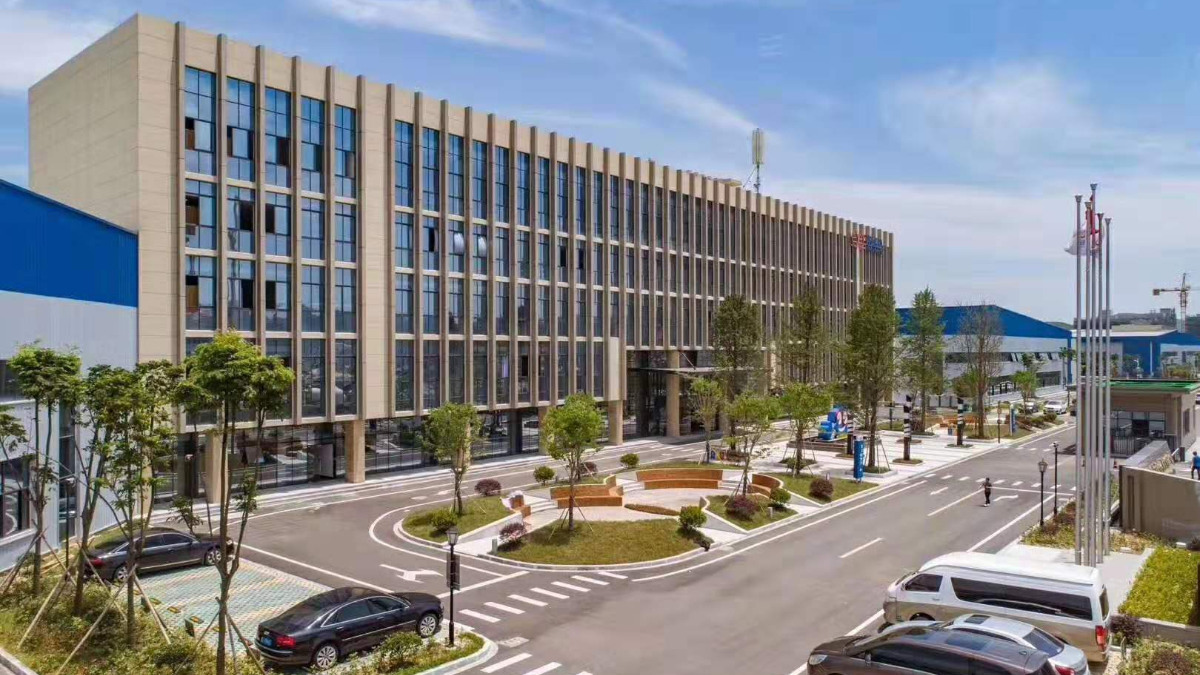
Zhejiang Shuanghuan Driveline Co., Ltd. (Stock Code: 002472) has published its 2024 Sustainability Report, marking its third sustainability disclosure and covering the period from 1 January to 31 December 2024. The report has been prepared in accordance with the Shenzhen Stock Exchange Guideline No.17 on Sustainability Reporting, references the GRI Standards, and has undergone independent third-party assurance by SGS under AA1000AS v3 (Type 1, Moderate level).
As a leading global manufacturer of precision gear components serving automotive, new energy vehicle (NEV), robotics, and industrial equipment markets, Shuanghuan’s 2024 disclosure is particularly relevant amid accelerating electrification, supply chain decarbonisation, and rising ESG expectations from global OEM customers.
Key Sustainability Themes and Disclosures
Climate transition and energy management are central to the 2024 report. Total Scope 1 and Scope 2 greenhouse gas emissions reached 263,841.62 tons CO₂e, representing a 10.7% decrease compared to the previous year. Carbon emission intensity per RMB 10,000 of industrial added value declined to 0.74 tons CO₂e, while energy intensity (value-based) remained at 0.44 tce per RMB 10,000 of industrial added value.
The company has articulated a clear roadmap: peak emissions by 2030 and achieve carbon neutrality by 2050, with annual carbon intensity reduction targets of 8.5%. Operationally, it has implemented distributed rooftop photovoltaic systems (including a 6.348 MWp installation in Jiaxing), green power procurement, and energy-saving projects such as waste heat recovery and grinding sludge oil recycling. These initiatives collectively reduced carbon emissions by thousands of tons in 2024 and signal structured decarbonisation across operations and product lifecycles.
Circular economy performance is increasingly quantified. In 2024, total recycled waste reached 26,327.4 tons, while renewable resource consumption included 280,461.78 tons of recycled steel and 2,798.56 tons of recovered oil. Hazardous waste intensity per RMB 10,000 of industrial added value was reduced to 0.0098 tons. These disclosures suggest an evolving shift from compliance-driven waste management toward resource efficiency as a decarbonisation lever.
On social performance, total employees reached 8,333 in 2024, with 11,009 person-times of training participation and 82.7% training coverage. Occupational health and safety metrics remain stable, with zero safety incidents reported and 100% coverage under work injury and safety liability insurance.
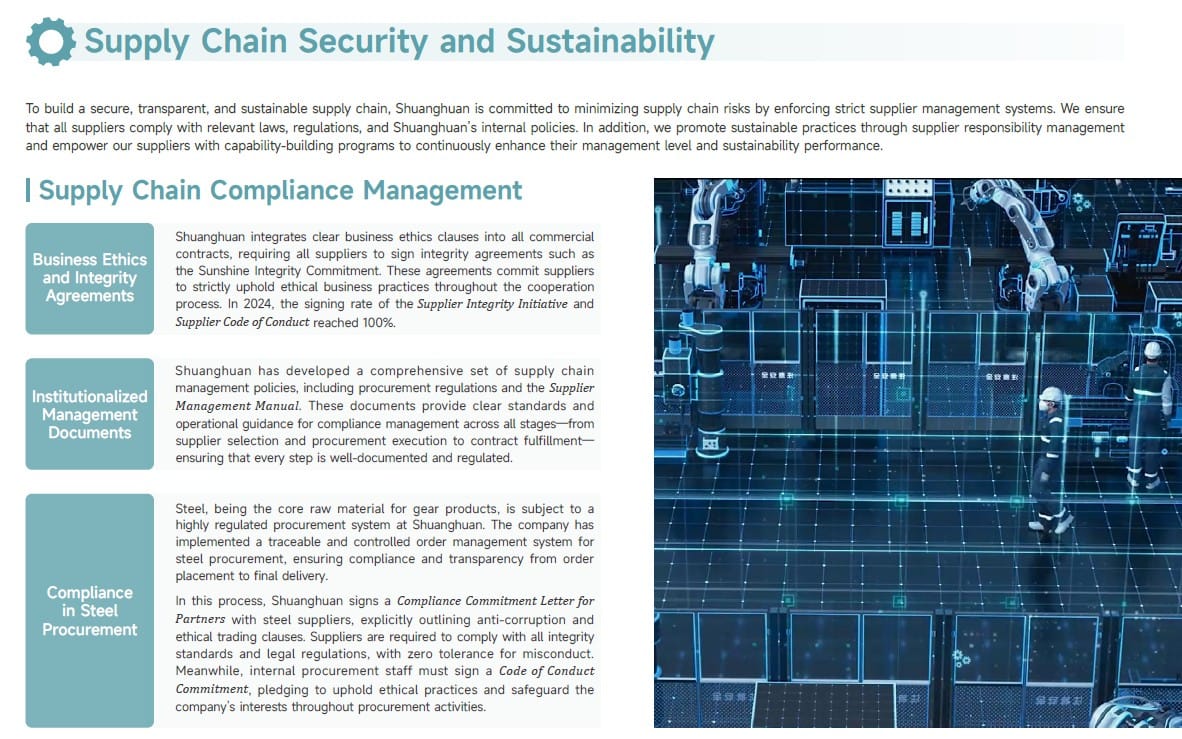
Supply chain governance is also structured. In 2024, 100% of suppliers signed the Supplier Integrity Commitment and Code of Conduct, and 49 suppliers were evaluated, with 100% rectification for identified high-risk suppliers. Tiered carbon emission management for suppliers is being introduced from 2025, indicating forward planning for value chain Scope 3 management.
Governance and Strategic Signals
Shuanghuan’s governance framework integrates sustainability oversight at board level through a dedicated ESG Committee under the Board of Directors. The company held three General Meetings of Shareholders and ten Board Meetings in 2024, with ESG-related topics approved at a 100% pass rate.
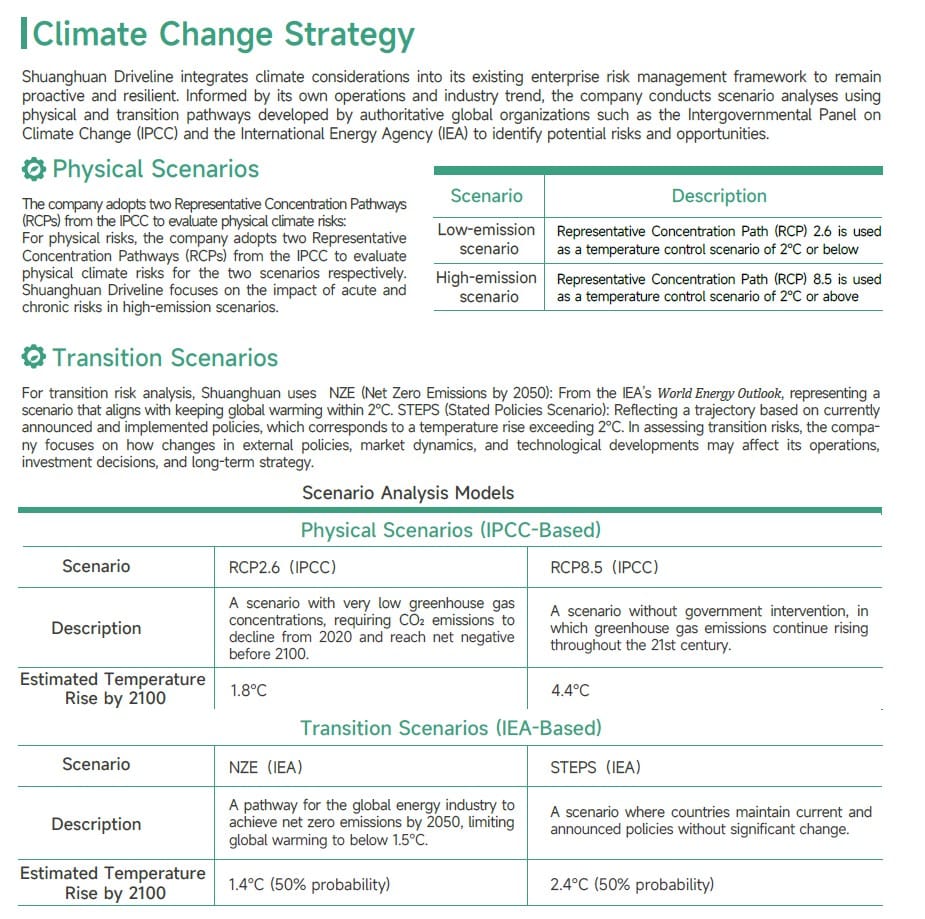
Climate governance has been institutionalised via a Carbon Neutrality and Dual Energy Control Task Force and a Carbon Emissions Office. Scenario analysis is conducted using IPCC RCP pathways and IEA transition scenarios, embedding both physical and transition risk evaluation into enterprise risk management.
The company maintains 100% anti-corruption training coverage for employees and board members, with zero recorded corruption cases or unfair competition violations during the reporting period. Information security management is supported by ISO 27001 and Level 3 classified protection certifications, reinforcing governance maturity in digital operations.
What This Report Suggests About Future Direction
The 2024 report suggests Shuanghuan is moving from traditional manufacturing optimisation toward a digitally enabled, low-carbon precision transmission platform. The integration of D-MOM digital manufacturing systems, real-time energy monitoring modules, and QR-code traceability indicates a direction of travel toward data-driven ESG management embedded directly into operations.
R&D investment reached RMB 456.04 million in 2024, accounting for 5.19% of revenue, with 1,262 R&D personnel (15.14% of total workforce). Innovation in NEV gear reducers, robotics reducers, and lightweight structural optimisation suggests positioning within high-growth electrification and intelligent equipment markets.
If supplier carbon management and renewable energy integration continue to scale, Shuanghuan may further strengthen its competitiveness with global automotive and industrial clients increasingly demanding low-carbon supply chain alignment.
Pacifica ESG View
Shuanghuan Driveline’s 2024 Sustainability Report reflects measurable carbon intensity reductions, structured governance oversight, and strong integration of digital manufacturing with ESG management. The combination of circular economy metrics, supplier integrity enforcement, and board-level climate governance indicates strategic ESG embedding rather than symbolic disclosure. Continued transparency on Scope 3 supplier emissions and renewable energy scaling will be key markers of long-term climate credibility.