Gamuda Berhad Positions Itself in Green Infrastructure with Sustainable Engineering Innovations
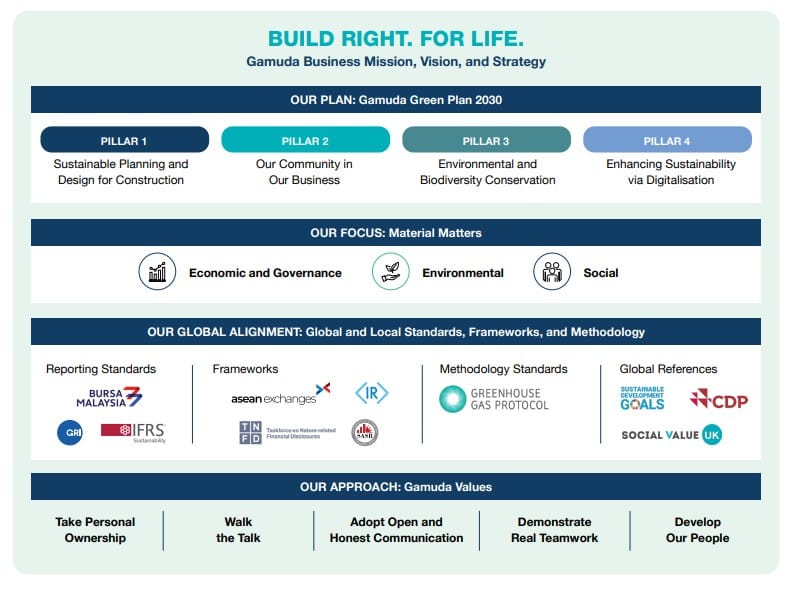
Gamuda’s Green Plan 2030 outlines a four-pillar strategy integrating sustainable construction, community impact, environmental stewardship, and digitalisation, aligned with global frameworks such as GRI, IFRS, TCFD and the GHG Protocol to drive long-term ESG value.
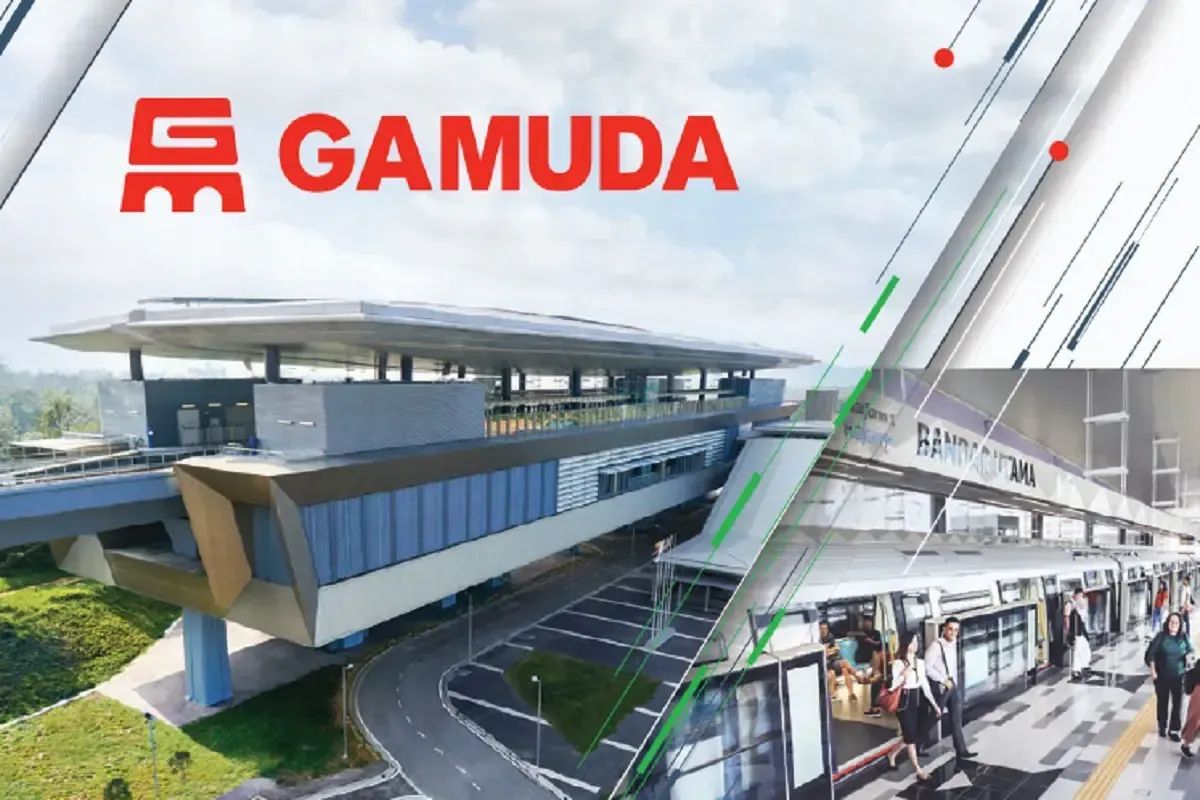
Gamuda Berhad has released its ESG Impact Report 2025, its first standalone sustainability report covering FY2025 performance across global operations. The report reflects a maturing disclosure approach, aligning with frameworks such as GRI 2021, IFRS S1/S2, SASB, and TNFD, and supported by limited external assurance under ISAE 3000. This standalone format signals a shift toward deeper, more structured ESG communication, particularly relevant as infrastructure developers face increasing scrutiny on climate, biodiversity, and supply chain impacts.
From a market perspective, the report matters because it positions Gamuda not just as a contractor, but as a regional infrastructure platform integrating sustainability into growth strategy—particularly in energy transition and nature-related risk management.
Key sustainability themes and disclosures
A central theme is decarbonisation with measurable progress. Gamuda reports a 36% reduction in Scope 1 and 2 emissions intensity from its FY2022 baseline, exceeding its 2025 target of 30%. This is complemented by SBTi-validated targets toward net zero by 2050, alongside a growing renewable energy pipeline exceeding 3 GW. The combination of operational reductions and business model expansion into clean energy suggests a dual-track decarbonisation approach.
The report also highlights nature and biodiversity integration as a differentiator. Gamuda is an early adopter of TNFD and has embedded a structured LEAP-based framework into its strategy. Biodiversity initiatives—such as habitat restoration, AI-driven monitoring, and marine ecosystem offsets—indicate a move beyond compliance toward nature-positive positioning.
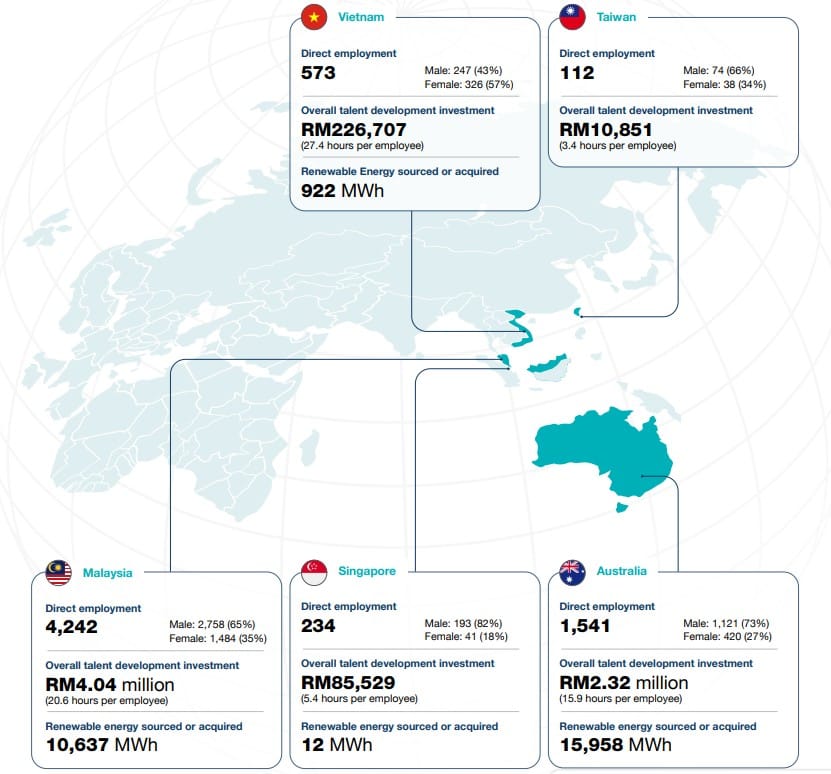
On the social side, disclosures emphasise measurable impact and workforce development. A Social Return on Investment (SROI) of 3.3 demonstrates quantified social value creation, while initiatives such as training academies and community programmes support long-term labour and community resilience. This reflects increasing expectations for infrastructure players to demonstrate tangible socio-economic contributions.
Supply chain management is another focus area, with near-total local procurement in key markets and structured ESG screening via digital platforms. This suggests early alignment with evolving Scope 3 and due diligence expectations.
Governance and strategic signals
Governance disclosures indicate a relatively mature ESG integration model. Sustainability oversight sits at Board level, supported by a Sustainability Steering Committee and risk management structures embedding ESG into enterprise risk processes. Notably, sustainability performance contributes approximately 20% to executive evaluation, signalling partial linkage between ESG outcomes and incentives.
The report also reflects increasing regulatory alignment and readiness. Gamuda is transitioning from TCFD to IFRS S2 reporting, with plans for full compliance by 2026. This indicates anticipation of stricter disclosure regimes, particularly in Asia-Pacific markets.
Strategically, the integration of digitalisation—AI, BIM, and data platforms—into ESG delivery stands out. These tools are positioned not only for efficiency gains but also for improving environmental monitoring, safety performance, and data reliability. This suggests a shift toward data-driven ESG management rather than narrative-led reporting.
What this report suggests about future direction
The report signals that Gamuda is transitioning from ESG integration to ESG-led growth. Its expansion into renewable energy, supported by capital deployment and partnerships, indicates that climate transition is being treated as a revenue driver rather than a compliance cost.
At the same time, the adoption of TNFD and biodiversity frameworks suggests early positioning in an area where regulation and investor expectations are still evolving. This could offer first-mover advantages, particularly in infrastructure projects exposed to land use and ecological risks.
However, the report also highlights areas still developing, including limited quantitative disclosure on financial impacts of climate risks and partial Scope 3 coverage. These gaps suggest that while direction is clear, data maturity is still evolving—consistent with industry trends.
Overall, the direction of travel points toward a more integrated model where climate, nature, and digitalisation converge to shape both project delivery and long-term asset strategy.
Pacifica ESG View
Gamuda’s 2025 ESG report reflects a company moving beyond compliance into strategic ESG positioning, particularly in energy transition and biodiversity. The combination of measurable emissions progress, TNFD adoption, and renewable energy expansion suggests credible forward momentum. The next phase will depend on strengthening financial linkage disclosures and Scope 3 data to match its strategic ambition.