Embedding Sustainability into Seafood Value Chains: A Strategic Analysis of Thai Union 2024
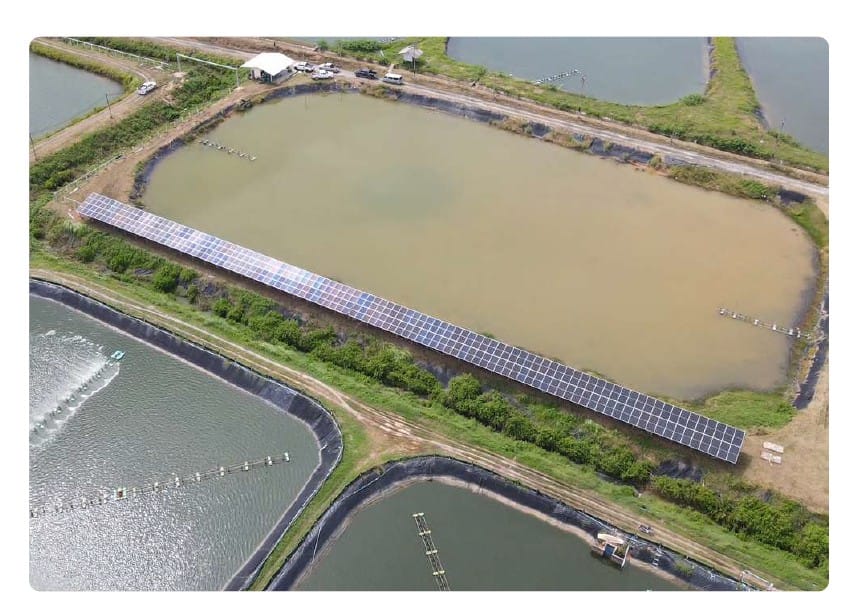
Thai Union partners with Chow Energy to bring solar power to shrimp farms through flexible PPAs, helping reduce emissions, lower energy costs, and scale renewable energy adoption across its aquaculture supply chain.
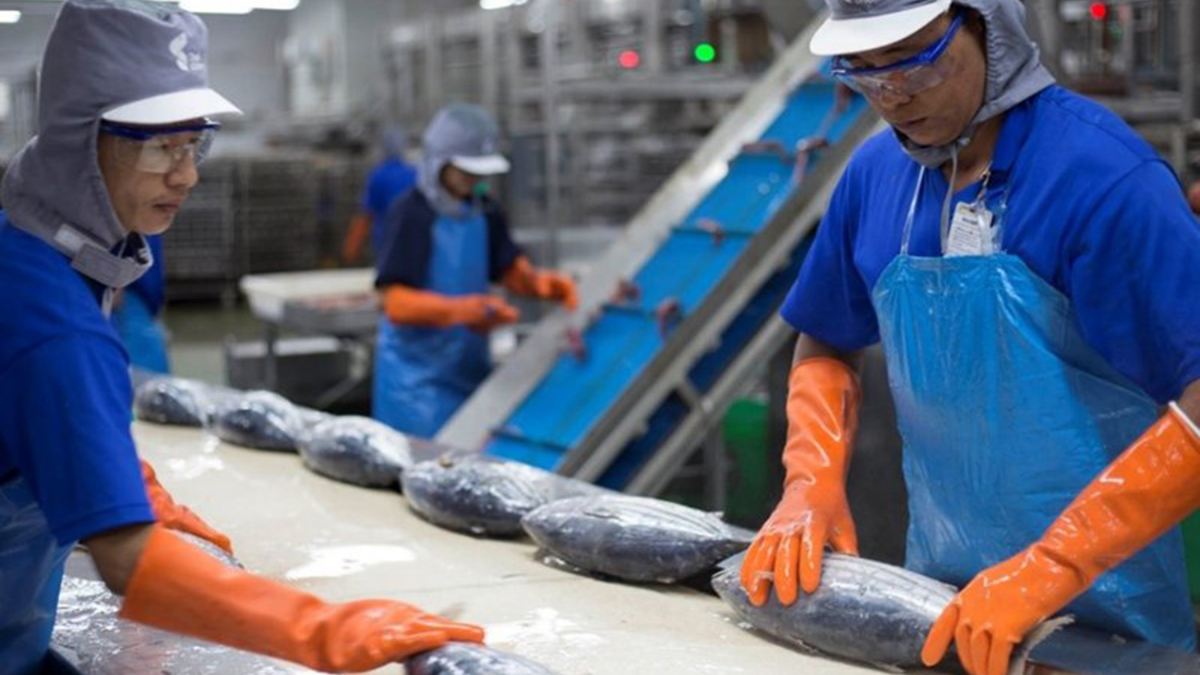
Thai Union’s 2024 Sustainability Report covers the full calendar year (1 January to 31 December 2024) and spans the company’s global operations across wild-caught and farmed seafood, aquafeed production, and related ingredients in Thailand, the U.S., Europe, and other markets. The report aligns with GRI Standards 2021, GRI 13 Sector Standard for Agriculture, Aquaculture, and Fishing, IFRS S1/S2, AA1000AP, and the UN SDGs, reflecting a comprehensive, multi-framework disclosure approach .
The report emphasizes the integration of ESG into strategic business decision-making, highlighting Thai Union’s SeaChange® 2030 commitments as central to operations and long-term resilience. Coverage includes environmental, social, and governance impacts, with data-driven reporting on key performance indicators (KPIs), multi-year trend comparisons, and forward-looking targets. Notably, the report also includes external assurance and third-party validation to enhance credibility across its diverse value chain.
This scope provides investors, regulators, and customers with a full view of both operational performance and broader societal impacts, making Thai Union one of the most transparent seafood companies globally.
Governance and oversight mechanisms
Thai Union demonstrates a robust governance framework anchored in the Sustainable Development (SD) Committee, chaired by the CEO and co-chaired by the CSO. The SD Committee oversees strategic direction, monitors progress on SeaChange® 2030 goals, and ensures sustainability policies are implemented across all business units . Board-level oversight is reinforced through quarterly reporting, integrating ESG into executive performance reviews, and linking KPIs to sustainability outcomes.
The company also embeds risk management into its governance framework via the Risk Management Committee, which aligns with international COSO ERM standards. This committee evaluates operational and financial risks, including climate-related and social risks, and escalates findings to the Board to support informed decision-making.
Governing policies also include comprehensive anti-corruption, human rights, and environmental compliance mechanisms, demonstrating Thai Union’s commitment to ethics, integrity, and accountability throughout the value chain.
Material topics and risk lens
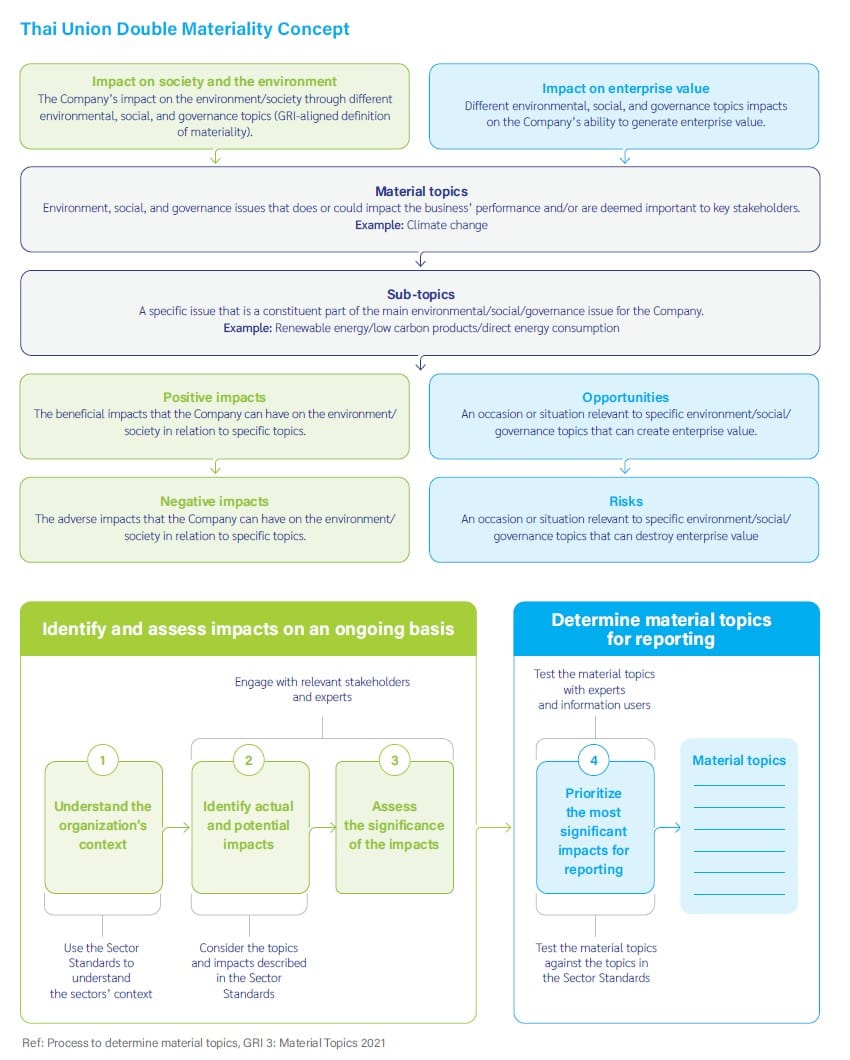
Thai Union undertakes a comprehensive double materiality assessment every two years to identify ESG topics with both business and stakeholder impacts. The materiality process incorporates stakeholder engagement, sector standards, and expert input to prioritize risks and opportunities, spanning environmental, social, and governance dimensions .
Key material topics include climate adaptation, responsible aquaculture, traceable seafood sourcing, human rights and labor standards, safe working conditions, packaging, water and waste management, nutrition and health, and community engagement. Each topic is assessed for both severity and likelihood of impact, producing a double-materiality matrix that guides reporting priorities. This ensures a holistic understanding of ESG risks while connecting them to enterprise value creation.
The process also emphasizes opportunities, such as innovation in low-carbon aquaculture, circular packaging, and social empowerment programs, ensuring Thai Union identifies value-creation avenues alongside risk mitigation.
Metrics, targets, and performance signals
The report presents a rich set of quantitative targets aligned with SeaChange® 2030 commitments. Thai Union has achieved a 21% reduction in Scope 1 and 2 GHG emissions and a 32% reduction in Scope 3 emissions from a 2021 baseline, with the majority of Scope 3 reduction arising from lower purchase of energy-intensive pole-and-line-caught tuna .
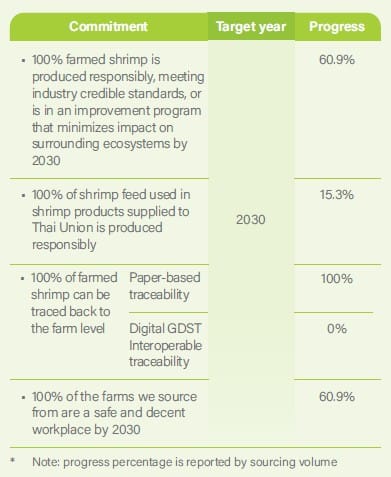
Responsible aquaculture targets include 100% of farmed shrimp and feed produced responsibly by 2030, with traceability back to the farm level. Wild-caught seafood targets include 100% observer coverage for tuna supply chains and compliance with MSC certification or Fishery Improvement Projects (FIPs). Packaging targets aim for 100% of branded products to be sustainable by 2025 and at least 60% of private label products by 2030, with ECOTWIST® implementation in the UK reducing materials use and emissions.
Social metrics focus on safe, decent, and equitable work, including zero recruitment fees, ethical recruitment, gender parity in management roles (50% by 2030), and reduced lost-time injury frequency. Nutrition and health targets ensure 100% of branded ambient products meet internal nutritional guidelines, with measurable progress achieved across Thailand, U.S., and Europe.
Credibility, assurance, and transparency
Thai Union engages independent assurance providers (LRQA) for a Type II AA1000AS engagement, covering selected sites across Asia, Europe, and the U.S. This verification evaluates compliance with GRI indicators and key sustainability metrics, including energy, water, emissions, and responsible sourcing standards such as ASC and BAP .
The report is also supported by stakeholder validation through expert consultations and public reporting via the SeaChange® website. Recognition through Dow Jones Sustainability Indices (top ranking in food products sector), MSCI ESG “A” rating, and multiple industry awards reinforce the credibility of the disclosures.
Transparency is further enhanced by explicit reporting on challenges, such as technical limitations in sustainable packaging, and clear explanations of progress percentages and methodological adjustments for Scope 3 GHG accounting.
Strategic positioning and ESG maturity
Thai Union positions sustainability at the core of business resilience, linking ecosystem health, responsible sourcing, and employee well-being to long-term value creation. Strategic initiatives include the Shrimp Decarbonization Program, ECOTWIST® packaging innovation, and responsible aquaculture improvement projects, which collectively reduce environmental impact while enhancing supply chain transparency and operational efficiency .
The company demonstrates sector leadership in sustainable seafood sourcing, circular economy practices, and human rights protections, indicating an advanced ESG maturity level. By embedding sustainability into strategic decision-making, risk management, and product innovation, Thai Union is progressing from ESG integration toward ESG-driven transformation.
Partnerships with NGOs, academic institutions, and global sustainability initiatives reinforce the company’s capability to implement systemic change and create scalable solutions across the seafood industry.
Pacifica ESG View
Thai Union’s 2024 Sustainability Report highlights a comprehensive, governance-driven ESG approach, integrating environmental stewardship, responsible sourcing, and social equity. Quantifiable progress against climate targets, traceable and ethical seafood sourcing, and safe working conditions illustrates a strong linkage between sustainability performance and enterprise value. While certain targets, such as sustainable packaging adoption, face operational challenges, the transparent reporting and external assurance provide defensible credibility. Thai Union demonstrates sector leadership, operational maturity, and a clear trajectory toward achieving its SeaChange® 2030 commitments.
Forward-looking signals
Thai Union is well-positioned to strengthen ESG integration through continued Scope 3 emission reductions, expansion of low-carbon aquaculture practices, and innovation in circular packaging. The company’s ongoing adoption of technological tools for traceability, renewable energy, and process optimization signals readiness to scale sustainability across global operations. Continued engagement with stakeholders and third-party assurance will be key to maintaining credibility and resilience as regulatory expectations for environmental and social performance intensify by 2030 .