UNIQLO’s Sustainability Evolution: Building Growth Through Trust and Circularity
Fast Retailing’s 2025 Integrated Report highlights how UNIQLO’s LifeWear strategy is evolving beyond apparel into a circular business model, combining responsible sourcing, product longevity, recycling initiatives, and global expansion to support sustainable long-term growth.
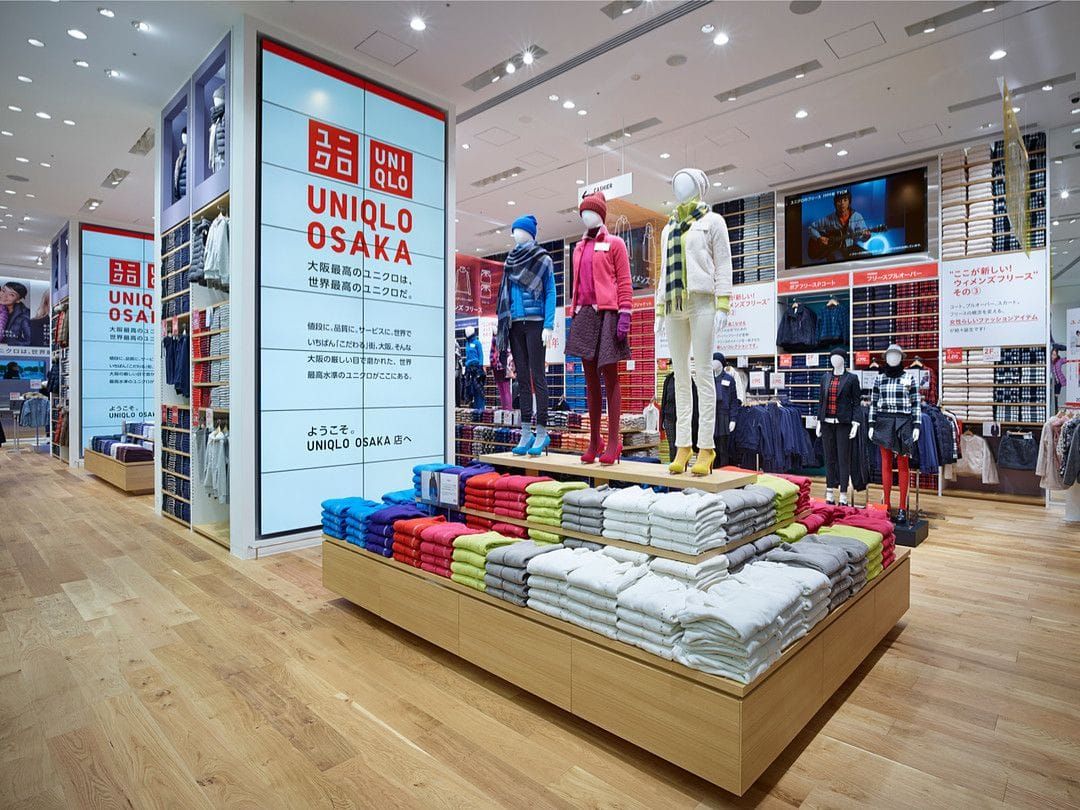
Fast Retailing’s Integrated Report 2025 presents a combined narrative of financial performance, business strategy, governance, and sustainability, rather than a standalone ESG report. The report positions the company’s LifeWear philosophy as the central framework linking commercial growth with social and environmental value creation. The company reported FY2025 revenue of ¥3.4 trillion and reiterated its long-term ambition to achieve ¥10 trillion in annual sales while pursuing broader societal impact.
A notable feature of the report is the integration of sustainability into business strategy rather than treating ESG as a separate compliance exercise. Throughout the report, sustainability is described as a core component of product design, supply chain management, customer engagement, circularity initiatives, and talent development. This reflects an increasingly mature approach where sustainability is framed as a business model rather than a reporting obligation.
The report covers UNIQLO, GU, and other Fast Retailing brands, with particular emphasis on UNIQLO as the primary growth engine. Geographic expansion, especially in Europe and North America, is presented alongside sustainability commitments, suggesting that ESG considerations are embedded within future growth planning rather than managed independently.
Governance and Oversight Mechanisms
Governance receives significant attention in the report, particularly through discussions of leadership accountability, succession planning, and corporate philosophy. Founder and CEO Tadashi Yanai repeatedly emphasizes that business success must contribute positively to society and that global companies are increasingly judged by their social value and operational integrity.
The report highlights Fast Retailing’s “Global One” and “ZEN-IN KEIEI” management philosophy, which encourages employees across markets to adopt a management mindset and share responsibility for operational excellence. This governance model is intended to align decision-making across regions while maintaining responsiveness to local market needs.
From an ESG perspective, the company demonstrates relatively advanced governance through direct executive involvement in sustainability-related issues such as human rights, factory working conditions, climate action, and circular economy initiatives. The report also discusses succession planning and governance continuity, indicating awareness of long-term leadership risks and stakeholder expectations surrounding governance stability.
For investors, the governance narrative signals a company seeking to institutionalize its culture and operating model beyond founder-led management. This is increasingly important as global investors evaluate governance resilience alongside financial performance.
Material Topics and Risk Lens
The report identifies several sustainability priorities that collectively define Fast Retailing’s ESG risk landscape. These include climate change, responsible sourcing, human rights, worker welfare, circularity, product quality, diversity, and community impact. Rather than presenting these as isolated topics, the company frames them as interconnected elements of the LifeWear ecosystem.
Supply chain responsibility emerges as a particularly material issue. Fast Retailing maintains long-term relationships with manufacturing partners and conducts regular audits covering human rights, working conditions, environmental management, and quality assurance. The report also notes ongoing engagement with garment factories, fabric mills, and material suppliers.
Climate-related risks are approached primarily through emissions reduction, sustainable materials, and operational efficiency. The company acknowledges the need to reduce environmental impacts across product design, production, transportation, retail operations, and post-consumer stages. This broader lifecycle perspective is increasingly aligned with investor expectations regarding value-chain accountability.
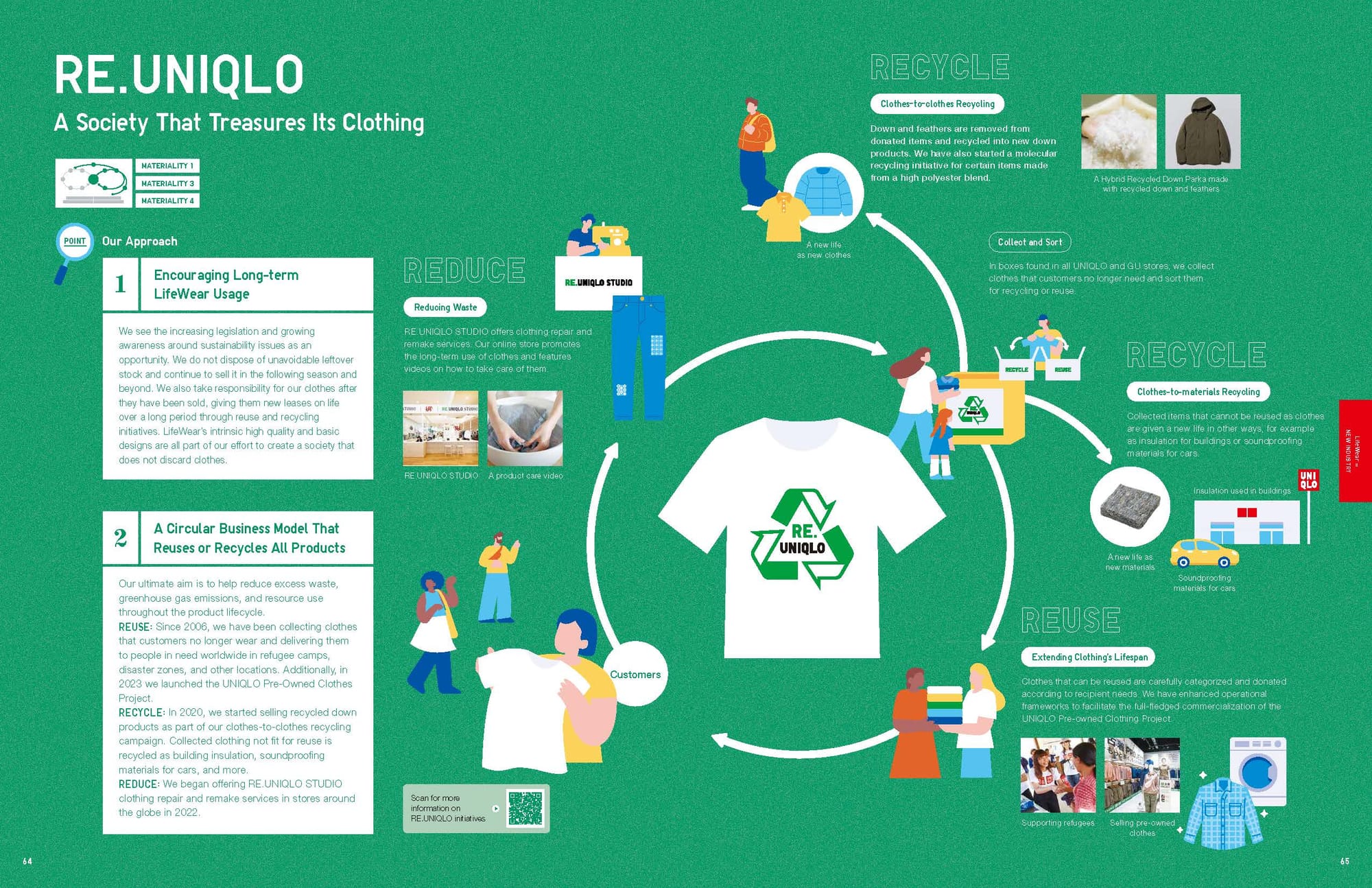
Another significant material topic is circularity. The report describes initiatives involving clothing collection, reuse, recycling, upcycling, and product longevity. Fast Retailing positions these activities as a foundation for creating a circular economy for apparel, reflecting growing regulatory and consumer pressure on the fashion industry to address textile waste.
Metrics, Targets, and Performance Signals
The report provides several sustainability indicators that help stakeholders assess progress. Among the disclosed metrics are greenhouse gas emissions, water consumption, recycled material usage, clothing collection volumes, supplier engagement programs, and community participation initiatives. The company also reports progress toward specific environmental targets extending to 2030.
One notable disclosure is the increasing use of recycled polyester, which reached 45.5% in FY2025, against a 2030 target of 80%. The report also indicates that recycled polyester accounts for approximately 50% of polyester used in products, demonstrating measurable progress toward material circularity goals.
Fast Retailing further reports the collection of approximately 47.4 million garments through reuse and recycling programs. This reflects the company’s effort to expand responsibility beyond the point of sale and strengthen circular business practices.
From a social perspective, employee engagement remains a strong performance indicator. The company reports nearly 110,000 employees globally, with 94.8% expressing alignment with Fast Retailing’s corporate values. While such metrics do not directly measure social impact, they provide useful signals regarding organizational culture and workforce engagement.
For investors, the combination of operational growth and sustainability-related performance metrics suggests increasing integration of ESG considerations into core business management.
Credibility, Assurance, and Transparency
The report demonstrates relatively high transparency compared with many apparel sector peers. Fast Retailing provides detailed descriptions of its product development processes, supplier relationships, customer feedback systems, digital transformation efforts, and sustainability initiatives. This level of operational disclosure allows stakeholders to better understand how sustainability commitments are translated into business practices.
Particularly noteworthy is the company’s willingness to discuss supply-chain oversight mechanisms, including factory audits, human-rights reviews, and technical support provided through its Takumi teams. Such disclosures strengthen confidence that sustainability commitments are supported by implementation structures.
However, the Integrated Report places greater emphasis on strategy and management systems than on externally assured ESG performance data. While the report provides extensive quantitative indicators, stakeholders seeking assurance information may need to refer to additional sustainability disclosures and supporting datasets. This does not diminish credibility but suggests further opportunities to strengthen assurance and verification practices in future reporting cycles.
Strategic Positioning and ESG Maturity
Fast Retailing’s ESG maturity appears increasingly advanced relative to traditional apparel retailers. The company has moved beyond philanthropy and operational efficiency toward a broader sustainability model built around product longevity, responsible sourcing, circularity, customer engagement, and social contribution.
The LifeWear concept serves as a strategic differentiator. Rather than competing solely on fashion trends, the company positions itself around quality, functionality, durability, accessibility, and sustainability. This approach may provide resilience against evolving consumer preferences, regulatory scrutiny, and supply-chain risks.
Importantly, sustainability is not portrayed as a cost center. Instead, Fast Retailing consistently links ESG priorities with growth opportunities, operational efficiency, customer loyalty, and brand trust. This alignment suggests a company progressing from ESG management toward ESG-enabled value creation.
Pacifica ESG View
Fast Retailing’s Integrated Report 2025 demonstrates a mature integration of sustainability into corporate strategy. The company’s LifeWear framework provides a coherent narrative connecting customer value, operational excellence, circularity, human rights, and climate action. While additional assurance and more detailed ESG performance data could further strengthen transparency, the overall direction indicates that sustainability is increasingly embedded within business decision-making. The report suggests a company seeking long-term competitive advantage through trust, product quality, responsible supply chains, and stakeholder engagement rather than relying solely on traditional retail expansion.
Forward-looking Signals
The report suggests Fast Retailing is positioning itself for a future in which sustainability expectations become inseparable from business performance. Continued investment in circular products, recycled materials, digital supply-chain optimization, and responsible sourcing may strengthen resilience against emerging regulatory requirements and shifting consumer preferences. Expansion in Europe and North America could also increase pressure to meet higher sustainability standards, but Fast Retailing appears to be building the governance, operational systems, and supply-chain capabilities necessary to support that transition. If execution remains consistent, LifeWear may increasingly function as both a commercial growth platform and a sustainability platform.