TBS Accelerates Low-Carbon Transformation Through Renewables, Waste Management and Electric Mobility
TBS’s 2025 Sustainability Report signals a major shift toward low-carbon growth, driven by renewable energy, waste management, and electric mobility. Coal asset divestments, climate transition planning, and strengthened ESG governance highlight its pathway toward carbon neutrality by 2030.
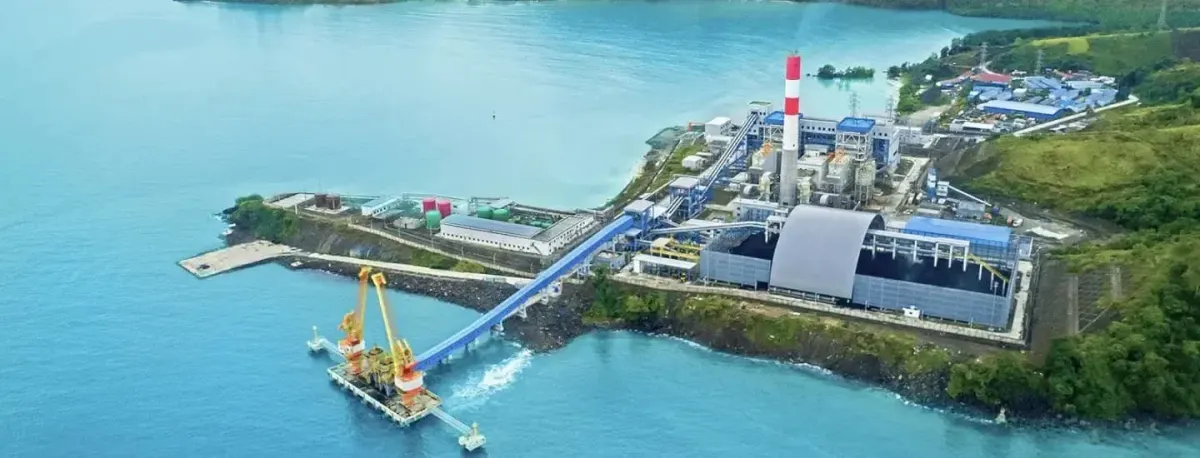
TBS Energi Utama (TBS) has released its 2025 Sustainability Report, outlining a pivotal year in the company’s transition from a traditional fossil-fuel-based business toward a diversified low-carbon portfolio. Published under the theme “Transforming for Good and for Growth,” the report highlights how sustainability is becoming increasingly integrated into the company’s business model, investment strategy, governance framework, and long-term growth ambitions.
The report covers the 2025 reporting period and aligns with multiple sustainability reporting frameworks, including GRI Standards, TCFD recommendations, IFRS S1 and S2 disclosures, Indonesia’s OJK sustainability reporting requirements, and AA1000 assurance principles. Independent assurance was obtained for the sustainability report as well as selected greenhouse gas emissions and energy disclosures, reflecting an increasing focus on transparency and accountability.
Key Sustainability Themes and Disclosures
One of the most significant developments disclosed in the report is TBS’s continued transition away from coal-related assets. During 2025, the company divested two coal-fired power plants and reported a reduction of approximately one million tonnes of annual carbon emissions. According to management, this contributed to an 86% reduction in combined Scope 1 and Scope 2 greenhouse gas emissions compared with the prior year and supports the company’s target of achieving carbon neutrality by 2030.
Environmental disclosures indicate substantial changes in the company’s operating profile. Total Scope 1 emissions decreased to approximately 629,000 tCO₂e, while total Scope 1 and Scope 2 emissions fell to around 647,000 tCO₂e. The company also completed its first broader Scope 3 emissions assessment covering employee commuting and the use of sold products, reporting more than 3.1 million tCO₂e of Scope 3 emissions. This marks an important step in developing a more comprehensive carbon inventory and may signal increasing readiness for future investor and regulatory expectations regarding value-chain emissions reporting.
Beyond emissions management, TBS continued expanding its renewable energy portfolio. During the year, its 2x3 MW mini-hydro power plant in Lampung achieved commercial operation, while development of a 46 MWp floating solar project in Batam continued. The company also purchased Renewable Energy Certificates and carbon credits to support electricity consumption associated with its electric mobility business.
Waste management emerged as one of the most strategically significant growth areas. Following the acquisition of Sembcorp Environment, subsequently rebranded as Cora Environment, TBS handled nearly one million tonnes of waste during the reporting year. Management noted that the waste management segment contributed 41% of consolidated revenue and 75% of adjusted EBITDA, demonstrating how sustainability-related businesses are increasingly becoming core economic drivers rather than peripheral activities.
On the social dimension, TBS reported over 5,000 employee training hours, representing an 82% increase from 2024. The company also disclosed that women held 37.5% of senior leadership positions, suggesting continued progress toward leadership diversity objectives. Occupational health and safety performance remained a key focus, with zero fatal incidents reported among employees and contractors during the reporting period.
Community investment also featured prominently. The establishment of the TBS Foundation in late 2025 reflects a more structured approach to social impact, focusing on education, policy advocacy, and impact-driven initiatives. The company allocated over US$700,000 to corporate social responsibility programmes and strengthened its community development framework through collaboration with Columbia University.
Governance and Strategic Signals
Governance appears to be a central pillar supporting TBS’s transformation strategy. The company maintains an independent ESG Committee comprising external experts, independent commissioners, and internal leadership representatives who provide direct oversight to the Board. This structure suggests an effort to elevate sustainability decision-making beyond operational management and into formal governance processes.
The report also highlights the launch of TBS’s first Climate Transition Plan, indicating a more systematic approach to managing climate-related risks and opportunities. Sustainability risks are reportedly integrated into enterprise risk management processes, including scenario planning around supply chain disruptions, climate-related uncertainties, and evolving regulatory environments.
From an ethics and compliance perspective, the company obtained ISO 37001 Anti-Bribery Management System certification and continued strengthening accountability mechanisms. Independent assurance of sustainability disclosures further reinforces governance credibility and may support stakeholder confidence in reported performance.
What This Report Suggests About Future Direction
The 2025 Sustainability Report suggests that TBS is entering a more advanced phase of corporate transformation. Rather than treating sustainability as a supporting function, the company appears to be repositioning its business portfolio around sectors directly linked to decarbonisation, resource efficiency, and environmental services.
Management has stated an ambition for at least 80% of EBITDA to originate from low-carbon businesses by 2030, supported by planned investments of US$500–600 million. The combination of renewable energy expansion, electric mobility infrastructure development, waste management growth, and coal asset divestments indicates a deliberate reallocation of capital toward businesses expected to benefit from the region’s energy transition.
The report also suggests increasing alignment with international sustainability expectations. Adoption of IFRS S1 and S2 reporting, expansion of Scope 3 accounting, climate transition planning, and independent assurance may position the company more favourably as investors, lenders, customers, and regulators continue raising expectations around ESG performance and climate disclosure.
Pacifica ESG View
TBS’s 2025 Sustainability Report stands out less for individual ESG initiatives and more for the scale of its strategic repositioning. The combination of fossil fuel divestments, growing low-carbon revenue streams, formal climate transition planning, and strengthened governance suggests a company seeking to redefine its business model rather than simply improve sustainability performance. Stakeholders should monitor execution against the company’s 2030 carbon neutrality target, growth of low-carbon EBITDA, expansion of Scope 3 reporting coverage, and the long-term profitability of its renewable energy, electric mobility, and waste management businesses.