Beyond Compliance: An In-Depth Analysis of Lenovo’s ESG Strategy and Sustainability Performance
Lenovo's 2024/25 ESG Report reveals how the global technology leader is integrating climate action, responsible AI, supply chain decarbonisation and circular economy principles while preparing for evolving disclosure requirements including CSRD and future sustainability expectations.
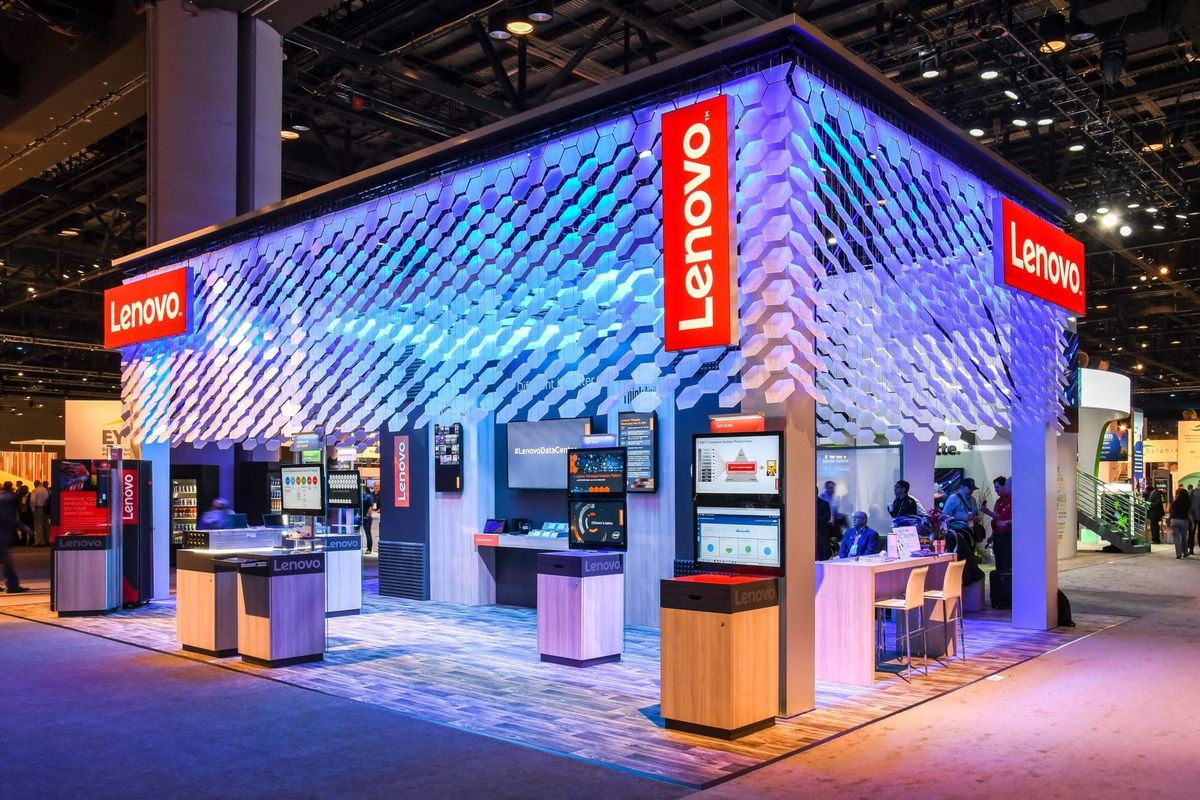
Lenovo’s Environmental, Social and Governance Report reflects a large, global technology company reporting at the intersection of Hong Kong listing requirements, GRI-based disclosure practice, climate transition expectations, and emerging international sustainability regulation. The report is prepared in accordance with the Hong Kong Stock Exchange ESG Reporting Guide and with reference to the GRI 2021 Standards, while Lenovo also signals preparation for future regulatory requirements, including the Corporate Sustainability Reporting Directive.
This positioning is important because Lenovo’s business model spans devices, infrastructure, software, solutions and services across global markets. For investors and sustainability leaders, the report is therefore not only a compliance document but also a test of how a multinational technology company is adapting ESG governance to AI growth, supply chain complexity, climate disclosure, and product lifecycle impacts.
Governance architecture and accountability
Lenovo presents ESG oversight as a board-level responsibility, supported by board committees, executive leadership, internal audit, risk management and the ESG Executive Oversight Committee. This architecture is stronger than a purely operational ESG model because it links sustainability oversight with enterprise risk, regulatory compliance and long-term value creation.
The report also shows that ESG is a recurring board agenda item, with climate strategy, ESG KPIs and reporting principles discussed at senior levels. This is significant in a regulatory environment where investors increasingly expect evidence of board involvement rather than general sustainability statements. The inclusion of AI governance, including a company-wide AI policy and a Responsible AI Committee, also reflects Lenovo’s attempt to treat AI ethics as a governance issue rather than only a product innovation topic.
Materiality approach and risk prioritisation
Lenovo’s materiality process identifies 28 ESG topics across environmental, social and governance dimensions. These include climate change, energy management, product end-of-life management, product materials, supply chain environmental management, human rights, labour practices, cybersecurity, data privacy, ethical AI and product quality.
The report states that the material topics remained unchanged after validation by internal representatives. This provides continuity, but it also raises an important question for future reporting: how Lenovo will evolve from traditional ESG materiality towards CSRD-style double materiality. Lenovo acknowledges that it is enhancing its materiality process in preparation for upcoming regulatory requirements, which suggests a transition from stakeholder-prioritised ESG topics towards a more formal assessment of both financial and impact materiality.
Climate, supply chain, and social dimensions
Climate remains one of the strongest areas of Lenovo’s disclosure. The company reports SBTi-aligned near-term and long-term targets, including a 50% reduction in absolute Scope 1 and Scope 2 emissions by FY2029/30 and a 90% absolute reduction across Scope 1, 2 and 3 by FY2049/50. Lenovo also reports progress as “on track” for several SBTi-linked targets, although some Scope 3 categories depend on improving input data.
The emissions profile shows why supply chain and product use are central to Lenovo’s transition challenge. In FY2024/25, Scope 3 emissions were 17.73 million tonnes CO2e, far exceeding Scope 1 and Scope 2 emissions. The largest contributors were use of sold products and purchased goods and services, meaning product energy efficiency, supplier decarbonisation and customer electricity mix will remain key variables.
Lenovo’s supply chain programme includes supplier ESG training, RBA-related activities, supplier climate data collection, CDP engagement and efforts to encourage science-based targets. The report also notes that Lenovo engaged approximately 1,200 suppliers through its 2024 Supplier Standards and Certification Conference. This indicates a relatively mature supplier engagement platform, although the disclosure also shows that some supply chain emissions goals remain difficult to achieve.
Employment
Lenovo’s employment disclosures are framed around global workforce management, inclusion, talent development and employee engagement. The report positions workforce diversity and inclusion as connected to its broader “smarter technology for all” strategy, which is relevant for a technology company competing for skilled labour in AI, infrastructure and digital services.
From an ESG perspective, the employment section is strongest where it connects culture, employee development and inclusion with measurable programmes. However, as reporting expectations evolve, stakeholders may expect deeper comparability around workforce composition, turnover, pay equity, training outcomes and regional employment practices. For a global technology group, employment disclosure will increasingly be assessed not only by policies but by data granularity and evidence of consistent implementation across markets.
Health and safety
Health and safety is identified as a material social topic and linked to labour practices, manufacturing and supply chain management. This is appropriate for Lenovo’s operating model, which includes manufacturing sites, offices, logistics exposure and supplier production networks.
The report indicates that Lenovo manages health and safety through formal systems and supplier expectations. For investors, the key issue is whether health and safety performance remains robust as the company scales AI infrastructure, advanced manufacturing and global service delivery. Future reporting could be strengthened by clearer trend analysis, incident severity context and more explicit linkage between safety performance and operational risk management.
Product or service responsibility
Product responsibility is a central ESG issue for Lenovo because its products create environmental and social impacts across design, manufacturing, use and end-of-life stages. The report covers product quality management, product safety, repairability, environmentally conscious products, packaging, circular economy and product end-of-life management.
Lenovo reports that it did not issue product recalls in during the reporting year. It also describes a customer care escalation process, including investigation, repair, replacement or refund pathways, with the global average time for resolution and agreement usually around 48 hours once escalated. These disclosures suggest that product responsibility is managed through quality systems, customer feedback loops and compliance processes rather than treated as a narrow after-sales issue.
The product dimension is also linked to climate strategy. For technology companies, product energy efficiency can materially affect downstream Scope 3 emissions. Lenovo’s development of AI-related sustainability tools and liquid cooling technology also shows how product innovation may support customer decarbonisation, although such claims require careful evidence over time.
Philanthropy
Lenovo’s philanthropy programme is relatively well quantified. In FY2024/25, total contribution to communities was reported at US$15.49 million, while the estimated value of community impact through philanthropy and volunteerism was US$18.97 million. Employee volunteering hours were also disclosed, with 14,326 hours in North America and 66,475 hours in the rest of the world.
The report’s philanthropy strategy focuses on access to technology, STEM education, disaster response and employee volunteering. Lenovo also reports progress toward goals to directly impact 15 million lives and transform one million lives by FY2025/26. This gives the philanthropy programme a clearer theory of change than one-off donation reporting, although external readers will still look for outcome quality, not only beneficiary numbers.
Metrics, targets, and data robustness
Lenovo’s metrics are detailed across energy, emissions, water, waste, social investment and supply chain performance. The GHG data is especially useful because it provides multi-year trends and separates Scope 2 location-based and market-based emissions. In FY2024/25, Scope 1 emissions were 5,849 tonnes CO2e, Scope 2 location-based emissions were 174,862 tonnes CO2e, and Scope 2 market-based emissions were 12,409 tonnes CO2e.
The gap between location-based and market-based Scope 2 emissions reflects Lenovo’s use of renewable electricity instruments and procurement approaches. The company also reports operational measures such as energy efficiency upgrades, renewable power purchase agreements, renewable energy certificates and digital tools for energy and carbon management. The report is transparent that some Scope 3 estimates are based on best available data, which is important because Scope 3 data quality remains one of the biggest challenges in technology-sector reporting.
Assurance, credibility, and comparability
Lenovo states that accredited third parties provided verification for certain energy, GHG emissions, waste and water data. This improves credibility, particularly for environmental metrics that are material to Lenovo’s SBTi pathway and stakeholder assessments.
However, the assurance scope appears selective rather than covering the full ESG report. This is common in the market, but it means readers should distinguish between externally verified data and broader narrative disclosures. As assurance expectations rise under CSRD, ISSB-aligned reporting regimes and stock exchange climate disclosure rules, Lenovo’s future credibility will depend on expanding data controls, documenting methodologies and improving comparability across reporting years.
Strategic implications for the sector
Lenovo’s report highlights several broader implications for the technology sector. First, AI growth increases both opportunity and responsibility: AI can support carbon data management and accessibility solutions, but it also raises issues around energy demand, ethical use, bias, privacy and governance. Lenovo’s decision to place ethical AI in governance is consistent with the direction of regulatory scrutiny.
Second, Scope 3 remains the defining climate issue for hardware and infrastructure companies. Product use, purchased goods and services, logistics and end-of-life impacts are likely to matter more than direct operational emissions. This means decarbonisation depends on supplier capability, product design, customer behaviour and electricity grid transition.
Third, circularity and product lifecycle management are becoming strategic rather than peripheral. Repairability, recycled materials, packaging, product take-back and end-of-life management are increasingly linked to regulation, customer procurement requirements and brand trust.
ESG maturity and future positioning
Overall, Lenovo’s report suggests a company with a mature ESG reporting platform, established climate targets, board-level ESG oversight and relatively broad disclosure across environmental, social and governance topics. Its strengths are climate target architecture, supply chain engagement, product responsibility, AI governance and metrics transparency.
The next stage of maturity will likely depend on how Lenovo deepens double materiality, expands assurance, improves Scope 3 data quality and links ESG issues more clearly to financial impacts. Its biodiversity disclosure, including the Yangtze finless porpoise initiative, shows awareness of nature-related themes, but this is not yet equivalent to TNFD-style nature risk assessment. For a global technology company, future positioning will depend on moving from strong ESG programme disclosure toward more decision-useful, externally assured and financially connected sustainability reporting.
Pacifica ESG View
Lenovo’s ESG Report demonstrates a relatively advanced sustainability management system for a global technology company. Its climate targets, governance structure, supply chain engagement and product responsibility disclosures provide a credible foundation. The main area to watch is not whether Lenovo has ESG programmes, but whether those programmes can keep pace with rising expectations on CSRD, Scope 3 data quality, AI governance, circular economy and assured climate reporting. The report positions Lenovo as a company preparing for the next phase of sustainability disclosure, but future reports will need to show more granular impact, stronger comparability and clearer links between ESG performance and business resilience.
Implications for the wider market
Lenovo’s disclosures reflect the direction of travel for the technology sector. ESG reporting is moving from policy description toward data control, value chain accountability, product lifecycle responsibility and governance of emerging technologies such as AI. Companies with complex supply chains will face increasing pressure to demonstrate supplier decarbonisation, human rights due diligence and credible Scope 3 methodologies. At the same time, customers and regulators are likely to expect clearer evidence that digital innovation supports, rather than complicates, climate and social objectives. Lenovo’s report shows that leading technology companies are already preparing for this shift, but the market standard will continue to rise.