Sichuan Yingfa Ruineng ESG Report 2025: Strengthening Global Photovoltaic Leadership Through Innovation, Decarbonisation and Responsible Growth
Sichuan Yingfa Ruineng's 2025 ESG Report highlights how innovation, decarbonisation and responsible supply chain management are supporting its global photovoltaic growth. The report reflects increasing alignment with international ESG standards and long-term sustainability strategy.
Sichuan Yingfa Ruineng Technology Co., Ltd. has published its third Environmental, Social and Governance (ESG) Report, covering the 2025 reporting period. The report aligns with the Hong Kong Stock Exchange ESG Reporting Code, references GRI Standards (2021), ISSB IFRS S1 and S2, the UN Sustainable Development Goals (SDGs), and the UN Global Compact, signalling a clear intention to align with internationally recognised sustainability disclosure frameworks as the company advances its Hong Kong listing ambitions.
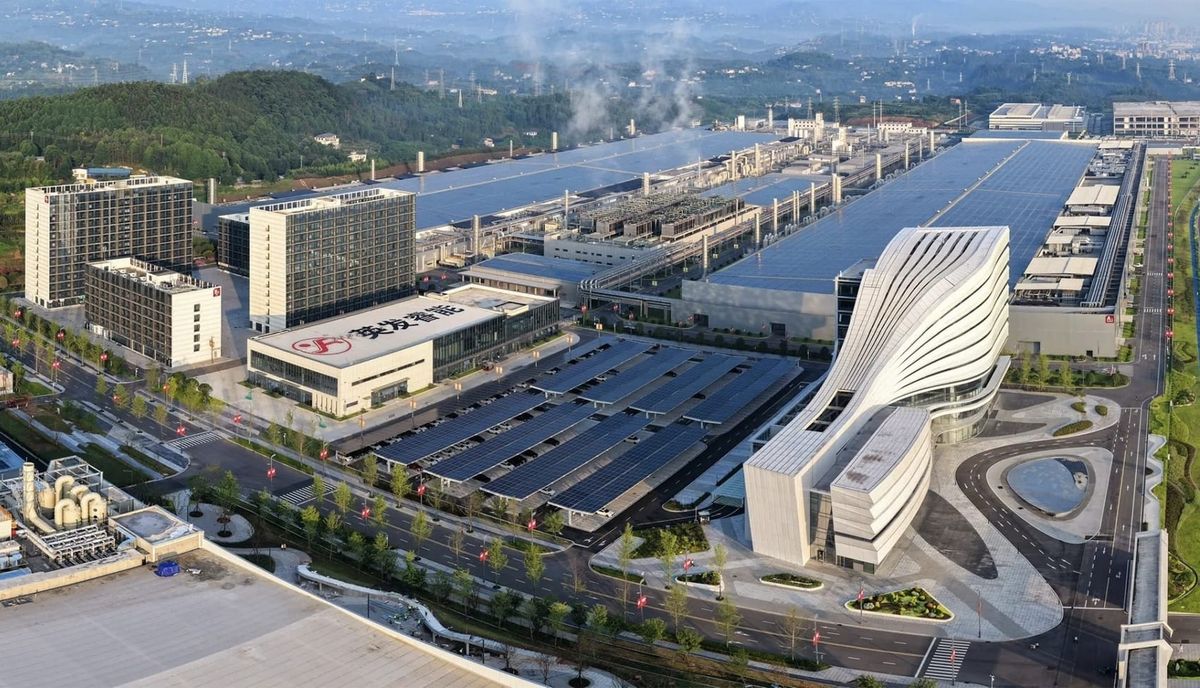
The report reflects an organisation undergoing rapid expansion. Yingfa Ruineng now operates manufacturing hubs in Yibin, Mianyang and Indonesia, serves customers in more than 17 countries, employs over 5,900 people and ranks among the world's largest photovoltaic cell manufacturers. Rather than presenting ESG as a standalone compliance exercise, the report positions sustainability as an integral component of technology leadership, global expansion and long-term competitiveness.
Governance and oversight mechanisms
Governance is presented as the foundation supporting both operational growth and sustainability performance. The Board assumes responsibility for the report, while ESG considerations are embedded into strategic planning, risk management, compliance, information security and internal control processes. This reflects a governance structure increasingly aligned with investor expectations for board accountability over sustainability-related risks and opportunities.
The report introduces the company's "GROWTH" sustainability strategy, linking innovation, green manufacturing, responsible supply chains and corporate governance under a unified framework. Leadership messages consistently connect sustainability with operational excellence rather than treating ESG as a parallel initiative. This integration may enhance management accountability as ESG considerations become more material to international customers and capital markets.
From a governance perspective, the company also demonstrates increasing awareness of emerging disclosure expectations. Reference to ISSB standards, climate-related reporting and quantitative environmental targets suggests that Yingfa Ruineng is preparing for a regulatory environment where sustainability information is expected to carry similar rigour to financial reporting.
Material topics and risk lens
Materiality remains central to the company's reporting approach. Yingfa Ruineng states that stakeholder engagement and formal materiality assessment determine disclosure priorities, helping focus resources on the ESG issues considered most significant to the business and its stakeholders. This provides a clearer link between sustainability reporting and enterprise decision-making.
The report identifies several strategic themes that mirror the evolving priorities of the global photovoltaic industry. Climate change mitigation, green manufacturing, product innovation, responsible supply chain management, employee development, occupational health and safety, information security and business ethics all receive substantial attention. These topics reflect both operational risks and commercial opportunities facing manufacturers operating within global renewable energy value chains.
Supply chain management receives particularly strong emphasis. Yingfa Ruineng has introduced a Supply Chain Sustainability Manual based on SA8000 and the Responsible Business Alliance (RBA) Code of Conduct, while integrating ESG criteria into supplier qualification, evaluation and monitoring. The report also highlights conflict minerals management, traceability procedures and supplier capability building, indicating that sustainability expectations are increasingly extending beyond the company's own operations into upstream partners.
Metrics, targets, and performance signals
The report combines strategic commitments with measurable operational indicators, providing greater confidence in the company's sustainability direction. Yingfa Ruineng commits to achieving operational carbon peaking (Scope 1 and Scope 2) by 2030 and operational carbon neutrality by 2050, while expanding lifecycle carbon management across photovoltaic products. Carbon footprint accounting and verification for key manufacturing bases further demonstrate movement towards product-level environmental transparency.
Innovation continues to be a defining performance signal. The company reports continued advances in N-type TOPCon technology, progress in xBC commercialisation and ongoing research into perovskite tandem cells. These technological developments are presented alongside sustainability objectives, suggesting that product efficiency improvements and emissions reduction are increasingly viewed as complementary rather than separate priorities.
Operational expansion also features prominently. The commissioning of the Mianyang manufacturing base, continued development of the Indonesian facility and expansion into international markets illustrate how the company is balancing growth with efforts to strengthen environmental management, supply chain resilience and governance systems. As overseas revenue continues to increase, maintaining consistent ESG standards across multiple jurisdictions will become increasingly important.
Credibility, assurance, and transparency
A notable strength of the report is its emphasis on reporting credibility. Yingfa Ruineng states that the report follows established reporting principles of materiality, quantitative measurement, balance and consistency, while providing disclosure boundaries, reporting methodologies and applicable standards. Such transparency supports greater confidence in year-on-year performance comparisons.
The inclusion of both an Independent Assurance Statement and a Greenhouse Gas Verification Statement further strengthens the credibility of reported information. Independent assurance is becoming increasingly important as investors, lenders and international customers seek greater confidence in sustainability disclosures, particularly within sectors expected to play a central role in the global energy transition.
The company's adoption of multiple international reporting frameworks also improves comparability with global peers. While further development of climate scenario analysis, nature-related disclosures and broader value-chain metrics could strengthen future reporting, the current report demonstrates a clear commitment to transparency and continuous improvement.
Strategic positioning and ESG maturity
Yingfa Ruineng's ESG Report 2025 reflects an organisation transitioning from rapid manufacturing expansion towards a more integrated sustainability model. ESG is increasingly embedded across innovation, manufacturing, supply chain management, governance and international business development rather than being confined to environmental compliance.
This positioning aligns closely with the direction of the global photovoltaic sector. Customers increasingly require verified carbon footprint data, responsible sourcing practices and transparent ESG governance alongside product performance. By investing simultaneously in advanced photovoltaic technologies, lifecycle carbon management and responsible supply chain systems, Yingfa Ruineng appears to be strengthening its readiness for evolving international market expectations.
The report also demonstrates growing organisational maturity through its combination of quantitative targets, internationally recognised reporting frameworks, external assurance and governance integration. Although future disclosures could further expand climate risk analysis, Scope 3 emissions reporting and biodiversity considerations, the current trajectory indicates a company progressively embedding sustainability into its long-term strategic development.
Pacifica ESG View
Yingfa Ruineng's 2025 ESG Report demonstrates an increasingly mature approach to sustainability management. The integration of climate commitments, product innovation, responsible sourcing, governance and independent assurance suggests that ESG is becoming a strategic capability supporting international expansion rather than simply fulfilling reporting requirements. For investors and customers operating within the renewable energy value chain, this integrated approach may strengthen confidence in the company's long-term resilience and operational governance.
Forward-looking signals
Looking ahead, Yingfa Ruineng appears well positioned to deepen its sustainability disclosures as global reporting expectations continue to evolve. Future reports may reasonably be expected to include more comprehensive Scope 3 emissions, climate scenario analysis, biodiversity management and supply chain performance metrics. Continued alignment with ISSB and other international frameworks could further enhance transparency and support the company's trajectory as a globally competitive photovoltaic manufacturer.