POSCO Holdings South Korea Sustainability Report 2025: Stronger ESG Governance, Climate Transition and Supply Chain Accountability
An independent analysis of POSCO Holdings’ 2025 Sustainability Report, covering climate strategy, decarbonisation, ESG governance, biodiversity, workplace safety, responsible supply chains and sustainability assurance in South Korea.
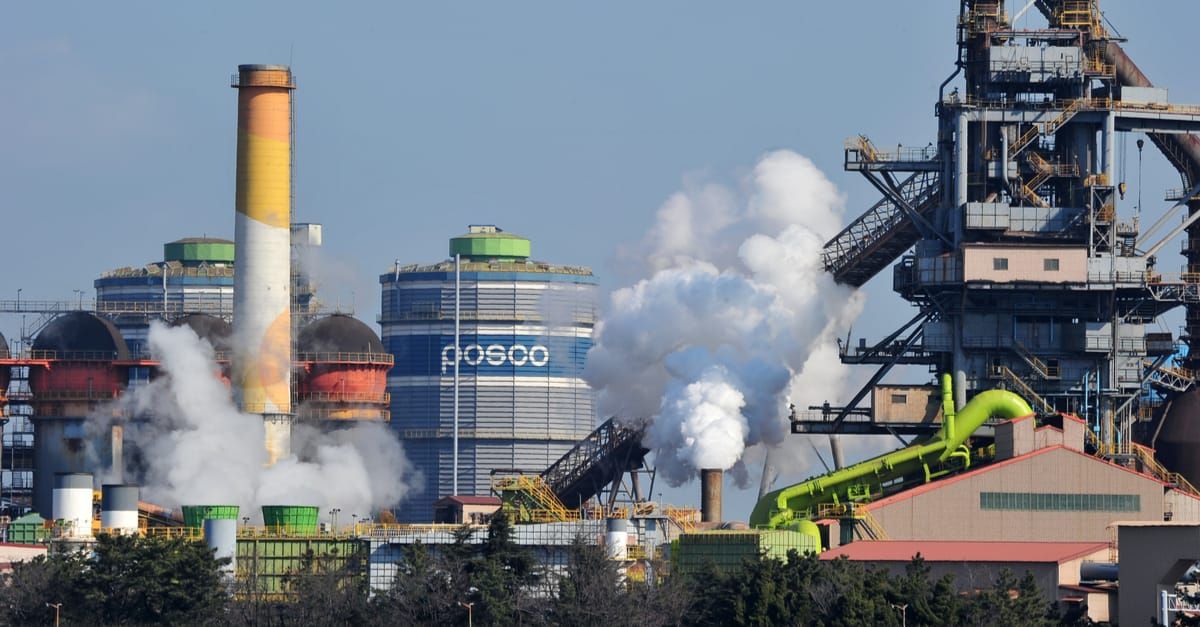
South Korea's POSCO Holdings has published its 2025 Sustainability Report, outlining environmental, social and governance priorities across its diversified industrial businesses. The Group operates across steel, rechargeable battery materials, infrastructure and related sectors, exposing it to sustainability risks spanning energy-intensive manufacturing, raw materials and global supply chains.
Released in June 2026, with an English-language regulatory filing in July, the report covers the 2025 reporting year. Its disclosures reference GRI Standards, SASB industry guidance and TCFD recommendations, alongside an expanded double materiality assessment. A significant development is the standardisation of ESG information across seven major Group companies, potentially improving reporting consistency and investor comparability.
Climate Strategy and Decarbonisation
Climate change remains a central sustainability priority for POSCO Holdings, particularly given the emissions-intensive nature of conventional steelmaking. The Group outlines a decarbonisation pathway towards net zero by 2050, supported by an intermediate 2030 milestone and the development of lower-carbon industrial technologies.
Key initiatives include electric arc furnace production, hydrogen-based ironmaking through the HyREX technology pathway, low-carbon steel products and renewable energy sourcing. These technologies may gradually reduce dependence on conventional blast furnace processes, although commercial deployment remains dependent on technological readiness, infrastructure and investment economics.
For investors, the critical consideration is how decarbonisation commitments translate into measurable Scope 1 and Scope 2 reductions while addressing Scope 3 emissions across purchased materials and downstream activities. Consistent organisational boundaries, energy consumption data and capital expenditure disclosures will be important for assessing progress across the Group's diversified businesses.
Environmental Management, Biodiversity and Circular Economy
One notable feature of the report is its expanded consideration of biodiversity and nature-related risks. Applying the Taskforce on Nature-related Financial Disclosures (TNFD) analytical approach, POSCO Group assessed 207 business locations across 29 countries and identified 57 locations near ecologically sensitive areas.
This development suggests a broader environmental risk perspective extending beyond greenhouse gas emissions. It is particularly relevant to businesses involving mineral resources, energy development and battery materials, where operations may affect land, water resources and ecosystems.
Water efficiency, waste management and circular economy practices remain relevant environmental priorities across the Group's industrial portfolio. Future disclosures linking resource consumption, recycling performance and environmental investments to measurable outcomes would provide stronger evidence of environmental management effectiveness.
Occupational Safety and Workforce Management
Occupational health and safety is among the Group's most significant social responsibilities. The report identifies safety as a priority and describes expanded governance arrangements involving safety executives from 33 Group companies, supported by sector-specific coordination and specialist safety expertise.
The report also responds to serious industrial accidents during 2025, reinforcing the importance of prevention, contractor management and operational controls. POSCO's approach increasingly incorporates safety activities and implementation measures into management performance evaluation, rather than relying exclusively on historical incident outcomes.
Workforce development, employee wellbeing and responsible labour practices are also important to sustaining industrial competitiveness. As production technologies evolve, technical training, workforce reskilling and employee engagement may become increasingly important components of the Group's sustainability transition.
Human Rights, Supply Chains and Product Responsibility
POSCO Holdings has expanded its Group-wide human rights management framework, including guidance for domestic and overseas operations. The extension of human rights management practices to additional subsidiaries and the translation of related guidance into multiple languages indicate efforts to establish more consistent expectations across jurisdictions.
For global customers, responsible sourcing is particularly relevant to steel products, minerals and rechargeable battery materials. Supply chain due diligence, supplier engagement and traceability may increasingly influence procurement decisions where buyers require evidence of ethical sourcing and environmental performance.
Product responsibility also intersects with decarbonisation. Developing lower-carbon steel and battery-related materials may create commercial opportunities, but credible product-level claims will require consistent lifecycle assessment methodologies, transparent calculations and reliable supporting information.
Governance Architecture and Strategic Signals
A major development in the 2025 report is the integration of sustainability disclosures across seven major Group companies. POSCO Holdings has introduced an ESG Ambassador system involving specialists from areas including carbon neutrality, safety and finance to support data preparation, verification and internal accountability.
The Group's double materiality assessment identifies five priority ESG topics: climate change, occupational health and safety, ethics and compliance, biodiversity, and human rights. This approach considers both sustainability impacts on society and the environment and potential financial implications for the business.
Together, these developments may indicate a shift from individual subsidiary-level ESG reporting towards a more coordinated Group-wide management framework. However, the effectiveness of this model will depend on the consistency of implementation, internal controls and corrective actions across operating companies.
Reporting Credibility and Independent Assurance
The 2025 report identifies KPMG Samjong Accounting Corp. as its independent sustainability assurance provider. The publicly available report summary describes limited assurance covering specified sustainability disclosures, including ESG Factbook information and reporting indices.
Independent assurance provides additional confidence in information prepared against defined reporting criteria, but should not be interpreted as verification of every sustainability claim or future target. Clear assurance boundaries, comparable historical indicators and transparent calculation methodologies remain essential for stakeholders evaluating ESG credibility.
What This Report Suggests About Future Direction
POSCO Holdings appears to be strengthening ESG management through three connected priorities: industrial decarbonisation, Group-wide risk oversight and greater consistency in sustainability information.
Its approach may improve readiness for evolving investor expectations, sustainability rating methodologies and customer requirements relating to climate disclosures, responsible sourcing and nature-related risks. Nevertheless, reporting harmonisation is only one component of ESG maturity.
Stakeholders should monitor actual emissions trends, implementation of low-carbon production technologies, workplace safety outcomes and the effectiveness of supply chain due diligence. These indicators will provide a stronger basis for evaluating whether governance improvements translate into measurable sustainability performance.
Pacifica ESG View
POSCO Holdings' 2025 Sustainability Report signals a move towards more integrated ESG governance and consistent Group-wide disclosures. Its expanded double materiality assessment, TNFD-related analysis and strengthened internal reporting arrangements indicate growing attention to sustainability risk management.
However, significant challenges remain in industrial decarbonisation, operational safety and supply chain accountability.
For investors and business partners, the key consideration is whether improved reporting structures lead to demonstrable reductions in environmental impacts, stronger workplace safeguards and more reliable sustainability information across the Group's operations.