China’s PACTL 2025 ESG Report: Advancing Sustainable Air Cargo Through Green Transformation, Innovation and Responsible Governance
China’s PACTL 2025 ESG Report highlights progress in sustainable air cargo, green transformation, digital innovation and responsible governance, supported by measurable climate targets, international certifications and independent ESG assurance.
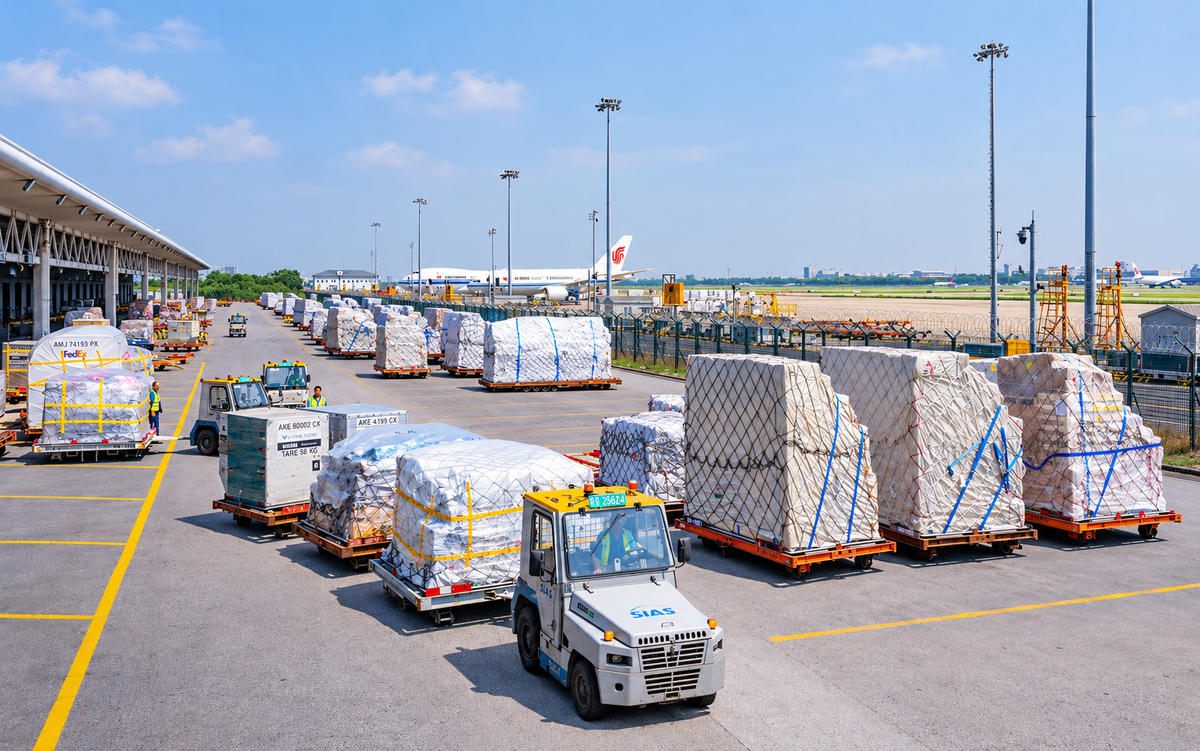
Shanghai Pudong International Airport Cargo Terminal Co., Ltd. (PACTL) continues to strengthen its role in international aviation logistics by combining operational excellence, technological innovation and sustainable development. Established in 1999, PACTL and its subsidiary PACTL WEST provide comprehensive air cargo handling, warehousing and specialised logistics services at Shanghai Pudong International Airport.
In 2025, PACTL achieved a record cargo throughput of 2.24 million tonnes, representing 10.5% year-on-year growth. This operational milestone provides an important backdrop to its second Environmental, Social and Governance (ESG) Report, demonstrating the company's commitment to strengthening sustainability management alongside business expansion.
Covering January to December 2025, the report references the Global Reporting Initiative (GRI) Standards, European Sustainability Reporting Standards (ESRS) and United Nations Sustainable Development Goals (SDGs). Its comprehensive coverage and independent third-party assurance reflect PACTL's efforts to enhance transparency, accountability and alignment with internationally recognised sustainability practices.
Governance and Oversight Mechanisms
PACTL has established a structured governance framework that integrates sustainability considerations into corporate strategy, operational management and risk oversight. The Board of Directors assumes overall responsibility for ESG governance, supported by regular management reviews, internal supervision and established accountability mechanisms.
A notable development is the company's approach to linking ESG performance with senior management assessment and variable remuneration. This arrangement reinforces management accountability and provides a mechanism for translating sustainability objectives into organisational priorities.
Environmental governance has also been strengthened through a dedicated management structure involving the General Manager, Deputy General Manager and Chief Financial Officer. The establishment of an IATA Environmental Assessment (IEnvA) working group further demonstrates PACTL's systematic approach to environmental management, operational controls and continuous improvement.
Material Topics and Risk Lens
PACTL has adopted a double materiality assessment approach to better understand sustainability-related impacts, risks and opportunities across its operations and value chain. Building on its 2024 assessment, which incorporated 25 ESG topics and 236 stakeholder questionnaires, the company continued refining its materiality management processes during 2025.
Key priorities include climate change, operational safety, occupational health, customer service, responsible supply chains, corporate governance and technological innovation. These topics are closely aligned with the requirements of international air cargo operations, where safety, reliability and efficiency are essential to customer confidence.
PACTL's commitment to specialised cargo handling is particularly significant. During 2025, it advanced its portfolio of IATA CEIV certifications covering pharmaceuticals, lithium batteries, perishables and live animals, demonstrating its investment in internationally recognised operating standards and specialised service capabilities.
Metrics, Targets and Performance Signals
Environmental management represents an important area of progress in PACTL's sustainability strategy. In 2025, the company completed its first comprehensive greenhouse gas inventory, establishing a baseline of 16,630.44 tCO₂e across PACTL and PACTL WEST, encompassing Scope 1, 2 and selected Scope 3 emission categories.
Building on this foundation, PACTL established measurable climate commitments: reducing absolute Scope 1 and 2 emissions by 21% and Scope 3 emissions by 12.5% by 2030, using 2025 as the baseline, alongside a long-term net-zero ambition for 2050. These targets establish a framework for monitoring decarbonisation performance and strengthening climate accountability.
The company's transition roadmap includes the progressive electrification of ground-support equipment, the replacement of diesel forklifts and the planned installation of a 1.25 MW photovoltaic system by 2030. Once operational, the proposed solar installation is expected to generate approximately 1.18 million kWh annually, with estimated emissions reductions of 550 tCO₂e per year.
Operational innovation complements these environmental initiatives. PACTL's automated cargo-screening technology, intelligent dangerous-goods handling systems and Suzhou forward cargo terminal demonstrate how digitalisation can support efficiency, safety and logistics connectivity.
PACTL also maintains a strong focus on employee wellbeing and operational safety. The report discloses 100% employment contract coverage, comprehensive safety training and structured emergency preparedness, reflecting the company's emphasis on protecting employees while maintaining reliable cargo services.
Credibility, Assurance and Transparency
An important feature of PACTL's 2025 ESG Report is the inclusion of independent limited assurance by TÜV Rheinland Hong Kong Ltd., conducted in accordance with ISAE 3000 (Revised).
The engagement covered selected sustainability information across environmental, social and governance dimensions, incorporating management interviews, documentation reviews, analytical procedures, sample-based testing and site visits. The assurance statement provides a limited assurance conclusion that supports confidence in the preparation and presentation of the selected information against the stated reporting criteria.
Although the assurance does not extend to every disclosure or validate future performance targets, it represents a meaningful step in strengthening reporting credibility. Together with the company's GRI and ESRS references, this approach supports greater transparency for customers, business partners and other stakeholders.
Strategic Positioning and ESG Maturity
PACTL's sustainability initiatives demonstrate a growing connection between ESG management and its long-term operational capabilities. International cargo-handling certifications, digital innovation, strengthened safety controls and environmental management systems collectively support its positioning as a reliable and responsible aviation logistics partner.
The company also completed its preparations for IEnvA certification during 2025 and received certification in January 2026, which PACTL identifies as a first for a cargo terminal in Mainland China. This development reinforces its efforts to institutionalise environmental management in accordance with an internationally recognised aviation industry framework.
From an ESG maturity perspective, PACTL is demonstrating a transition towards more structured, measurable and independently reviewed sustainability management. Its established emissions baseline, defined climate roadmap and governance mechanisms provide a foundation for continued improvement as customer expectations and international supply-chain sustainability requirements evolve.
Pacifica ESG View
PACTL's 2025 ESG Report reflects encouraging progress in integrating sustainability with operational excellence and international aviation logistics standards. Its achievements in specialised cargo certifications, environmental management, technological innovation and independent sustainability assurance demonstrate a structured approach to responsible business development.
The combination of measurable climate targets, established governance mechanisms and operational investment positions PACTL to further strengthen its sustainability capabilities. Its continued focus on translating ESG commitments into practical improvements offers a constructive foundation for long-term value creation.
Forward-looking Signals
PACTL's next phase of sustainability development presents opportunities to demonstrate measurable results from its electrification, renewable energy and digital transformation initiatives.
Successful delivery of these projects could contribute to lower operational emissions, improved resource efficiency and stronger supply-chain resilience. Continued enhancement of supplier engagement, ESG performance monitoring and independent assurance would further reinforce reporting transparency.
As global logistics customers increasingly incorporate sustainability considerations into procurement decisions, PACTL's combination of specialised operational capabilities and systematic ESG management could become an increasingly relevant competitive advantage.