From Battery Recycling to Critical Mineral Security: Key Signals from GEM’s 2025 Sustainability Report
GEM’s 2025 Sustainability Report highlights progress in critical mineral recycling, battery circularity and climate action. The company reported a 9.4% reduction in carbon intensity, a 46% increase in battery recycling volume, and over 220,000 tonnes of recovered key metals.
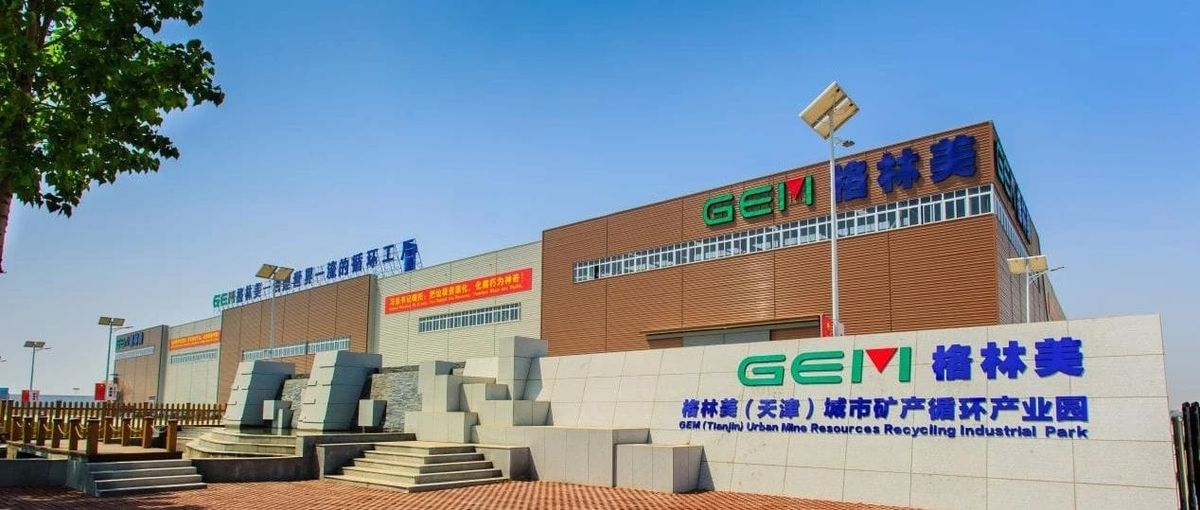
GEM Co., Ltd. has released its 2025 Sustainability Report, marking the company’s sixteenth consecutive year of sustainability disclosure. The report covers the period from 1 January to 31 December 2025 and has been prepared with reference to the Shenzhen Stock Exchange Sustainability Reporting Guidelines, GRI Standards, IFRS S1 and IFRS S2, the UN Global Compact, and the UN Sustainable Development Goals. The report also received independent AA1000AS (Type 2, Moderate Assurance) verification from TÜV Rheinland.
As one of the world’s largest recyclers of critical metals and a major supplier to the global electric vehicle battery supply chain, GEM’s sustainability disclosures provide insight into how circular economy business models are evolving from environmental initiatives into strategic resource security and industrial resilience solutions. The report is particularly relevant given growing concerns around critical mineral supply, battery recycling, climate transition, and sustainable supply chain management.
Key Sustainability Themes and Disclosures
Environmental performance remains at the core of GEM’s sustainability strategy. The company reported a 9.4% reduction in carbon emission intensity per unit of revenue compared with 2024 and increased renewable energy utilisation to 25.71% through a combination of photovoltaic generation, renewable electricity certificates, waste heat recovery, and biomass energy. These initiatives collectively reduced approximately 261,300 tonnes of carbon emissions during the reporting period.
A defining feature of the report is GEM’s continued emphasis on circular economy leadership. The company reported carbon reductions of approximately 1.43 million tonnes of CO₂ through its waste resource utilisation business and maintained its leading position in China’s waste resource utilisation industry for a fifth consecutive year. Recycling volumes for cobalt increased by 48% year-on-year, while waste battery recycling volumes rose by 46%. Total extraction and recovery of key metals including nickel, cobalt, tungsten and lithium exceeded 220,000 tonnes, representing a 66% increase compared with the previous year.
The report also highlights GEM’s role in supporting battery circularity. Through partnerships with more than 1,100 automotive and battery companies globally, the company continues to expand its battery recycling ecosystem. Its advanced recovery technologies for lithium, nickel and cobalt demonstrate increasing maturity in industrial-scale battery recycling, a capability likely to become increasingly important as electric vehicle battery retirements accelerate globally.
On the social front, GEM reported strong investment in workforce development and community engagement. The company trained more than 31,900 employees during the year, with average training hours reaching 47.43 hours per employee. Occupational health and safety remained a priority, with no occupational disease incidents reported and a lost-time injury frequency rate of 1.09 per million hours worked. GEM also invested more than RMB310 million in social welfare programmes benefiting over 16,500 individuals globally.
Governance and Strategic Signals
One of the most significant governance developments disclosed in the report was the upgrade of the Board’s Strategy Committee into a Strategy and Sustainable Development Committee. This change signals a stronger integration of ESG considerations into strategic decision-making and suggests sustainability is increasingly embedded within corporate governance structures rather than being managed as a standalone reporting function.
GEM also strengthened accountability mechanisms through 100% anti-corruption training coverage for employees and suppliers and maintained ISO 37301 compliance management certification. The company continued to enhance stakeholder engagement through investor communication channels and extensive public engagement programmes, including nearly 2,000 factory open-day events.
The report reflects growing alignment with international sustainability expectations. GEM achieved improved ESG ratings across several major assessment frameworks, including S&P CSA, CDP, HKQAA and Sustainalytics, suggesting increasing recognition of its sustainability management systems and disclosure practices by external stakeholders.
What This Report Suggests About Future Direction
The disclosures suggest that GEM is positioning itself as both a circular economy company and a strategic enabler of the global energy transition. Its investments in battery recycling, critical mineral recovery, low-carbon manufacturing, and international resource partnerships indicate a long-term focus on resource security and supply chain resilience.
The report also highlights the company’s expanding presence in Indonesia, where GEM continues to combine industrial investment with talent development, technology transfer and community engagement. This approach may indicate a broader strategy of embedding sustainability into overseas expansion while strengthening access to critical mineral resources.
Looking ahead, stakeholders are likely to monitor progress in Scope 3 emissions management, renewable energy adoption, battery recycling scale-up, and the commercialisation of next-generation battery materials. The company’s ability to maintain leadership in recycled critical materials while meeting growing international sustainability expectations may become an increasingly important differentiator.
Pacifica ESG View
GEM’s 2025 Sustainability Report reinforces its position as one of the world’s most prominent circular economy and battery recycling companies. The strongest signal is not only its environmental performance, but its strategic integration of resource recovery, climate action, supply chain security and industrial development. Going forward, stakeholders should closely monitor how GEM converts its circular economy leadership into measurable decarbonisation outcomes and broader value-chain sustainability impacts.