Decarbonising Cement While Building Business Resilience: An In-Depth Analysis of PT Semen Indonesia's 2025 Sustainability Report
PT Semen Indonesia's 2025 Sustainability Report shows how one of Southeast Asia's largest construction materials companies is advancing decarbonisation, governance, and sustainable growth. Our analysis explores its climate strategy, ESG maturity, risks, and long-term industry implications.
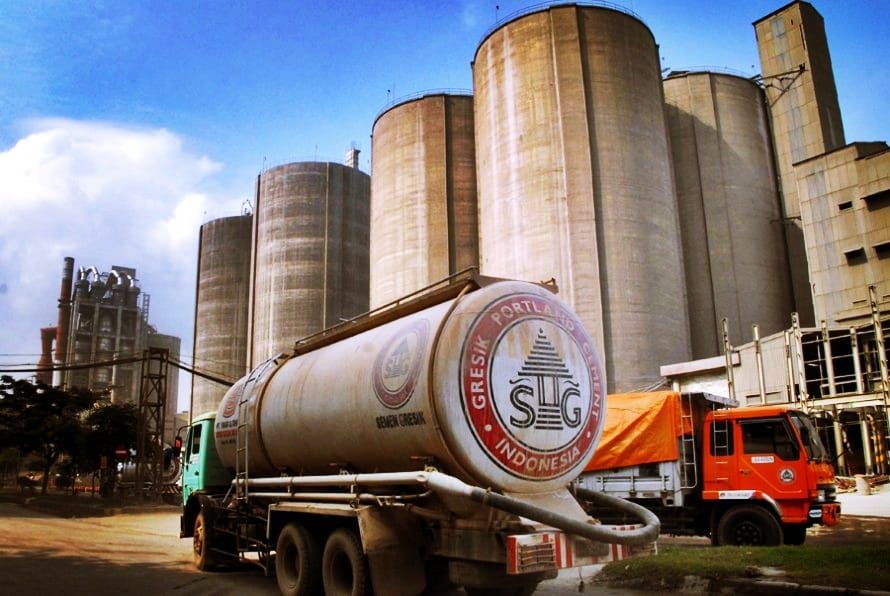
PT Semen Indonesia (Persero) Tbk’s 2025 Sustainability Report presents the company’s ESG performance under the theme “Enhancing Financial and Business Development Through ESG.” The report is positioned as part of SIG’s accountability to stakeholders and is prepared with reference to Indonesian sustainable finance disclosure requirements, GRI Standards 2021, and POJK 51/2017. As a state-owned cement group, SIG operates in one of the most emissions-intensive industrial sectors, making its disclosures relevant not only to investors but also to regulators, public-sector stakeholders, customers, suppliers, and communities.
The report reflects a broader shift in heavy industry reporting: sustainability is no longer presented only as compliance, but as a business resilience and competitiveness agenda. SIG links its strategy to low-carbon cement, alternative fuels, renewable energy, circular economy initiatives, and sustainable building solutions. This is consistent with global trends in cement and construction materials, where decarbonisation, product innovation, and supply-chain transformation are becoming central to long-term market positioning.
Governance architecture and accountability
SIG’s governance disclosures show an effort to embed sustainability within corporate governance rather than treating it as a standalone communications function. The report includes sections on governance structure, the role of the highest governance body in sustainability reporting, climate-impact management, internal control, anti-bribery and anti-corruption, business ethics, conflicts of interest, and risk management. This breadth suggests that the company is attempting to connect ESG oversight with formal governance mechanisms.
The more significant point is the inclusion of climate governance and delegated responsibility for managing climate impacts. For a cement group, this is particularly important because climate risk is not peripheral; it affects production costs, energy sourcing, capital expenditure, product strategy, and access to finance. However, the report would be stronger if future disclosures provided more detail on how climate-related performance affects executive remuneration, investment approval, and business-unit accountability.
Materiality approach and risk prioritisation
SIG’s materiality approach is structured around economic, environmental, social, and governance impacts. The company’s sustainability pillars include sustainable solutions and innovation, environmental protection, value creation for people and communities, and governance risk management. These pillars are appropriate for a cement business because they capture the main areas of exposure: carbon intensity, resource use, operational safety, local community impacts, procurement, and compliance.
The report’s risk prioritisation is strongest where it links sustainability issues to operational realities. Climate and energy, circular economy, air emissions, water, biodiversity, occupational health and safety, employment, ethics, compliance, and community development are all identified as areas of focus. The next step for SIG would be to strengthen the connection between materiality and financial impact, particularly by explaining which sustainability issues may affect revenue, margins, asset values, capital allocation, and customer demand.
Climate, supply chain, and social dimensions
Climate is the central issue in SIG’s report. The company states that SBTi has approved its near-term science-based targets and that it is committed to reducing Scope 1 and Scope 2 greenhouse gas emissions by 33.7% per tonne of cementitious material by 2032 from a 2019 baseline. In 2025, SIG reports a 5.2% reduction in Scope 1 and Scope 2 emissions compared with the 2019 baseline. This is meaningful because cement decarbonisation is technically difficult and depends on clinker reduction, alternative fuels, energy efficiency, renewable power, and product substitution.
SIG’s 2025 performance shows mixed progress against its 2030 roadmap. Sustainable solutions generated 62% of revenue, exceeding the 2030 roadmap target of 49%. Environmentally friendly material use reached 34%, below the 39% target, while the thermal substitution rate reached 9.77%, still short of the 20% roadmap ambition. This indicates that the company has made stronger progress in sustainable product revenue than in some operational decarbonisation levers.
Supply chain is addressed through local procurement and sustainable procurement commitments. The report states that local suppliers account for 97% of total suppliers, which may support domestic economic contribution and supply-chain resilience. However, from a global ESG perspective, future reporting could provide more detail on supplier ESG screening, supplier emissions, human rights expectations, and corrective action processes.
Employment
SIG reported 9,264 employees in 2025, down from 9,743 in 2024 and 10,174 in 2023. Male employees accounted for 8,220 employees, while female employees accounted for 1,044 employees. This indicates that the workforce remains heavily male, which is common in cement and heavy industrial operations but still relevant from a diversity and workforce planning perspective.
The training indicator is notable. SIG reported average training hours of 212.13 hours per employee in 2025, higher than 185.66 hours in 2024 but below 348.03 hours in 2023. This suggests continued investment in capability building, though the year-to-year fluctuation would benefit from further explanation. For investors and sustainability leaders, the key question is whether training is linked to strategic needs such as safety, decarbonisation, digitalisation, operational excellence, and leadership development.
Health and safety
Occupational health and safety is one of the most material social issues for SIG. The company reports a Lost Time Injury Frequency Rate of 0.13 in 2025, improving slightly from 0.14 in 2024 and significantly from 0.27 in 2023. This trend suggests progress in safety management and operational discipline.
The report also states that SIG achieved 100% implementation of the Contractor Safety Management System for contractors. This is important because contractor risk is often a major exposure in heavy industry. Future disclosures could be strengthened by providing more detail on severe injury prevention, contractor incident rates, leading indicators, safety observations, near-miss reporting, and how safety culture is embedded across subsidiaries.
Product or service responsibility
SIG’s product responsibility disclosures are closely linked to its strategic shift toward sustainable building solutions. The report highlights low-carbon cement, green cement, Portland Composite Cement, and environmentally friendly products as part of its business direction. In 2025, eco-friendly or green products reached 22.456 million tonnes, compared with 21.836 million tonnes in 2024.
The strategic significance is that product innovation may become a key route for cement companies to respond to climate regulation and customer expectations. Green building standards, infrastructure procurement rules, and corporate decarbonisation targets are likely to increase demand for lower-carbon construction materials. SIG’s challenge will be to support product claims with robust life-cycle data, product-level emissions information, and clear alignment with sustainable finance taxonomies.
Philanthropy
SIG’s social and environmental responsibility programmes remain a visible part of its sustainability profile. The company reported CSR expenses of Rp74.651 billion in 2025, down from Rp112.333 billion in 2024 and Rp145.077 billion in 2023. The number of beneficiaries also declined to 554,261 in 2025 from 789,710 in 2024 and 1,205,810 in 2023.
At the same time, cumulative beneficiaries since 2015 increased to 10.3 million people. This shows that SIG continues to maintain a broad community footprint, although the reduction in annual CSR spending and beneficiaries should be explained in terms of programme design, efficiency, prioritisation, or changing community needs. Mature ESG reporting should move beyond activity volume and show measurable outcomes, such as livelihood improvement, education results, environmental restoration, or community resilience.
Metrics, targets, and data robustness
SIG provides a substantial set of quantitative ESG indicators across economic, environmental, and social areas. Revenue declined to Rp35.244 trillion in 2025 from Rp36.186 trillion in 2024, while profit for the year fell to Rp179.439 billion from Rp771.674 billion. Production and sales volumes also declined, indicating a challenging market backdrop.
Environmental indicators show both progress and complexity. Energy use declined to 99.304 million GJ in 2025 from 100.107 million GJ in 2024. Water withdrawal fell to 6,699 megalitres from 7,147 megalitres. Scope 1 emissions intensity for domestic operations improved to 561 kg CO2 per tonne cement equivalent from 570 in 2024, while Scope 2 intensity increased slightly to 57 from 56. These indicators suggest operational efficiency gains, but also show that decarbonisation remains gradual rather than linear.
Assurance, credibility, and comparability
The report states that data and information are based on internal analysis, documents, and credible sources, while also including a disclaimer on forward-looking information. It is prepared with reference to GRI Standards 2021 and POJK 51/2017, and includes an index for GRI, POJK, SDGs, and SASB responses. This improves navigability and comparability for readers.
However, the credibility of future reports would be stronger with more explicit external assurance over selected ESG data, especially greenhouse gas emissions, energy, water, safety, and sustainable product metrics. In emissions-intensive sectors, assurance is increasingly important because investors and lenders need confidence in baseline data, reduction claims, and progress against science-based targets. More transparent methodologies for emissions accounting and product classification would also improve comparability.
Strategic implications for the sector
SIG’s report illustrates the direction of travel for cement and building materials companies in emerging markets. The sector faces simultaneous pressure from climate policy, infrastructure demand, energy transition, industrial competitiveness, and sustainable finance. Companies that can reduce clinker intensity, increase alternative fuel use, develop low-carbon products, and demonstrate credible governance may be better positioned as customers and regulators raise expectations.
The report also shows that sustainability performance is becoming linked to business development. SIG’s sustainable solutions revenue exceeding its 2030 roadmap target is a positive signal, but operational decarbonisation indicators show that deeper transformation remains difficult. For the wider sector, this points to a dual challenge: market-facing green products may scale faster than plant-level emissions reduction, but both are needed for credible transition.
ESG maturity and future positioning
SIG appears to be moving from foundational ESG reporting toward more integrated sustainability management. Its strengths include a structured 2030 roadmap, SBTi-approved targets, broad ESG metrics, climate-related governance sections, circular economy initiatives, and social performance disclosures. The company also shows awareness that sustainability is connected to financial and business development, not only compliance.
The main maturity gaps relate to depth, assurance, and financial linkage. Future reports could improve by explaining the financial implications of climate risks and opportunities, providing more detail on Scope 3 and supplier ESG management, disclosing product-level carbon data, and strengthening assurance over key metrics. SIG’s future positioning will depend on whether it can translate ESG commitments into measurable decarbonisation, resilient margins, safer operations, and stronger customer trust.
Pacifica ESG View
SIG’s 2025 Sustainability Report presents a relatively mature ESG framework for an emerging-market cement group, especially through its SBTi-approved target, 2030 roadmap, and broad disclosure of environmental and social indicators. The strongest signal is the integration of sustainability with business development, particularly through low-carbon products and sustainable solutions revenue. However, the report also shows the practical difficulty of cement-sector transition: alternative fuel substitution, emissions intensity reduction, and material substitution remain long-term operational challenges. Future credibility will depend on clearer financial linkage, stronger assurance, and more granular climate and supply-chain data.
Implications for the wider market
SIG’s disclosures reflect a broader shift in heavy industry: ESG performance is becoming a factor in competitiveness, capital access, and customer confidence. Cement producers in Southeast Asia are likely to face rising expectations around science-based targets, lower-carbon products, circular materials, safety, biodiversity, and community impact. The market implication is not that every company will decarbonise at the same speed, but that credible transition planning is becoming a baseline expectation. Companies with stronger data systems, verified emissions baselines, and commercially viable low-carbon products may be better positioned in the next phase of sustainable infrastructure growth.