China’s GoodWe Signals a Broader Shift Toward Value-Chain Decarbonisation and ESG Integration
China’s GoodWe is broadening its sustainability strategy from operational management toward value-chain decarbonisation, with progress in renewable energy, product carbon footprint certification, supply-chain ESG management and plans for climate scenario analysis and SBTi alignment.
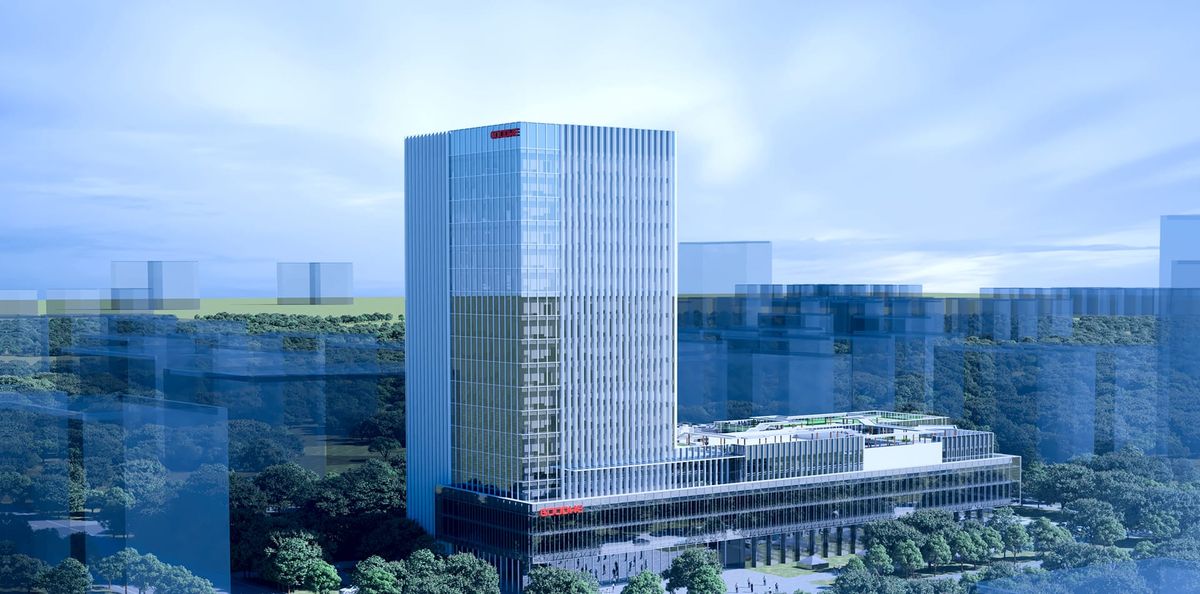
GoodWe Technologies Co., Ltd. has released its 2025 Sustainability Report, covering the period from January 1 to December 31, 2025. The report, published in April 2026, is the company’s second Sustainability Report and fifth disclosure of ESG-related information, covering GoodWe and its subsidiaries. It was prepared in accordance with Shanghai Stock Exchange sustainability reporting requirements, with reference to the GRI Standards, UN Sustainable Development Goals and the Ten Principles of the UN Global Compact. The report also incorporates a double materiality assessment, providing stakeholders with a more structured view of how sustainability issues connect with both business impacts and financial considerations.
The report is particularly relevant because GoodWe operates at the intersection of renewable energy equipment, energy storage and digital energy management. Its sustainability disclosures therefore extend beyond the environmental footprint of its own manufacturing operations to the carbon performance, lifecycle impacts and resilience of the wider energy value chain. This makes the company’s progress on Scope 3 emissions, product carbon management and sustainable supply chain governance especially significant for investors, customers and global business partners.
Key Sustainability Themes and Disclosures
Climate and decarbonisation are among the clearest themes in the report. GoodWe reported total GHG emissions of 1.54 million tCO₂e in 2025, comprising 2,205.45 tCO₂e of Scope 1, 34,221.57 tCO₂e of Scope 2 and 1.50 million tCO₂e of Scope 3 emissions. Compared with 2024, total emissions declined substantially from 3.73 million tCO₂e to 1.54 million tCO₂e, while emissions intensity fell from 5.53 to 1.73 tCO₂e per RMB10,000 of revenue. The scale of Scope 3 emissions is particularly notable: value-chain emissions accounted for almost all reported GHG emissions, suggesting that future decarbonisation opportunities will increasingly depend on products, supply chains and downstream use rather than only factory-level efficiency.
GoodWe is also expanding its product-level carbon management capabilities. By the end of 2025, 48 product models had completed carbon footprint certification and 30 had obtained EPD certification, with the company applying ISO 14025, ISO 14067 and relevant product category rules to core inverter series. The company states that lifecycle carbon information is being used to support product design, technological iteration, process optimisation and supply-chain carbon reduction. This potentially positions product environmental data as an increasingly important interface between GoodWe’s sustainability strategy and customers facing their own Scope 3 and low-carbon procurement requirements.
Energy management provides another important operational signal. GoodWe reported 28,122.20 tce of comprehensive energy consumption in 2025, down from 51,558.02 tce in 2024, while self-produced renewable electricity consumption reached 350,073.86 MWh. The Guangde plant also achieved a 41% green electricity consumption ratio through green power trading, alongside production-process optimisation and energy-efficiency improvements. The report links these measures with broader initiatives including virtual power plants, distributed photovoltaics and integrated generation-grid-load-storage-intelligence solutions.
Beyond climate, GoodWe reports a relatively structured approach to environmental management. The company states that all reported pollutant emissions were managed in compliance with applicable requirements in 2025, with no environmental violations reported. Water withdrawal decreased to 220,177.20 m³ from 269,231 m³ in 2024, while hazardous waste was subject to a 100% legal disposal rate. The company also identifies biodiversity as a material topic and recognises potential risks associated with facility expansion and renewable-energy projects, although its current operations are described as having limited exposure to ecologically sensitive areas.
The social disclosures point to continued emphasis on workforce safety, capability building and customer responsibility. GoodWe reported 87,923.5 employee training hours, or 19.69 hours per employee, and recorded a 100% safety training pass rate, 100% hazard rectification rate and zero work-related injuries resulting in lost workdays in 2025. All productive operating sites were reported as ISO 45001 certified. Customer satisfaction was also tracked through a 5,106-sample survey covering domestic and overseas customers, while the company reported no major quality or safety incident requiring a large-scale product recall during the reporting period.
Governance and Strategic Signals
Governance is becoming increasingly institutionalised within GoodWe’s sustainability framework. The company has established a three-level ESG governance structure involving the Board, an ESG Strategy and Management Committee, and the Sustainable Development Research Institute and ESG working teams. The Board reviews major ESG topics, key projects and the Sustainability Report, while the company established an ESG indicator system in 2025 covering more than 200 quantitative indicators. This suggests a shift from ESG disclosure as a reporting exercise toward a more integrated management and data-governance model.
The governance architecture is also supported by more formal policies covering climate change, GHG management, biodiversity, human rights, diversity and inclusion, supplier conduct, anti-corruption, anti-bribery, business ethics and whistleblowing. In 2025, the Board held eight meetings, independent directors represented 50% of the Board, and female directors represented 33.33%. GoodWe also reported 64 business ethics training sessions and 100% supplier integrity agreement signing coverage, indicating that compliance and ethical conduct are being incorporated into both internal governance and business relationships.
Supply-chain management is another strategic area to watch. GoodWe reported 283 active production suppliers at its Suzhou headquarters and Guangde factory, with a 100% completion rate for the annual CSR and hazardous-substance audit plan among targeted suppliers. Supplier risks are assessed across quality, technology, cost, delivery, service and ESG dimensions, while higher-risk suppliers can face enhanced audits, contractual controls or termination. The company’s direction toward supplier carbon-data collection and integrating carbon performance into supplier evaluation suggests that Scope 3 management may increasingly move from disclosure toward supplier-level accountability.
What This Report Suggests About Future Direction
The strongest forward-looking signal is GoodWe’s intention to move toward science-based climate target management. The company plans to conduct climate scenario analysis in 2026, establish a scientific carbon-target management framework and formally submit a commitment letter to the Science Based Targets initiative in 2026. Its longer-term roadmap includes increasing renewable electricity, replicating zero-carbon factories and parks, developing digital carbon monitoring, integrating climate targets into strategy and budgeting, and exploring carbon-neutral pathways for major operating bases.
This direction suggests that GoodWe’s next stage of sustainability maturity will depend less on expanding individual initiatives and more on converting existing systems into measurable, externally credible targets. The company already has product carbon footprints, EPDs, supplier audits, digital ESG indicators and operational emissions data; the potential next step is to connect these datasets through a coherent transition plan covering Scope 1, Scope 2 and, most importantly, Scope 3. Stakeholders may therefore watch closely for the eventual SBTi commitment, the methodology and boundaries of future targets, the results of climate scenario analysis, and evidence that supplier and product-level carbon performance translates into measurable value-chain reductions.
Pacifica ESG View
GoodWe’s 2025 Sustainability Report indicates a transition from operational ESG management toward broader value-chain sustainability. The most material signal is the company’s recognition that Scope 3 dominates its reported carbon footprint, alongside growing use of product carbon footprints, EPDs and supplier ESG controls. Its planned 2026 climate scenario analysis and SBTi commitment could provide a more defined long-term framework. Going forward, stakeholders should monitor whether these systems translate into science-based targets, measurable Scope 3 reductions, stronger supplier accountability and clearer links between climate strategy, capital allocation and business performance.