China’s CRRC Times Electric: From Green Innovation to Deeper ESG Integration
CRRC Times Electric’s 2025 ESG Report highlights China’s evolving approach to climate transition, green innovation and ESG governance, with value-chain emissions, clean energy and long-term carbon neutrality emerging as key priorities.
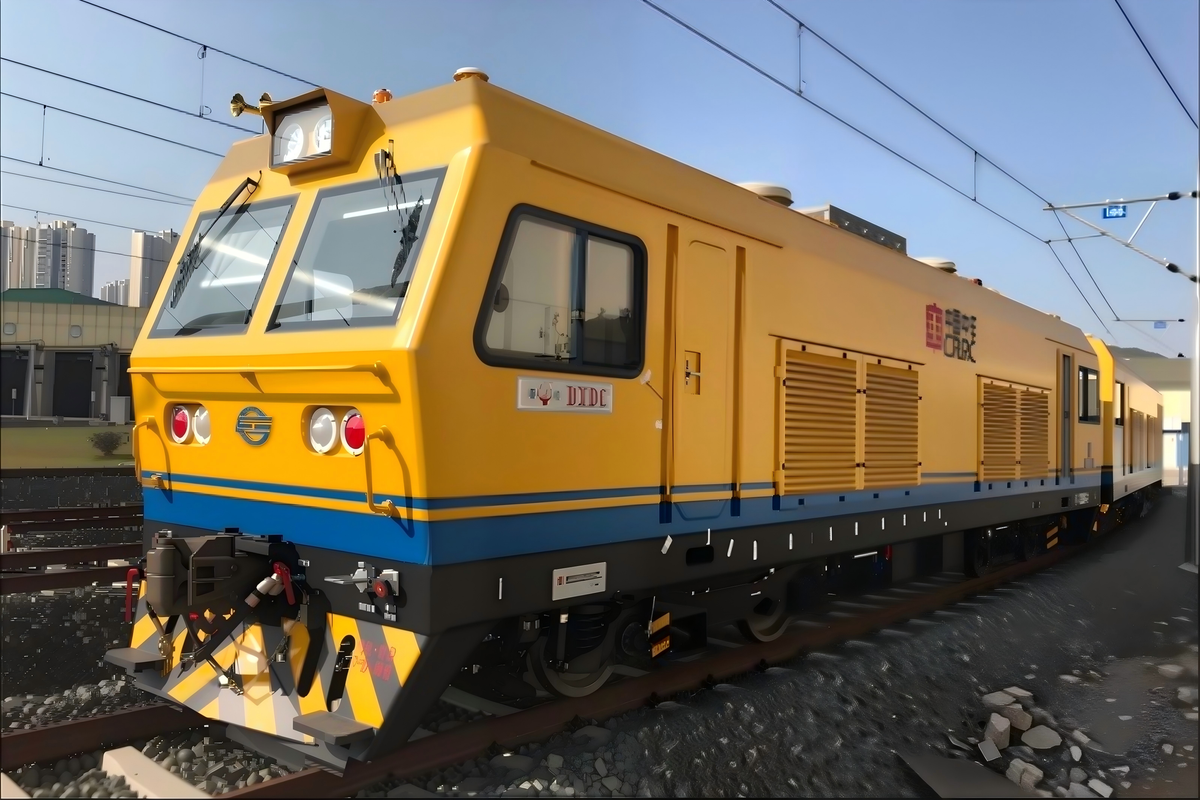
Zhuzhou CRRC Times Electric Co., Ltd. has released its 2025 Environmental, Social and Governance Report, covering the period from January 1 to December 31, 2025. The report covers the company’s headquarters and financially consolidated subsidiaries, with key ESG performance indicators generally covering the company and its wholly owned subsidiaries in mainland China. It references the HKEX ESG Reporting Code, Shanghai Stock Exchange sustainability reporting guidelines, GRI Standards, the UN Sustainable Development Goals, IFRS S1 and IFRS S2, as well as MSCI ESG rating focus areas.
The report is notable for the increasing connection between sustainability reporting, operational management and Times Electric’s broader industrial strategy across rail transit, semiconductors, new energy, automotive equipment, industrial applications and marine equipment. External credibility is strengthened by moderate assurance of the ESG report under AA1000AS v3 by TÜV Rheinland, while the company’s greenhouse gas inventory received separate reasonable assurance from SGS under ISO 14064-3.
Key Sustainability Themes and Disclosures
Climate management represents one of the report’s strongest developments. Times Electric reports Scope 1 emissions of 32,821 tCO2e, Scope 2 emissions of 227,922 tCO2e and, for the first time in the three-year performance table, Scope 3 emissions of 12.19 million tCO2e, bringing disclosed value-chain emissions to approximately 12.45 million tCO2e. The scale of Scope 3 relative to operational emissions demonstrates that the company’s longer-term decarbonisation challenge lies predominantly beyond its own facilities, making suppliers, product use and other value-chain activities increasingly important areas for future action.
Operationally, the company procured 150,415 MWh of green electricity and associated green certificates during 2025, while establishing Smart Park, Energy Dispatching and Carbon Management and Control platforms. It also states that green electricity procurement will gradually increase and natural gas use will begin to be restricted and phased out from 2026. However, total operational Scope 1 and 2 emissions increased to 260,744 tCO2e, while comprehensive energy consumption reached 60,644 tonnes of standard coal, indicating that absolute operational expansion currently remains an important counterweight to efficiency and renewable-energy initiatives.
Resource efficiency is another visible focus. A fluoride-containing wastewater reuse project is expected to save approximately 240,000 cubic metres of tap water annually, while circular packaging programmes replace disposable wooden packaging with reusable alternatives. The company also uses its “6R1D” packaging strategy to address material reduction, reuse, recycling and degradability across the packaging lifecycle. These programmes suggest that circularity is being treated increasingly as an operational efficiency issue rather than solely as environmental compliance.
On social performance, Times Electric reported zero work-related fatalities and zero occupational disease cases in 2025, but recorded two work-related accidents and 34 lost workdays. Its LTIFR rose from 0.054 in 2024 to 0.099 in 2025, making safety performance an area stakeholders should continue to monitor despite 100% safety-training coverage and substantially higher training hours. Employee development remained extensive, with 421,320 total training hours and an average of approximately 42 hours per employee.
Product responsibility indicators remained comparatively strong. Times Electric reported no product recalls, a 100% product sampling qualification rate and customer satisfaction of 95.5%, up from 93.3% in 2024. Cybersecurity disclosures also show zero major cybersecurity or data-security incidents and no substantiated customer privacy complaints, although the company identified and managed a significant volume of cyber risks during the year.
Governance and Strategic Signals
Times Electric operates a three-tier ESG governance structure in which the Board of Directors holds ultimate responsibility for major ESG decisions, supported by the Strategy and ESG Committee and an ESG Management Working Group. The board is tasked with reviewing ESG strategies, monitoring targets, assessing material issues and incorporating sustainability factors into strategy and major transaction decisions. This structure indicates a shift from ESG as primarily a disclosure function toward integration with formal corporate decision-making.
More significantly, ESG indicators, including climate-related considerations, have been incorporated into the company’s overall performance appraisal system and linked to executive compensation. ESG risks are also integrated into enterprise-wide risk management and considered during pre-assessment of major transactions and strategic planning. The company’s double-materiality assessment covered 26 ESG issues and identified 13 high-impact material topics and six financially material topics, providing a more structured basis for prioritising sustainability risks and opportunities.
Business ethics controls also appear relatively developed. Times Electric reports 100% business ethics training coverage, integrity declarations and commitments for personnel in key positions, supplier integrity requirements and whistleblower protection mechanisms. The company states that neither it nor its employees were involved in litigation relating to corruption, bribery, extortion or fraud during the reporting period.
What This Report Suggests About Future Direction
The clearest direction of travel is toward deeper value-chain decarbonisation. Times Electric has set targets to achieve operational carbon neutrality by 2035 and full value-chain carbon neutrality by 2050, while the introduction of Scope 3 accounting establishes an important baseline for future supplier and product-related emissions management.
Clean technology is also increasingly positioned as both an ESG priority and a growth strategy. Investment in clean-technology R&D reached RMB 3.177 billion, equivalent to 11.07% of operating income and above the company’s stated 10% target, covering technologies including photovoltaic inverters, energy storage systems, electric drives and semiconductor technologies. This suggests that Times Electric’s sustainability positioning may increasingly depend not only on reducing its own footprint, but also on the contribution its technologies can make to lower-carbon transport and energy systems.
Future scrutiny is nevertheless likely to focus on translating long-term carbon-neutrality commitments into clearer interim absolute-emissions pathways, addressing rising operational emissions and strengthening Scope 3 management. Occupational safety trends, supplier ESG implementation and the development of more quantified nature and biodiversity indicators may also become increasingly relevant as reporting expectations evolve.
Pacifica ESG View
Times Electric’s 2025 report signals a maturing ESG management system, particularly through Scope 3 disclosure, externally verified carbon data, executive ESG incentives and double-materiality assessment. Its strongest strategic signal is the integration of clean technology with business growth. However, rising operational emissions and safety incident indicators show that expanding disclosure does not automatically translate into improving outcomes. Stakeholders should monitor interim decarbonisation milestones, value-chain engagement and whether governance mechanisms begin to deliver measurable performance improvements.