BHP Australia Sustainability Report 2026 Analysis: ESG Governance, Climate Performance, Responsible Mining and Sustainability Assurance
An in-depth analysis of BHP's 2026 Sustainability Report, examining climate performance, Scope 3 emissions, ESG governance, workforce safety, responsible mining, regulatory alignment and independent assurance.
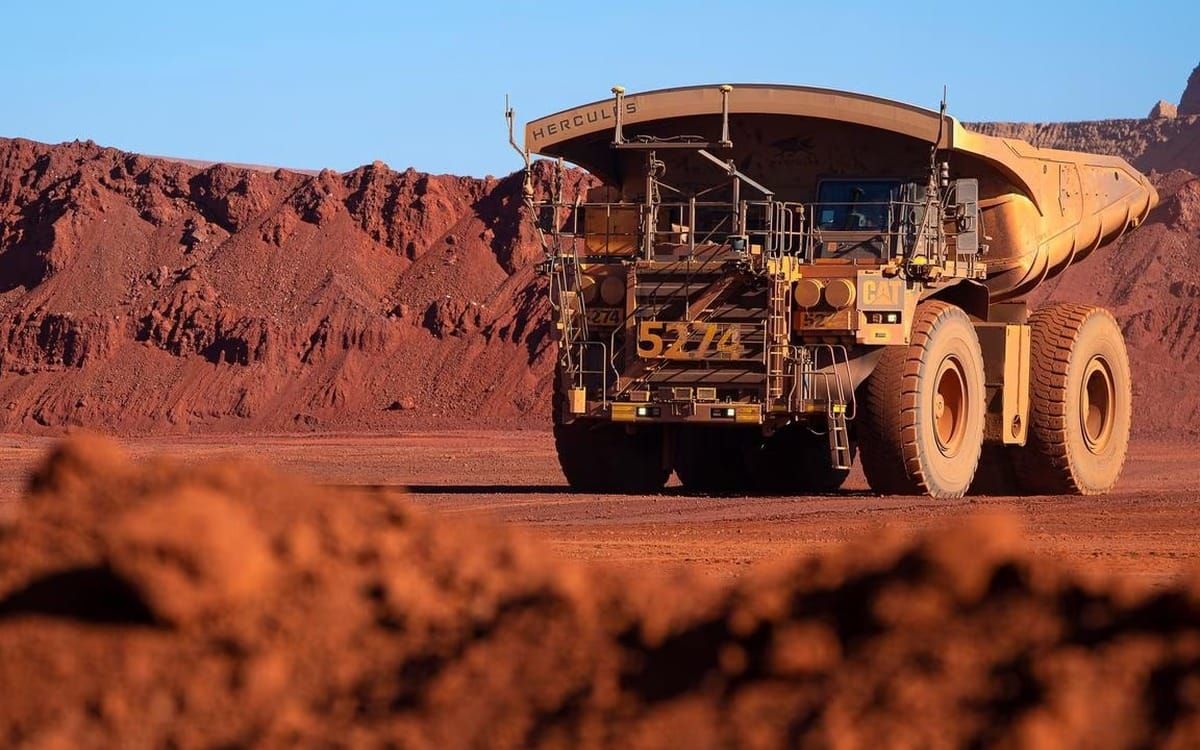
BHP Group Limited is a global resources company headquartered in Australia, with major interests in copper, iron ore, steelmaking coal and potash. Its operations and investments span Australia, Chile, Canada and other international markets, positioning the company within supply chains supporting infrastructure, manufacturing, electrification and agricultural production. Copper contributed more than half of BHP's underlying EBITDA in FY2026 for the first time, reflecting its growing importance within the company's portfolio.
BHP's sustainability profile consequently involves a structural tension: its commodities support industrial development and energy transition technologies, while mining creates substantial environmental, occupational and community impacts. Assessing its ESG performance requires examining both the sustainability relevance of its products and the consequences of extracting them.
Reporting Background and Regulatory Context
BHP's Annual Report 2026 covers the financial year ended 30 June 2026 and incorporates a dedicated Sustainability Report prepared under Australia's mandatory climate-related financial disclosure framework. The company implemented Australian Sustainability Reporting Standard AASB S2, building upon its established reporting practices associated with the Task Force on Climate-related Financial Disclosures (TCFD). Its wider sustainability disclosures also reference the International Council on Mining and Metals (ICMM) and Global Reporting Initiative (GRI).
This creates a reporting architecture combining financially material climate disclosures with broader impact-oriented sustainability information. Internationally, GRI 14: Mining Sector 2024 provides an additional benchmark for sector-specific transparency, while European Sustainability Reporting Standards (ESRS) emphasise double materiality. BHP's Australian reporting obligations should nevertheless be distinguished from potential EU requirements: applicability of the CSRD and CSDDD depends on relevant legal thresholds and corporate structures, including the EU's 2026 Omnibus amendments.
Governance Architecture and Accountability
BHP places ultimate responsibility for climate-related oversight with its Board, encompassing strategic decisions, investments, risk management, disclosures and executive remuneration. The Board's Sustainability Committee monitors implementation of sustainability strategies and progress against targets, while the Risk and Audit Committee oversees principal risks, including climate-related exposures. The Board met 13 times during FY2026, with climate considerations regularly appearing in its deliberations.
This structure indicates that sustainability governance extends beyond a standalone ESG function. Importantly, BHP integrates relevant climate investment decisions into its Capital Allocation Framework, connecting decarbonisation expenditure with operational priorities and financial discipline. The central governance question is whether these mechanisms consistently translate sustainability commitments into measurable operational outcomes, particularly where technology development, commercial returns and environmental objectives compete.
Materiality Approach and Risk Prioritisation
BHP conducts an impact materiality assessment aligned with GRI principles and ICMM requirements, identifying sustainability topics relevant to its operations, stakeholders and wider impacts. Separately, the company evaluates climate-related financial risks and opportunities under AASB S2. These complementary approaches provide different perspectives, but should not be interpreted as a complete ESRS double materiality assessment.
A notable FY2026 development is that tailings storage facilities and value-chain sustainability were removed from the company's principal material-topic disclosure list, with related information continuing through separate reporting channels. Economic contribution was introduced as a new material topic. The change does not establish that tailings or supply-chain risks have diminished; rather, it increases the importance of navigating the reporting suite to assess those exposures comprehensively.
Climate, Supply Chain and Social Dimensions
Climate remains one of BHP's most consequential sustainability challenges. Its unadjusted FY2026 Scope 3 emissions reached approximately 429 million tonnes of CO₂ equivalent, compared with 423.7 million tonnes in FY2025. Downstream processing of iron ore and steelmaking coal accounted for approximately 85% of reported Scope 3 emissions, demonstrating the scale of environmental impacts occurring beyond BHP's operational boundaries.
BHP collaborates with 13 steelmakers, collectively representing approximately one-quarter of reported global steel production, to explore lower-emissions production technologies. Its initiatives include modified blast furnaces, direct reduced iron, electric smelting and carbon capture. These partnerships establish identifiable engagement mechanisms, although commercial-scale deployment and resulting emissions reductions remain uncertain.
Operationally, emissions were 33% below BHP's adjusted FY2020 baseline, against a target of at least 30% by FY2030. However, unadjusted operational emissions increased from 8.7 million tonnes in FY2025 to 9.4 million tonnes in FY2026. Renewable sources accounted for approximately 80% of operational electricity usage, supported by renewable electricity certificates, while large-scale displacement of diesel-powered mining equipment is not expected until after FY2030.
BHP also addresses nature, water and community impacts through its social value framework. Approximately 246,000 hectares were under formal conservation, restoration or regenerative management practices, compared with its FY2030 objective of at least two million hectares. Meanwhile, operational water withdrawals increased by 7%, highlighting continuing resource pressures despite the company's stewardship initiatives.
Employment and Workforce Management
BHP reported that women represented 41.5% of employees at 30 June 2026, compared with 41.3% in the preceding year. Women accounted for 47.4% of new hires and 39.3% of people leaders, suggesting more substantial progress in leadership representation than in overall workforce composition. Employee engagement remained comparatively stable, with 83% responding favourably to engagement questions and 88% to wellbeing questions.
However, employment performance also involves labour relations, remuneration compliance and workplace conduct. BHP disclosed continuing industrial negotiations and remediation activities relating to historical payroll issues in Australia. Its reporting of 113 established sexual harassment cases during FY2026 illustrates why diversity representation alone is insufficient to evaluate workplace inclusion and employee protection.
Health and Safety
Mining safety remains a critical measure of operational ESG effectiveness. BHP recorded no fatalities during FY2026 and reported a 27% reduction in high-potential injury frequency compared with FY2025, while total recordable injury frequency remained unchanged at 4.5 injuries per million hours worked. These indicators suggest progress in controlling potentially severe incidents, although overall recordable injury performance did not improve.
The fatal injury of a contractor at the Peak Downs mine on 24 July 2026, after the financial year ended, presents an important qualification to the annual performance indicators. BHP disclosed an ongoing investigation and identified contractor safety management as an area requiring further attention. Its occupational health programmes additionally address silica, diesel particulate exposure, coal dust and psychosocial risks, indicating a broader approach extending beyond immediate workplace accidents.
Product or Service Responsibility
For BHP, product responsibility primarily concerns the responsible extraction, processing, sourcing and delivery of mineral commodities rather than conventional consumer-product safety. The company reports assessments of applicable producing operated assets against recognised responsible production and sourcing standards, including the Copper Mark and Towards Sustainable Mining. Its sustainability framework also addresses tailings management through disclosures associated with the Global Industry Standard on Tailings Management.
These activities are relevant to industrial customers facing growing expectations concerning traceability, human rights and product carbon footprints. Nevertheless, assessment against operational standards does not automatically establish that every product shipment is independently certified or fully traceable. Greater integration between mine-level verification, product-level environmental data and customer-facing disclosures could strengthen responsible minerals assurance across the value chain.
Philanthropy and Community Investment
BHP's community approach extends beyond conventional corporate donations, emphasising economic participation, education, skills development and partnerships with local communities. In FY2026, its social value scorecard recorded support for 66 education and skills programmes. The company also reported approximately US$1.007 billion in procurement expenditure with Indigenous businesses, representing an important mechanism for economic participation.
BHP's total economic contribution of US$50.8 billion must not be confused with philanthropic expenditure, since it incorporates payments to suppliers, governments, employees and other stakeholders. Its broader annual reporting does not provide sufficient information to attribute a verified social return to each community programme. Stronger outcome measures covering educational attainment, employment pathways and community resilience would improve assessment of long-term social investment effectiveness.
Metrics, Targets and Data Robustness
BHP provides detailed sustainability metrics, including operational emissions, Scope 3 categories, workforce indicators, occupational safety and environmental performance. Importantly, the company distinguishes unadjusted emissions inventories from adjusted figures used to assess progress against historical targets. Its FY2026 adjusted Scope 3 inventory for target tracking was 383.8 million tonnes of CO₂ equivalent, differing materially from the unadjusted inventory of 429 million tonnes.
This distinction is important because acquisitions, divestments, reporting boundaries and methodological changes affect comparability. BHP has begun incorporating product-level emissions data from four strategic suppliers, accounting for 5% of its Scope 3 Category 1 emissions on the stated adjusted basis. Nevertheless, downstream processing emissions remain heavily dependent on estimation methodologies, demonstrating that disclosure sophistication does not eliminate data uncertainty.
Assurance, Credibility and Comparability
BHP's FY2026 sustainability reporting benefits from independent assurance conducted by Ernst & Young under Australia's ASSA 5000 framework, which is based on the international ISSA 5000 standard. Its Scope 1 and Scope 2 emissions disclosures received reasonable assurance, while the broader statutory Sustainability Report and specified other sustainability information were subject to limited assurance. These different assurance levels should be clearly distinguished when interpreting the credibility of reported information.
The assurance framework strengthens confidence in the preparation of selected disclosures against applicable criteria, but it does not certify the effectiveness of BHP's entire sustainability strategy. EY also explicitly excludes assurance over the achievability of prospective information, including future climate targets and scenarios. Investors must therefore distinguish verified historical information from management assumptions, modelling and forward-looking commitments.
Strategic Implications for the Mining Sector
BHP's reporting illustrates how mining companies increasingly face sustainability expectations extending across the full commodity lifecycle. Growing demand for copper and other industrial inputs may create commercial opportunities, but production expansion can also intensify pressures relating to emissions, water consumption, biodiversity, land access and community relations. The strategic challenge is to manage these impacts without treating the environmental benefits of downstream applications as substitutes for responsible upstream production.
Across international markets, climate disclosure standards, nature-related reporting frameworks and supply-chain due diligence expectations are reinforcing demand for decision-useful information. Even where regulatory requirements differ or have been simplified, industrial buyers and financial institutions may continue seeking comparable, independently supported sustainability evidence.
ESG Maturity and Future Positioning
BHP demonstrates considerable maturity in sustainability governance, target-setting, climate scenario analysis and assurance arrangements. Its structured disclosure practices and integration of climate considerations into capital allocation provide a foundation for managing complex sustainability risks. However, material challenges remain, particularly the scale of downstream emissions, dependence on emerging decarbonisation technologies, ecological pressures and the persistence of serious workforce-related risks.
Future ESG maturity should therefore be assessed through demonstrated operational outcomes rather than reporting coverage alone. Continued improvements in supplier-specific emissions information, mine-level environmental indicators, grievance effectiveness and independent verification would help strengthen the link between sustainability governance and measurable performance.
Pacifica ESG View
BHP's FY2026 disclosures reflect an advanced sustainability reporting architecture, particularly through mandatory AASB S2 implementation, detailed climate-risk analysis and the adoption of reasonable assurance for Scope 1 and Scope 2 emissions. These practices provide stronger foundations for investor scrutiny and cross-period evaluation.
Nevertheless, the report highlights the difference between managing sustainability disclosure and resolving underlying sustainability impacts. Scope 3 emissions remain substantial, operational emissions increased during FY2026, and long-term decarbonisation depends partly on technologies and customer decisions outside BHP's control.
Pacifica ESG considers BHP's principal ESG challenge to be demonstrating that established governance, investment discipline and assurance arrangements deliver sustained environmental and social improvements across its operations and value chain.
Implications for the Wider Market
BHP's experience offers several lessons for mining companies and other emissions-intensive sectors. Climate disclosure is becoming increasingly connected to financial planning, while supply-chain engagement, nature stewardship and social licence remain essential components of long-term business resilience.
The growing use of sustainability assurance also increases the importance of consistent reporting boundaries, reliable underlying evidence and transparent methodological assumptions. For investors, disclosure comprehensiveness should be evaluated alongside performance trends and unresolved risks.
Ultimately, more mature ESG reporting will be distinguished not only by the quantity of information disclosed, but by its comparability, credibility and demonstrated relevance to long-term operational and financial resilience.