Beyond Carbon: How China’s SAIC MAXUS Is Integrating ESG into Commercial Vehicles, Supply Chains and Global Growth
An independent analysis of SAIC MAXUS China’s 2025 Sustainability Report, covering ESG governance, climate performance, Scope 3 emissions, electric mobility, battery supply chain due diligence, product responsibility, workplace safety and sustainability assurance.
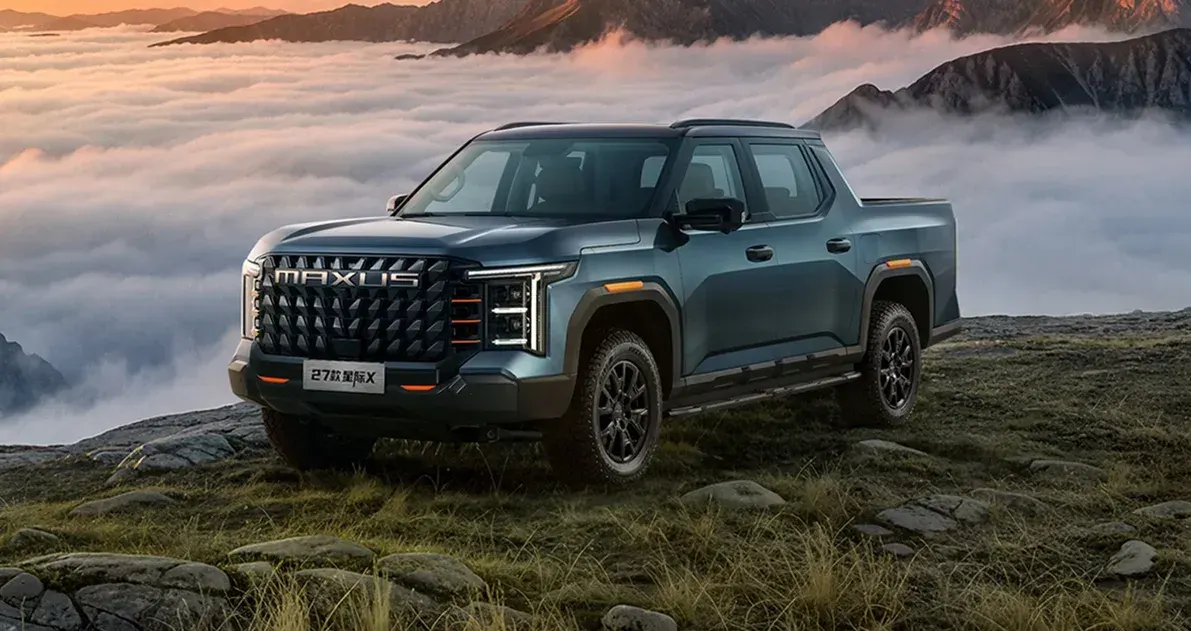
SAIC MAXUS Automotive Co., Ltd. (SAIC MAXUS) is a Chinese automotive manufacturer and a wholly owned subsidiary of SAIC Motor Corporation Limited (SAIC Motor), one of China's largest automotive groups. Headquartered in Shanghai, SAIC MAXUS specialises in the development, manufacturing and sales of commercial and passenger vehicles, with a diversified product portfolio that includes light commercial vehicles, pickup trucks, multi-purpose vehicles (MPVs), sport utility vehicles (SUVs), recreational vehicles (RVs), and new energy vehicles (NEVs). The company operates major manufacturing facilities in Wuxi and Nanjing, serving domestic and international markets across Asia, Europe, Oceania and other regions. With an expanding international presence and a growing focus on electric mobility, SAIC MAXUS operates in an increasingly competitive automotive industry where technological innovation, product quality, environmental performance and responsible supply chain management are important factors influencing long-term business development.
SAIC MAXUS’s 2025 sustainability disclosure marks an important institutional milestone: it is the company’s first standalone sustainability publication, covering the period from 1 January to 31 December 2025. The report covers SAIC MAXUS Automobile Co., Ltd., its Wuxi and Nanjing branches, Wuxi Shenlian Special Purpose Vehicle Co., Ltd., SAIC MAXUS RV Technology Co., Ltd., and SAIC MAXUS Automobile Sales & Service Co., Ltd. The disclosure references the GRI Standards and the UN Sustainable Development Goals, while the Board states that it assumes responsibility for the authenticity, accuracy and completeness of the disclosed information.
The timing is significant for China’s automotive industry. Sustainability expectations are increasingly moving beyond factory-level environmental compliance toward climate governance, supply-chain due diligence, product lifecycle impacts, cybersecurity and responsible sourcing. MAXUS explicitly references TCFD and IFRS S2 concepts in its climate framework and links battery supply-chain management to requirements arising from the EU Battery Regulation, indicating that overseas market access is becoming an important driver of ESG system development.
Governance architecture and accountability
MAXUS has established a four-tier ESG governance structure headed by the General Manager, supported by an ESG Committee, a Sustainable Development Working Group and specialised implementation teams. The General Manager holds ultimate accountability for ESG strategy, targets, long-term roadmaps and significant ESG-related capital allocation, while major ESG decisions are considered through executive management meetings and reported to the Board.
Below this level, specialised working groups cover environmental management, products and services, sustainable supply chains, employee management and governance. This architecture is notable because responsibilities extend beyond sustainability disclosure into operational topics such as climate change, circular economy, product lifecycle management, supplier enablement, occupational safety and anti-corruption. MAXUS also plans to incorporate key ESG indicators into its Business Plan Deployment management system, further strengthening the integration of sustainability priorities into business planning and performance management
Materiality approach and risk prioritisation
MAXUS applies a double-materiality assessment that combines impact materiality with financial materiality. The process begins with background review and issue identification, followed by stakeholder input and separate assessments of external impacts and potential financial implications. The materiality matrix shown on page 14 divides topics according to the significance of their impacts and their potential financial relevance, creating a more structured basis for management prioritisation.
The underlying analysis goes beyond ranking issues. Pages 15–18 connect material topics with risks, opportunities and management responses, including product safety, corporate governance, circular economy, product lifecycle design, ESG governance, environmental management, customer relations, occupational health and safety, R&D and energy use. This is a stronger approach than a conventional stakeholder survey because it begins to connect sustainability topics with operational and financial consequences.
Building on this approach, MAXUS has begun to connect material ESG topics with potential effects on costs, market demand, operational resilience and market access. This provides a useful basis for progressively deepening the financial dimension of materiality analysis and, over time, supporting more quantitative assessment of the business implications associated with key sustainability risks and opportunities.
Climate, supply chain, and social dimensions
Climate management is one of the most developed elements of MAXUS’s ESG architecture. The company states that climate considerations are integrated into corporate decision-making and addresses physical risks such as extreme rainfall, flooding and high temperatures alongside transition risks including carbon regulation, energy costs, technology shifts and changing market demand. Its strategy combines low-carbon product development, capital allocation, green manufacturing and supply-chain management.
The company has set a target to reach an operational carbon peak by 2026 and reports 2025 emissions of approximately 8.76 million tonnes CO₂e. Scope 3 dominates the footprint at approximately 8.66 million tonnes CO₂e, compared with around 26,267 tonnes for Scope 1 and 74,150 tonnes for location-based Scope 2 emissions. This profile is strategically important because it suggests that decarbonisation cannot be achieved through manufacturing energy efficiency alone; vehicle use, purchased goods, batteries and other value-chain activities are likely to remain central.
Supply-chain management reflects the same shift toward value-chain accountability. MAXUS has developed supplier sustainability procedures covering selection, classification, assessment, audits, corrective action and record retention, with zero-tolerance provisions for bribery, child labour, forced labour and severe health, safety or environmental violations. It also identifies high-risk sourcing regions for minerals including cobalt, lithium, nickel, graphite, tin, tantalum, tungsten and gold.
Within this broader supply-chain framework, MAXUS is also advancing a phased due-diligence programme for power-battery suppliers in response to evolving requirements such as the EU Battery Regulation. In 2025, the company reported a 43% battery supplier due-diligence rate and conducted on-site assessments of selected key suppliers, with identified issues followed through Corrective Action Plan processes. The phased roadmap provides a structured pathway for progressively expanding coverage and embedding sustainability considerations more deeply into procurement and supplier management.
Employment
MAXUS has established a structured employee-management framework covering employee rights and benefits, career development, diversity and inclusion, performance management and workplace communication. The company states that employee rights are supported through a governance structure involving senior management, human resources, the labour union and subsidiary-level implementation teams, providing a systematic basis for employee protection and engagement.
Employee development is supported through Individual Development Plans, specialised training, job rotations, secondments and high-potential development programmes. MAXUS has also established the “iXue” internal online learning platform, with training resources covering areas such as environmental protection, workplace harassment, equality and inclusion, privacy protection and information security. The company additionally conducts women’s leadership training to support the professional development of female employees.
In 2025, diversity, inclusion and equality training achieved 100% coverage, while average training duration reached 14.57 hours per employee. MAXUS has set a target of increasing average employee training to 30 hours by 2027, indicating a continued focus on strengthening workforce capabilities alongside the company’s technological development and international growth.
Health and safety
Occupational health and safety is supported by ISO 45001 certification across the company’s major operating facilities, including its Nanjing and Wuxi branches and relevant subsidiaries. The General Manager holds primary responsibility for safety and environmental protection, while risk identification, hazard assessment, workplace inspections and corrective actions are distributed across management and operational levels.
The company reported a recordable injury rate of 0.09 per 200,000 working hours in 2025, with zero work-related fatalities and zero serious work-related injuries. Safety training coverage reached 100%, while occupational health examinations for employees exposed to relevant hazards also achieved full coverage.
An important strength is the extension of safety requirements to contractors. Contractor qualification checks, mandatory safety responsibility agreements, tiered training, hazardous-work approval and performance evaluation are incorporated into the system. This broadens occupational safety from employee protection to operational value-chain control, which is increasingly relevant in complex manufacturing environments.
Product or service responsibility
For an automotive manufacturer, ESG credibility ultimately depends heavily on product safety, reliability and lifecycle impacts. MAXUS has established a Product Quality and Safety Committee and an end-to-end quality management framework incorporating ISO 9001, IATF 16949, automotive cybersecurity standards and Chinese regulatory requirements. The company reports ISO 9001 certification across its branches and subsidiaries, while its Wuxi and Nanjing branches hold IATF 16949 certification.
Quality controls span design, testing, manufacturing, inspection, delivery and recall management. During product development, the company uses performance, durability and environmental adaptability testing, while digital production systems are used to monitor manufacturing quality and consistency.
Product responsibility increasingly also includes software, connectivity and privacy. MAXUS holds ISO 27001 and ISO 27701 certifications and has obtained UN R155 Cyber Security Management System certification for vehicle cybersecurity. In 2025, it disclosed zero confirmed privacy complaints, customer data-loss incidents and privacy violations.
This is particularly relevant as the automotive industry evolves from mechanical products toward connected mobility platforms. Product safety, cybersecurity, data governance and software integrity are increasingly interconnected aspects of responsible vehicle design.
Philanthropy
MAXUS’s social contribution model combines conventional charitable support with activities connected more directly to its commercial-vehicle capabilities. Following the 2025 Dingri earthquake in Tibet, the company mobilised 11 pickup trucks and nearly RMB200,000 of emergency supplies, while also providing vehicle inspections, roadside assistance and claims-support services in affected areas.
Its rural-development initiatives are more strategically integrated. MAXUS plans to establish 150 rural logistics and service nodes, with the first 30 operating across 80 cities and 150 townships, and announced a planned RMB15 million public-welfare fund under its agricultural-support programme. The initiative combines transport vehicles, logistics infrastructure, livestreaming e-commerce and digital-skills training.
This model potentially creates more durable social value than standalone donations because it links mobility, logistics and market access with rural income generation. However, future disclosures would benefit from clearer outcome metrics, such as farmer income changes, employment created and the long-term utilisation of infrastructure.
Metrics, targets, and data robustness
MAXUS’s first sustainability disclosure contains a relatively broad set of quantitative indicators. In addition to its 8.76 million tonnes CO₂e footprint, the company reports comprehensive energy consumption of 41,486 tonnes of standard coal equivalent, purchased electricity of approximately 155.7 million kWh and solar electricity of 30.43 million kWh. Clean energy represented 56.34% of reported energy consumption, while solar electricity accounted for 19.54% of purchased electricity.
Taken together, these indicators establish a broad quantitative baseline for MAXUS’s sustainability performance. As this is the company’s first standalone sustainability disclosure, the dataset provides a starting point for future year-on-year comparison across emissions, energy, workforce and supply-chain performance. The GRI index also identifies where certain information is currently unavailable or subject to reporting limitations, adding transparency to the scope of the disclosure.
This reporting foundation can support increasingly robust performance tracking as the company continues annual disclosure. Maintaining consistent organisational boundaries and methodologies over time will allow MAXUS to build historical comparatives and strengthen the usefulness of ESG data for investors, customers, rating agencies and other stakeholders.
Assurance, credibility, and comparability
The publication includes independent assurance statements from SGS. Page 87 reproduces SGS assurance documentation, including assurance relating to greenhouse-gas emissions data and sustainability activities, providing an additional layer of external scrutiny beyond management certification.
External assurance further strengthens the credibility of this first-year reporting baseline. The SGS assurance documentation adds an independent layer of review to the company’s sustainability reporting process and complements the Board’s stated responsibility for the authenticity, accuracy and completeness of the disclosure. As MAXUS continues to develop its reporting approach, this assurance foundation can support greater stakeholder confidence in reported ESG information.
The establishment of MAXUS’s first comprehensive sustainability dataset also creates the starting point for future year-on-year comparison. Continued annual reporting will allow stakeholders to observe performance trends across areas such as emissions, renewable energy, supply-chain due diligence, employee development and occupational safety, providing greater visibility into how the company’s ESG management systems translate into operational outcomes.
Strategic implications for the sector
MAXUS illustrates how ESG in China’s automotive sector is expanding well beyond factory emissions. Climate strategy now intersects with vehicle electrification, overseas market access, battery due diligence, cybersecurity, product design, logistics, responsible minerals and supplier resilience. The scale of Scope 3 emissions highlights MAXUS’s comprehensive approach to understanding carbon impacts across the automotive value chain and reinforces the strategic relevance of lifecycle decarbonisation alongside improvements in manufacturing operations.
The EU-facing battery due-diligence programme is particularly instructive. It shows how overseas sustainability regulation can influence procurement systems inside China, encouraging companies to identify mineral origins, classify sourcing risks, audit suppliers and retain evidence of corrective actions. For Chinese vehicle manufacturers with international ambitions, ESG infrastructure may therefore increasingly function as part of trade readiness and product-market access.
At the same time, the report shows that sustainability opportunities are not limited to compliance. Electric commercial vehicles, fleet digitalisation, rural logistics and low-carbon mobility services can potentially connect environmental transition with new business models. Their longer-term contribution will depend on technology development, infrastructure readiness and customer adoption.
ESG maturity and future positioning
For a first sustainability disclosure, MAXUS demonstrates relatively broad ESG architecture. Governance responsibility is defined, double materiality is applied, climate risks are integrated into business analysis, Scope 3 emissions are quantified, battery due diligence is being developed, product cybersecurity is addressed and employee and contractor safety systems are documented.
Taken together, these elements indicate that MAXUS has established many of the core building blocks associated with increasingly mature ESG management. The first standalone sustainability report provides a baseline against which governance systems, operational programmes and performance indicators can be tracked over time. As multi-year data develops, stakeholders will be better positioned to assess the results generated across areas such as lifecycle emissions, renewable-energy use, supply-chain due diligence, workforce development and occupational safety.
The company’s future sustainability positioning may therefore be shaped by the continued deepening of systems already in place. Expanding value-chain data, building historical performance trends, strengthening assurance and further connecting sustainability indicators with business outcomes can enhance the decision usefulness of future disclosures while supporting MAXUS’s broader international growth and sustainability strategy.
Pacifica ESG View
SAIC MAXUS’s first sustainability disclosure provides a relatively comprehensive foundation for ESG management in China’s commercial-vehicle sector. Its strongest features include the integration of climate considerations into business strategy, extensive Scope 3 accounting, a structured battery due-diligence roadmap, product lifecycle controls and defined ESG governance responsibilities. The report also establishes a broad quantitative baseline and incorporates external assurance, providing a credible starting point for future performance comparison. As annual reporting continues, the accumulation of multi-year data can further demonstrate how these management systems are translating into measurable progress across climate, supply-chain, workforce and operational priorities.