Taiwan Cement Industry Sustainability Analysis: TCC Group Holdings' Climate Transition and Circular Economy Strategy
An in-depth ESG analysis of Taiwan's TCC Group Holdings, examining its 2025 sustainability strategy, climate transition, circular economy, low-carbon cement, governance, IFRS S1/S2 readiness, and long-term industry positioning.
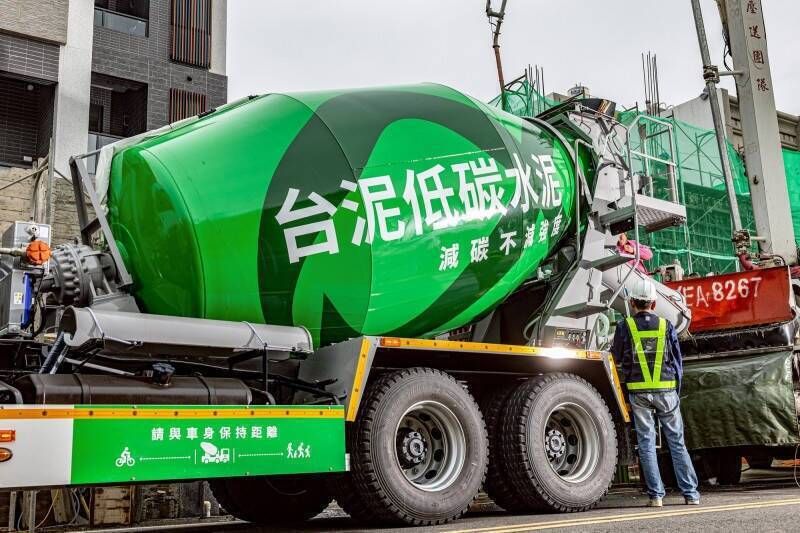
TCC Group Holdings Co., Ltd. (TCC) is Taiwan's largest cement and building materials company and has evolved into a diversified industrial group with operations spanning cement manufacturing, low-carbon building materials, renewable energy, energy storage, battery technology, resource recycling, logistics, and infrastructure investments across Asia, Europe, Africa, and the Americas. In its 2025 Annual Report, TCC presents sustainability as a core component of long-term corporate strategy, reflecting growing alignment with global climate policies, industrial decarbonisation, and international sustainability disclosure standards.
The regulatory framing is increasingly aligned with IFRS S1 and IFRS S2. TCC states that it identifies sustainability- and climate-related risks and opportunities from the perspective of investors, lenders and creditors, and expects to complete a trial IFRS S1/S2 version in the third quarter of 2026. This places the report within the broader global shift from voluntary ESG disclosure toward financially material sustainability reporting.
Governance architecture and accountability
TCC identifies the Board of Directors as the highest decision-making body overseeing sustainability and climate-related matters. The Board’s skill set is described as covering energy, environmental protection, cement, investment, information technology, risk management, law and finance, which is relevant given the company’s diversified transition strategy.
A notable governance issue is the 2025 fire incident at Molie Quantum Energy Corporation. The Chairman directly acknowledged accountability and stated that stricter safety protocols and governance standards had been mandated. This disclosure strengthens transparency, but it also highlights that TCC’s ESG maturity will be judged not only by strategy, but by how effectively risk controls are embedded across newer business lines such as batteries and energy storage.
Materiality approach and risk prioritisation
TCC’s IFRS S1/S2 section identifies material sustainability and climate-related risks and opportunities. Key risks include fire risk management, earthquake risk, information security, occupational health and safety, product lifecycle management, sustainable supply chain management, ethical conduct, extreme precipitation, carbon pricing, water scarcity and biodiversity-related regulation.
The most significant signal is that “insufficient fire risk management” is prioritised as the primary risk. TCC’s response includes refining risk limits for major accident events, initiating ISO 31000 and ISO 22301 adoption in 2026, introducing RBA-based third-party audits, and planning dedicated fire-response capabilities. This is a more concrete risk-management disclosure than many broad ESG reports, because it links a real incident to governance reform.
Climate, supply chain, and social dimensions
TCC’s climate strategy combines emissions reduction, circularity and product transition. The company reports SBTi validation and a 1.5°C-aligned decarbonisation target, while also developing low-carbon cement, low-carbon concrete, UHPC, energy storage and renewable energy assets.
Circularity is central to the strategy. TCC describes the use of industrial and municipal waste as alternative raw materials and fuels, with the aim of reducing natural resource extraction and coal consumption. It also reports that its alternative fuel thermal substitution rate increased from 0.2% in 2020 to 10%, while the overall alternative raw material substitution proportion reached 21% in 2025 when including mainland China plants.
Supply chain management is increasingly connected to human rights and environmental due diligence. TCC states that its human rights policy applies not only to the company and controlled entities, but also to suppliers and business partners. It expanded due diligence in 2025 across multiple business segments, including Europe/Africa cement, battery energy, charging and storage, asset management and investment business.
Employment
TCC presents employment management as part of its “Total Care Commitment”. The report refers to flexible working arrangements, work-from-home options, cross-time-zone shift arrangements, health checks, medical insurance, education scholarships, marriage and childbirth benefits, holiday bonuses, employee stock ownership trusts and emergency assistance.
The employment disclosure is relatively broad and welfare-oriented. Its strength is that it covers both statutory compliance and additional benefits. Its limitation is that, based on the reviewed sections, the report would be stronger if it provided more comparable workforce metrics by region, gender, employment type, turnover, training hours and pay equity indicators.
Health and safety
Health and safety is one of the report’s most material themes. TCC states that it aims for “zero work injuries” for employees and contractors, has established an occupational safety and health management system, and operates a dedicated Occupational Safety and Health Management Office.
The report also describes stronger safety data mechanisms, including monthly and weekly safety reports, daily high-risk operation reporting, AI recognition technology in high-risk areas and an occupational accident reporting platform planned for April 2025. These are meaningful process-level disclosures. The next step would be clearer performance data, such as lost-time injury frequency rate, contractor injury rates, severity rate and year-on-year improvement.
Product or service responsibility
TCC’s product responsibility strategy is closely linked to low-carbon construction. The company reports Taiwan’s first Type III Environmental Product Declaration certifications for cement and concrete, covering Portland limestone cement from Heping and Su’ao plants and concrete from the Taipei plant.
The product transition is not limited to cement substitution. TCC reports low-carbon concrete sales in Taiwan exceeding 3 million cubic meters in 2025 and describes UHPC materials with compressive strength reaching 180 MPa. These disclosures show a shift from commodity cement toward engineered, lower-carbon and performance-based material systems.
Philanthropy
TCC’s philanthropy and community role is reflected through foundations, local engagement, environmental education and community-facing projects. The report refers to entities such as the Dr. Cecilia Koo Botanic Conservation Center and Hualien County Private Hoping Sustainability Charity Foundation in its governance and executive disclosures.
The more strategic community contribution is linked to circular economy infrastructure. For example, the TCC DAKA Resource Recycling Center processed nearly 100,000 tons of municipal waste from Hualien by the end of 2025, helping address local waste treatment constraints while replacing approximately 3% of coal consumption.
Metrics, targets, and data robustness
TCC discloses GHG emissions under operational control and states that activity data, emission factors and GWP are used for calculation. For the parent company, 2025 Scope 1 emissions were 3,393,265 tCO₂e and Scope 2 emissions were 211,774 tCO₂e, for a total of 3,605,039 tCO₂e.
The report also provides a baseline year of 2016 for SBT-related targets, with emission intensity of 0.849 tCO₂e per ton of cementing material and total emissions of 4,621,312 tCO₂e. This is useful for trend assessment. However, investors will likely expect more granular disclosure on Scope 3, decarbonisation capex, abatement levers, residual emissions and the contribution of each pathway such as alternative fuels, clinker reduction, renewable power and carbon capture.
Assurance, credibility, and comparability
The report states that 2024 and 2025 Scope 1 and Scope 2 data were verified by third-party organisations, including BSI and SGS. For 2025, the parent company’s Scope 1 and Scope 2 GHG assurance was performed by BSI under the GHG Protocol and ISO 14064-3:2019, with an unqualified opinion.
This strengthens credibility for core emissions data. The main comparability gap is that consolidated entities are not required to begin assurance until 2027 under Taiwan’s roadmap, meaning group-wide assurance maturity is still developing. For a multinational cement and energy group, broader assurance over consolidated emissions, Scope 3 and selected social indicators would improve investor confidence.
Strategic implications for the sector
TCC’s report reflects a wider transition in the cement sector: decarbonisation is no longer only a compliance topic, but a product, capital and market-access issue. CBAM, green procurement, EPDs, carbon labels and low-carbon construction standards are gradually changing how cement companies compete.
The most important strategic implication is that cement producers may need to become material-technology and circular-resource companies, not only volume manufacturers. TCC’s disclosures on low-carbon cement, ULCC, UHPC, waste co-processing, recycled aggregates and energy storage indicate one possible pathway. The challenge is execution risk, especially across safety, capital allocation and technology scalability.
ESG maturity and future positioning
TCC demonstrates above-average ESG maturity in climate transition narrative, circular economy strategy, product innovation, GHG assurance and IFRS S1/S2 readiness. The report is strongest where it connects sustainability to financial risks, market opportunities and operational transformation.
Its weaker areas are not absence of disclosure, but the need for more consolidated, comparable and decision-useful metrics. Future reports would benefit from clearer year-on-year ESG performance tables, quantified transition plans, Scope 3 expansion, safety outcome indicators, and more explicit linkage between sustainability targets and capital expenditure.
Pacifica ESG View
TCC’s 2025 report shows a company using ESG disclosure to explain industrial transformation rather than simply meet reporting expectations. Its strongest signals are IFRS S1/S2 preparation, SBTi validation, third-party GHG assurance, EPD-certified low-carbon products and explicit post-incident safety governance. The report is credible in direction, but future market confidence will depend on measurable delivery: lower emissions intensity, safer energy-storage operations, broader assured data and clearer financial quantification of transition risks and opportunities.
Implications for the wider market
For cement and building-materials companies, TCC’s report illustrates how climate regulation, carbon pricing, circular economy policy and product verification are reshaping competition. EPDs, low-carbon cement, alternative fuels, waste co-processing and assured emissions data are becoming strategic assets. The wider market should expect ESG reporting to move closer to financial reporting, with investors asking not only what companies promise, but whether targets are governed, costed, verified and operationally achievable.