Building a Low-Carbon Healthcare Supply Chain: Insights from Zhende Medical's 2025 Sustainability Report
This analysis explores Zhende Medical's 2025 Sustainability Report, examining its ESG governance, SBTi-validated climate targets, double materiality assessment, supply chain management, workforce strategy and long-term sustainability positioning in the global healthcare sector.
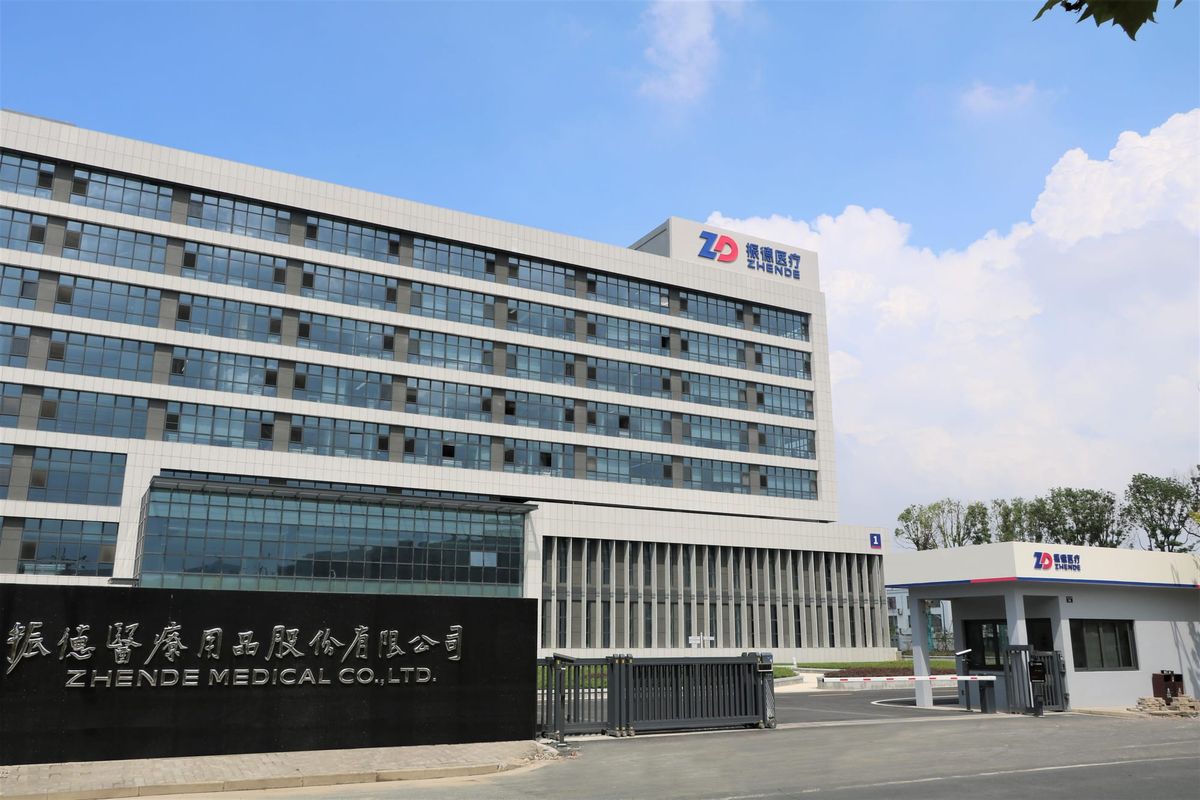
Zhende Medical’s 2025 Sustainability Report presents the company as a Chinese A-share listed medical dressing and infection control product manufacturer operating across China and more than 70 countries. The report is positioned against the Shanghai Stock Exchange sustainability reporting guidelines, GRI Standards, the UN Sustainable Development Goals, and emerging expectations around double materiality.
The regulatory context is important. Medical device and healthcare supply chains are increasingly exposed to climate disclosure, product safety, traceability, labour rights, anti-bribery, and responsible sourcing expectations. For Zhende, sustainability reporting is therefore not only a disclosure exercise, but also a way to demonstrate export-market readiness and supply-chain resilience.
Governance architecture and accountability
The report describes a four-tier ESG governance structure, with the Board of Directors as the top governing body, supported by the ESG Management Committee, ESG Office, and implementation responsibilities across departments and production bases. This structure suggests that ESG has moved beyond a communications function and is being embedded into operating processes.
A notable feature is the company’s framing of ESG as one of its primary business processes. This is relevant because mature sustainability management depends on repeatable governance routines, not only annual reporting. However, the report could further strengthen credibility by disclosing more detail on board-level ESG competencies, frequency of ESG reviews, and linkage between ESG performance and executive remuneration.
Materiality approach and risk prioritisation
Zhende applies a double materiality approach, assessing both impact materiality and financial materiality. The report identifies 25 material topics, including climate change mitigation and adaptation, product quality and safety, sustainable supply chain, R&D and innovation, customer service, occupational health and safety, and employee training.
This approach aligns with the direction of ESRS and ISSB-influenced reporting, where companies are expected to connect sustainability impacts with financial risks and opportunities. The stronger aspect of Zhende’s disclosure is that it links topics such as climate, product quality, supply chain disruption, and occupational health to operational and financial implications. The weaker aspect is that the report remains largely qualitative in explaining how these risks are quantified, prioritised, and integrated into enterprise risk management.
Climate, supply chain, and social dimensions
Climate is one of the report’s strongest themes. Zhende states that its greenhouse gas reduction targets were validated by the Science Based Targets initiative in 2025, with commitments to reduce Scope 1 and Scope 2 emissions by 42% and Scope 3 emissions by 25% by 2030 from a 2023 base year. This is material for a manufacturing business with energy-intensive production and a wide upstream and downstream value chain.
The company also reports renewable electricity use of 23.99%, Scope 1 and Scope 2 emissions of 75,277.38 tCO₂e, and Scope 3 emissions of 406,622.75 tCO₂e. The gap between operational and value-chain emissions highlights the strategic importance of supplier engagement, procurement standards, low-carbon materials, packaging design, and logistics optimisation.
Employment
Zhende’s employee disclosures focus on rights protection, training, diversity, welfare, and development. The company reports 100% training coverage, average training time of 63.21 hours per employee, and female senior executives above director level at 27.2%. These figures indicate a relatively structured human capital management approach.
From an ESG maturity perspective, the strength lies in coverage and quantified indicators. The next level of disclosure would be to connect training outcomes with productivity, retention, skills transformation, and safety performance. For a company investing in automation and digitalisation, workforce transition planning will become increasingly important.
Health and safety
Occupational health and safety is treated as a material topic and supported by ISO 45001 certification. The report states that the work-related injury rate per thousand employees was 0.37, below the company’s target of less than 0.5. It also discloses 872 working days lost due to work-related injuries.
The disclosure is useful because it includes both rate-based and absolute indicators. However, investors and customers would benefit from more detail on incident severity, root-cause analysis, contractor safety, and preventive measures at higher-risk production sites. In medical product manufacturing, safety culture is directly linked to operational reliability and quality assurance.
Product or service responsibility
Product quality and safety is central to Zhende’s sustainability profile. The report references certifications and regulatory requirements including FDA, CE, MDSAP, ISO 13485, and NMPA-related compliance. This is important because medical dressing and infection control products carry direct implications for patient safety and healthcare trust.
The company reports customer net promoter scores of 80 in the domestic market and 42 in the foreign market. The difference suggests that international customer expectations may be more demanding or that service consistency across markets remains an area for improvement. For a globalising medical device supplier, product responsibility will increasingly require integrated management of compliance, quality, traceability, cybersecurity, and customer response mechanisms.
Philanthropy
Zhende reports RMB 912.5 thousand in donations and describes community initiatives related to healthcare support, education, volunteer service, and support for disadvantaged groups. The company also reports 245 employees participating in volunteer activities, with total volunteer service time of 1,470 hours.
The philanthropy disclosure is consistent with the company’s healthcare identity, but it remains secondary to the core ESG issues of climate, product safety, supply chain, and workforce management. A stronger future approach would connect community investment to measurable health outcomes, access to care, disaster response capability, or long-term partnerships.
Metrics, targets, and data robustness
The report provides a broad set of ESG performance metrics, including emissions, renewable electricity, waste, recycled water, environmentally friendly packaging, supplier ESG surveys, employee training, injury rate, and donations. The inclusion of year-on-year trend data improves comparability.
The most material data point is Scope 3 emissions, which account for the majority of the disclosed carbon footprint. This makes supplier data quality and emissions-factor selection critical. The report would be stronger if it provided more methodological detail on Scope 3 categories, supplier-specific data coverage, calculation assumptions, and verification boundaries.
Assurance, credibility, and comparability
The report includes an independent assurance statement, which improves external credibility. It also references management system certifications including ISO 14001, ISO 45001, ISO 50001, ISO 27001, ISO 37001, ISO 14064, and ISO 14067.
These certifications support the company’s claim that ESG management is embedded into operational systems. However, assurance quality depends on scope, level of assurance, criteria, and tested indicators. To improve comparability, future reporting could clearly distinguish between assured and non-assured data, and provide more granular boundaries for factories, subsidiaries, and overseas operations.
Strategic implications for the sector
Zhende’s report reflects a broader shift in China’s medical device and healthcare manufacturing sector. Sustainability expectations are moving from general CSR narratives toward measurable climate targets, responsible supply chains, product safety, and data-backed governance.
For export-oriented medical suppliers, ESG performance increasingly affects customer qualification, procurement access, financing discussions, and brand trust. Companies with validated climate targets, traceable supply chains, certified management systems, and credible assurance may be better positioned as multinational healthcare customers tighten supplier requirements.
ESG maturity and future positioning
ZhendE demonstrates a relatively advanced ESG profile for a manufacturing company, particularly through SBTi validation, double materiality assessment, supplier ESG surveys, renewable electricity use, digitalisation, and external assurance. The report shows a transition from compliance-oriented sustainability toward operational integration.
The next maturity stage will depend on execution. Key areas include deeper Scope 3 supplier decarbonisation, stronger international customer satisfaction, more transparent climate transition planning, measurable social impact, and clearer links between ESG targets and financial resilience. The company’s direction is credible, but continued progress will require more granular data, stronger target tracking, and deeper value-chain engagement.
Pacifica ESG View
ZhendE Medical’s 2025 Sustainability Report shows a company moving toward more structured, data-led ESG management. Its strongest disclosures are climate target validation, double materiality, management system coverage, supplier ESG engagement, and quantified workforce indicators. The report is not merely philanthropic; it connects sustainability to manufacturing efficiency, product responsibility, and international market expectations. The main improvement area is deeper methodological transparency, especially around Scope 3 emissions, financial materiality, assurance scope, and international customer performance. Overall, ZhendE appears to be positioning ESG as a competitiveness issue rather than a standalone reporting obligation.
Implications for the wider market
The report signals a wider trend among Chinese healthcare and medical device manufacturers: ESG is becoming part of supply-chain qualification and export-market readiness. Climate targets, product safety, anti-bribery controls, labour management, and supplier due diligence are increasingly connected. Companies in the sector may need to move beyond basic disclosure toward validated targets, auditable data systems, supplier engagement, and credible third-party assurance. For investors and customers, the key question will be whether disclosed ESG systems translate into measurable risk reduction and long-term operational resilience.