Healthcare Manufacturing and Climate Alignment: Zhende’s 2030 Carbon Roadmap
Zhende Medical’s 2024 Sustainability Report outlines measurable progress in climate management, green operations, supply chain oversight, and employee well-being.

Zhende Medical Co., Ltd. (SSE: 603301) has published its 2024 Sustainability Report, marking its third standalone sustainability disclosure and aligning with the Shanghai Stock Exchange’s Guidelines No.14 on Sustainability Reporting, the GRI Standards (2021), and relevant SDG frameworks. The report covers the period from 1 January to 31 December 2024 and has been approved by the Board of Directors, reinforcing governance accountability for ESG oversight.
For a leading Chinese medical consumables manufacturer with growing overseas operations, including Kenya and other markets, the 2024 report provides a structured view of how the company is integrating ESG considerations into global expansion, supply chain resilience, and low-carbon transformation. The disclosure is particularly relevant amid tightening EU regulatory frameworks such as CBAM and EUDR, which the company explicitly references in its climate and supply chain strategy.

Key Sustainability Themes and Disclosures
Climate transition is positioned as a central strategic pillar. Zhende formally committed to the Science Based Targets initiative (SBTi) in 2024 and outlined a 2030 pathway targeting a 42% reduction in Scope 1 and 2 emissions and a 51.6% reduction in Scope 3 emission intensity per unit revenue, compared with a 2023 baseline. Total Scope 1 and Scope 2 emissions (location-based) reached 90,458.26 tCO2e in 2024, while renewable electricity accounted for 20% of total electricity use during the reporting period.
Green supply chain management is another notable highlight. Based on 2023 carbon inventory data, Scope 3 emissions represented over 80% of total emissions, largely driven by purchased goods and services. In response, Zhende increased the proportion of recyclable packaging materials to 68% and strengthened supplier ESG engagement, including 88% ESG training coverage among key suppliers. These measures suggest a gradual shift from internal energy optimisation toward value chain decarbonisation.
Operational efficiency and lean manufacturing also feature prominently. In 2024, the company completed 113 Total Productive Improvement (TPI) projects and reduced annual costs by RMB 39.86 million through process optimisation. R&D investment reached RMB 135.49 million, with 28 invention patents granted during the year, reinforcing innovation-led competitiveness in wound care, antimicrobial dressings, and PFAS-free product development.
From a social perspective, the workforce reached 7,807 employees in 2024, with 100% training coverage and an average of 64.9 training hours per employee. The injury rate per thousand employees declined to 0.38, and all production sites achieved ISO 14001 certification coverage. Community investment totalled RMB 2.30 million in 2024, supporting rural revitalisation and healthcare accessibility initiatives.
Governance and Strategic Signals
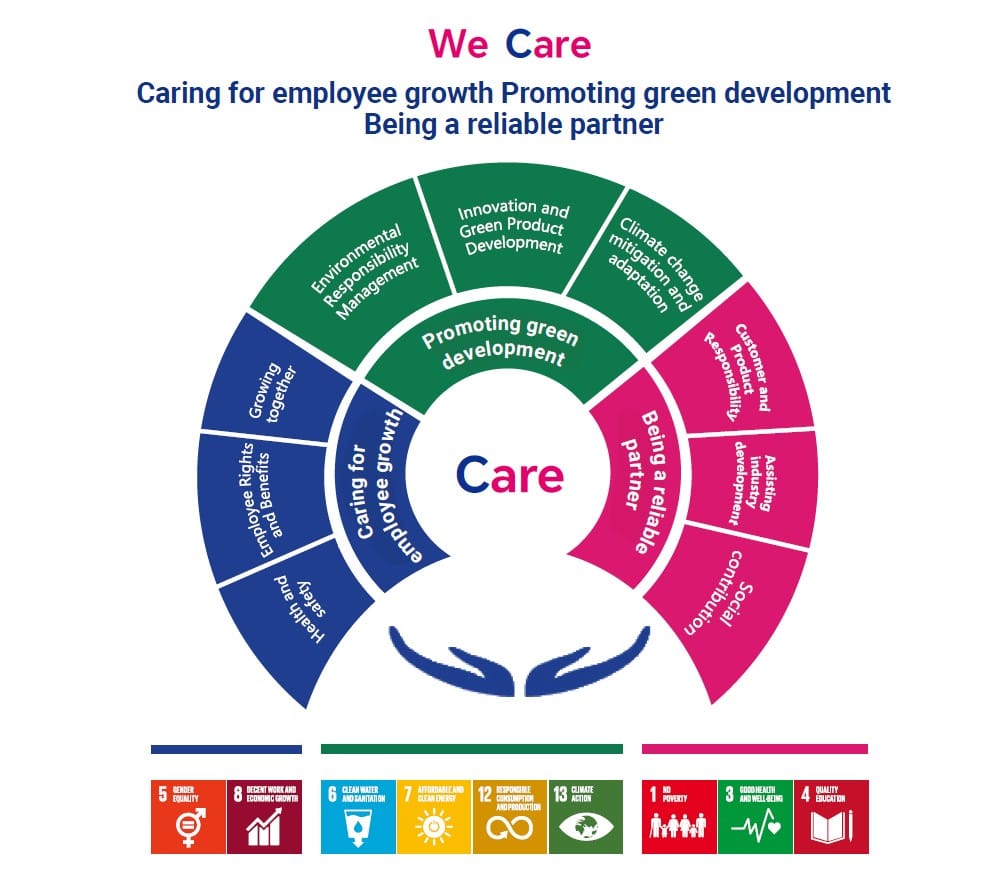
Zhende has embedded ESG governance within a top-down structure led by the Board and ESG Management Committee, with executive-level oversight of climate and sustainability matters. Climate change governance is further integrated into long-term incentive plans for senior executives, indicating alignment between financial performance and decarbonisation objectives.
The report highlights strengthened compliance systems, including ISO 27001 certification for information security and zero corruption or anti-competition violations during the reporting period. Supplier life-cycle management frameworks, SRM digitalisation, and risk-based classification systems demonstrate a maturing approach to supply chain oversight.
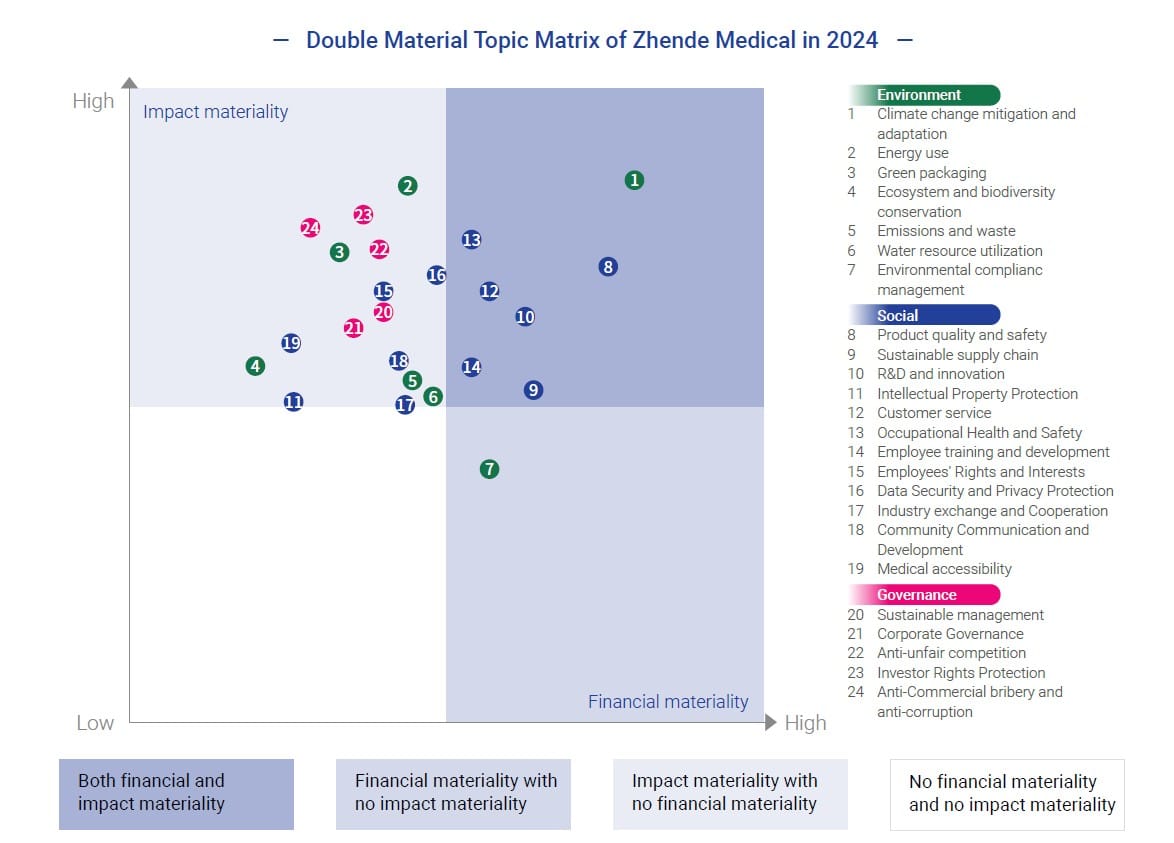
In addition, the company conducted a formal double materiality assessment, identifying 24 material topics covering climate change, product safety, sustainable supply chain, and occupational health. This approach signals preparedness for alignment with emerging European sustainability reporting standards and ISSB-based disclosures.
What This Report Suggests About Future Direction
Zhende Medical’s 2024 Sustainability Report suggests a transition from compliance-driven ESG management toward strategic ESG integration. The formal SBTi commitment, measurable carbon reduction targets, and packaging decarbonisation initiatives indicate a direction of travel aligned with international regulatory expectations and export market requirements.
The expansion of overseas production bases and renewable energy deployment may enhance both supply chain resilience and climate performance. If execution remains consistent, the company is potentially positioning itself as a low-carbon, compliance-ready supplier within global healthcare procurement networks.
The integration of ESG metrics into governance structures, innovation processes, and supplier engagement also suggests an effort to translate sustainability commitments into operational advantage. Continued transparency on Scope 3 reduction pathways and renewable energy scaling will be key indicators of progress in the coming reporting cycles.
Pacifica ESG View
Zhende Medical’s 2024 disclosure reflects structured governance integration, measurable decarbonisation targets, and supply chain engagement aligned with global regulatory trends. The company’s SBTi commitment and packaging innovation initiatives indicate a forward-looking sustainability strategy. Monitoring execution on Scope 3 reductions and renewable energy expansion will be critical to assessing long-term climate credibility and market positioning.